
Homemade Venison Jerky Marinade
This post may contain affiliate links, which means I may earn a small commission at no additional cost to you. As an Amazon Associate I earn from qualifying purchases.
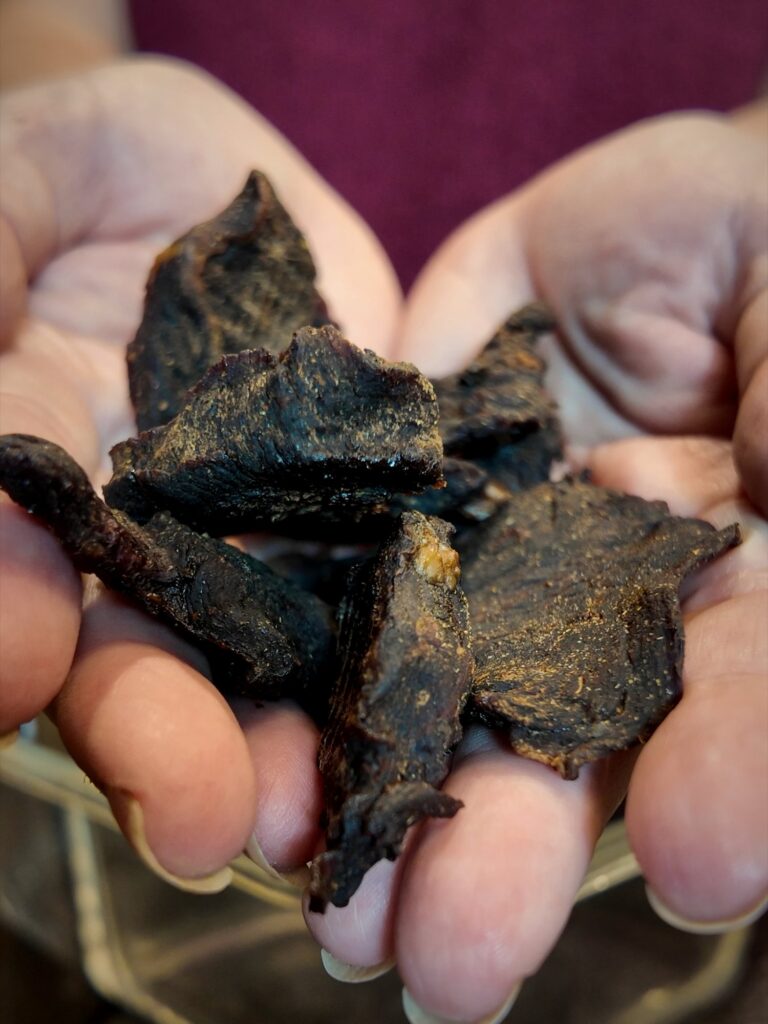
This is the marinade I use when I’m making a big batch of deer jerky. It’s savory and smoky with just enough honey to balance everything out, and it’s made almost entirely from ingredients I already keep in the pantry.
The recipe started with a basic red-meat jerky marinade, but I’ve adjusted it for the way I actually make jerky. I use garlic powder instead of fresh garlic so it distributes evenly through a large batch, add onion powder and smoked paprika for more flavor, and keep the honey and ketchup at an easy ⅓ cup each. It’s a little less than the mathematically exact amount from scaling the original recipe, but it’s easier to measure and keeps the finished jerky from getting overly sweet.
I primarily make this with deer, so I’m listing it with my venison recipes. But there’s nothing about the marinade that limits it to venison—it works well for beef jerky, too.
Why I Adjusted This Jerky Marinade
When I tripled the original recipe, I didn’t want to make the measurements unnecessarily fussy just for the sake of keeping the ratios mathematically exact.
The original amount of honey and ketchup would have scaled to ⅜ cup each. I use ⅓ cup instead. That’s only a small reduction across a large batch, but it gives me a simple measurement and keeps this firmly in the savory jerky category rather than making it too sweet.
I also made a few changes to the seasonings.
Instead of fresh minced garlic, I use garlic powder. When I’m working with several pounds of sliced deer, dried seasoning is easier to distribute throughout the entire batch. I added onion powder for another layer of savory flavor and smoked paprika to complement the liquid smoke.
One thing I don’t add is salt. With a full cup each of soy sauce and Worcestershire sauce in the marinade, it doesn’t need it.
I also added one food-safety step. The original recipe didn’t say to heat the meat to 160°F before drying, and it’s not something I used to do. But current USDA guidance recommends heating jerky meat to 160°F before dehydrating—and it specifically calls out venison, since deer can carry more bacteria than store-bought meat. So that step is now part of this recipe.
The result is a straightforward pantry-based jerky marinade that I can mix quickly when I have a large batch of deer ready for the dehydrator.
Ingredients
This batch makes enough marinade for approximately 6–9 pounds of sliced venison or beef.
- 1 cup Worcestershire sauce
- 1 cup soy sauce
- ⅓ cup honey
- ⅓ cup ketchup
- 1 tablespoon liquid smoke
- 1 tablespoon coarsely ground black pepper
- 1 tablespoon garlic powder
- 1 tablespoon onion powder
- 1 teaspoon smoked paprika
- 6–9 pounds thinly sliced venison or beef
Ingredient Notes
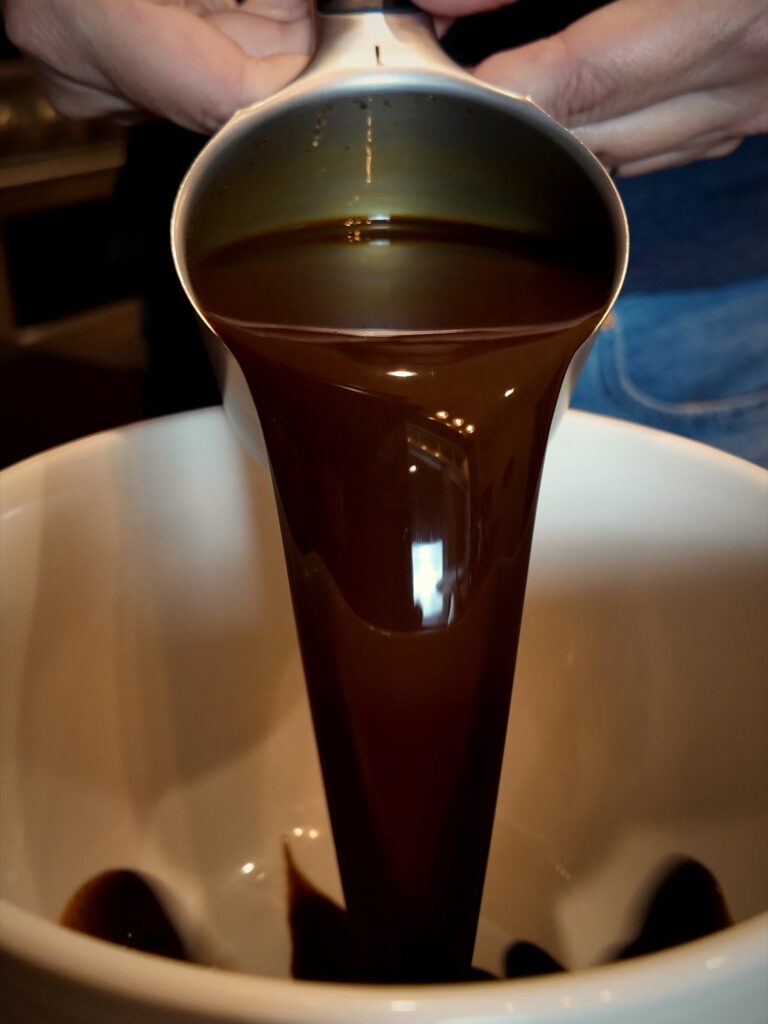
Worcestershire sauce + soy sauce: These make up the savory base of the marinade and provide plenty of salt on their own. I don’t add any additional salt.
Honey: I use ⅓ cup for the entire large batch. It balances the salty, savory ingredients without turning this into a sweet jerky.
Ketchup: Another ⅓ cup adds a little sweetness and tomato flavor. Keeping the honey and ketchup at the same easy measurement also makes this recipe simple to throw together.
Liquid smoke: I use a full tablespoon in this large batch to bring smoky flavor to jerky made in the dehydrator.
Black pepper: I prefer coarsely ground black pepper here rather than finely ground pepper.
Garlic powder: The original recipe used fresh garlic. I switched to garlic powder because it distributes more evenly when I’m marinating several pounds of meat.
Onion powder: This wasn’t in the original marinade, but I added it for another layer of savory flavor.
Smoked paprika: Just a teaspoon reinforces the smoky flavor without taking over the marinade.
How to Make Venison Jerky Marinade
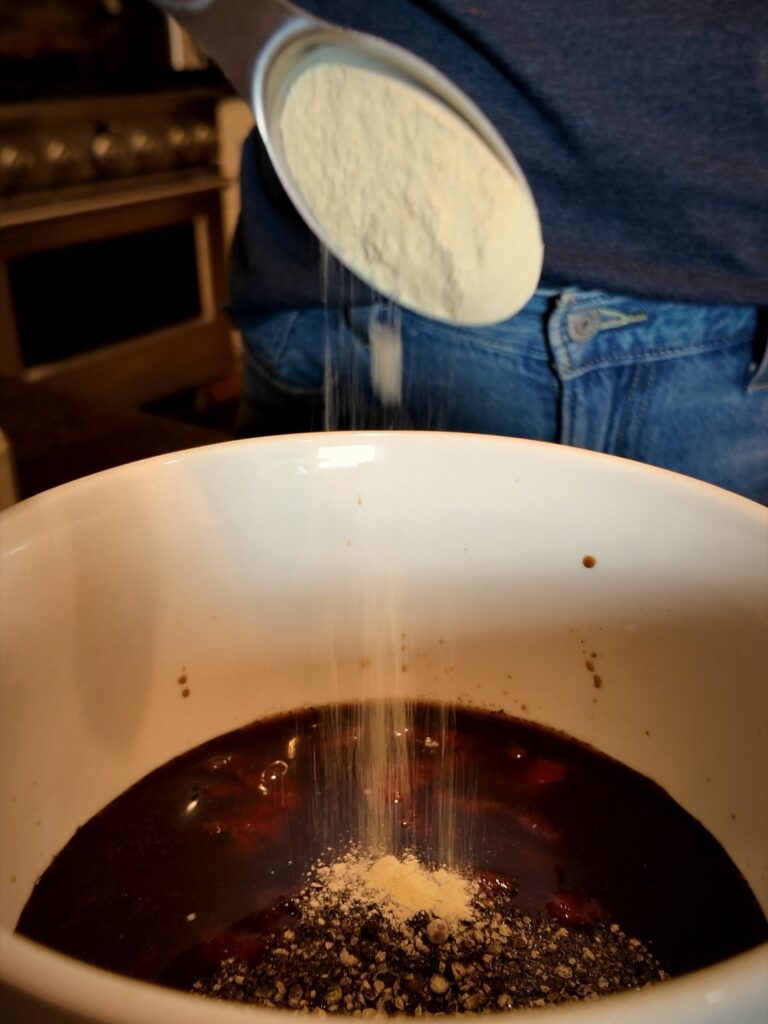
- Add the Worcestershire sauce, soy sauce, honey, ketchup, liquid smoke, black pepper, garlic powder, onion powder, and smoked paprika to a large bowl or other container large enough to hold the meat.
- Whisk everything together until the honey is incorporated and the dry seasonings are evenly distributed.
- Add the sliced deer and thoroughly coat it in the marinade.
- Cover and refrigerate overnight while the meat marinates.
- When you’re ready to dehydrate the jerky, remove the meat from the marinade and let the excess liquid drain.
- Before drying, steam or roast the drained strips until the meat reaches 160°F inside, checking with a food thermometer. One option is to bake them in a single layer in a 325°F oven.

How I Dehydrate Deer Jerky
Before the strips go into the dehydrator, heat them to an internal temperature of 160°F. Check a few of the thickest pieces with an instant-read thermometer. Drying alone doesn’t guarantee the meat itself gets that hot, so this step comes first.
Once heated, arrange the deer in a single layer on the dehydrator trays. Don’t pile or overlap the pieces—you want air to be able to circulate around them.
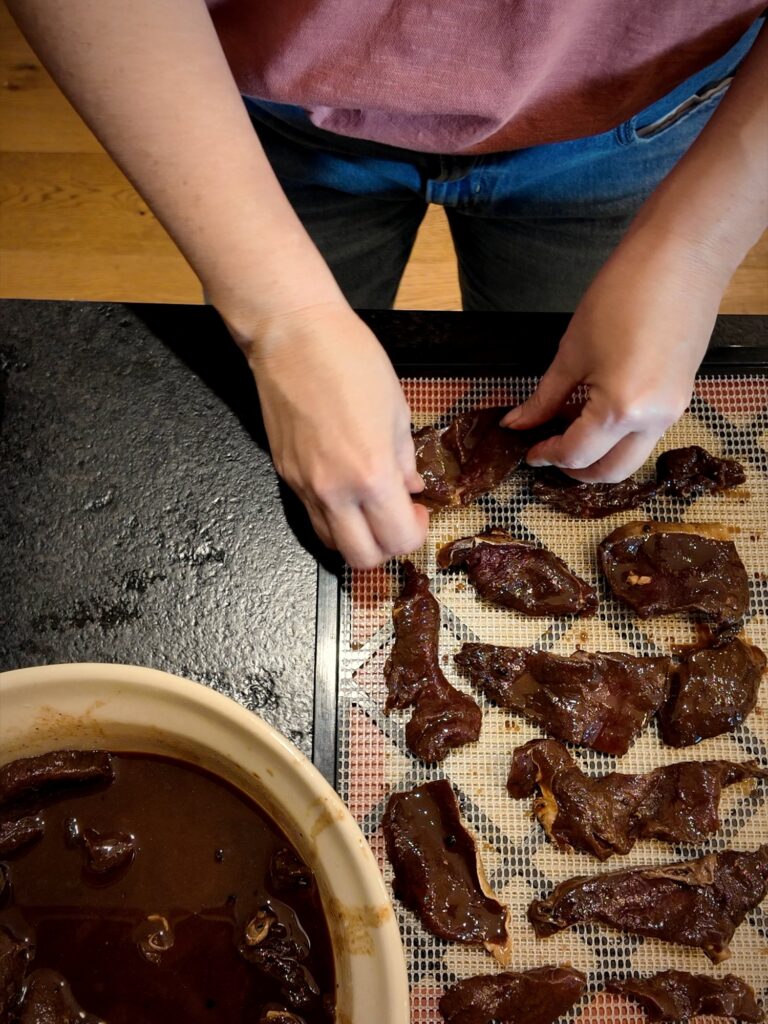
I run my dehydrator at 155°F.
I start checking the jerky at about 3 hours, but that’s a checking point, not a promised finish time.
Depending on how thick the meat is sliced, it can take significantly longer.
That’s one of the more important things to know when making jerky. Don’t pull an entire batch just because a recipe gives you a specific number of hours. Check the actual pieces and continue drying them until they reach the doneness you’re looking for.
Thinner pieces will naturally be ready before thicker ones, so check individual pieces rather than assuming the entire dehydrator will finish at exactly the same time.
How Thick Should You Slice Deer for Jerky?
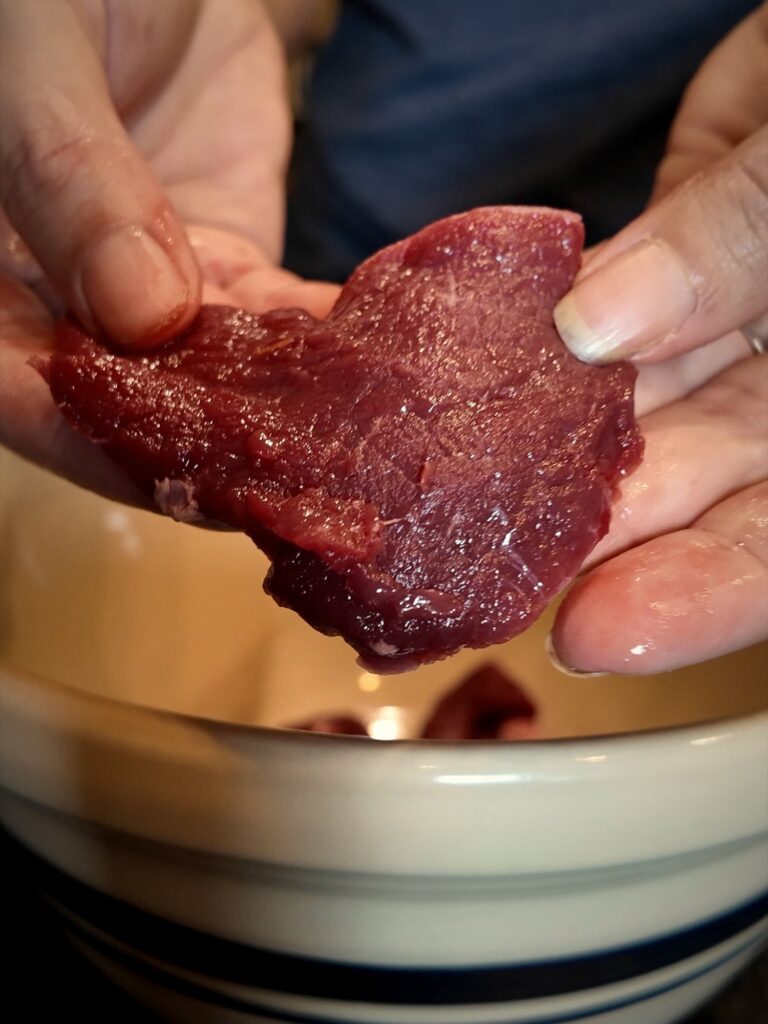
Consistency is useful because pieces of similar thickness will dry at a similar rate. If your slices vary quite a bit, expect to remove some pieces before others.
Thickness also has a major effect on dehydrating time. That’s why I start checking mine at around three hours but plan for the possibility that it will take considerably longer.
If you like thicker jerky, that’s fine—just don’t use the three-hour mark as your finish time.
How Do You Know When Jerky Is Done?
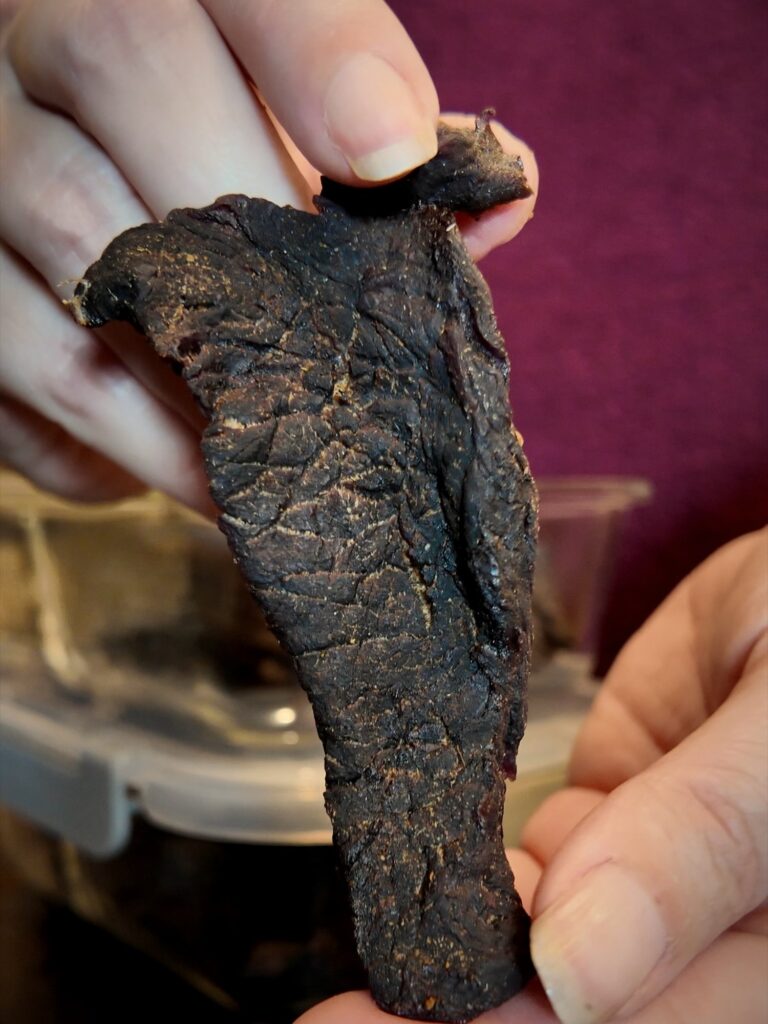
I dehydrate this jerky to my desired doneness rather than relying solely on the clock.
The biggest variable I’ve found is simply the thickness of the meat. Use the three-hour mark as your reminder to begin checking, then continue from there.
For food safety, follow current USDA guidance for safely preparing and dehydrating meat jerky rather than relying on texture or appearance alone.
Can I Make This With Beef?
Yes. I developed this batch for the deer we use for jerky, but the marinade itself works well with beef.
That makes this a useful recipe to keep even if you don’t have venison in the freezer. Use the same marinade measurements and your preferred lean cut of beef.
Can I Make a Smaller Batch?
Absolutely. This is intentionally a large-batch recipe because I’m typically working with several pounds of deer at once.
The full recipe is designed for roughly 6–9 pounds of meat, but all of the ingredients can be scaled proportionally for a smaller batch.
For a half batch, use:
- ½ cup Worcestershire sauce
- ½ cup soy sauce
- 2 tablespoons + 2 teaspoons honey
- 2 tablespoons + 2 teaspoons ketchup
- 1½ teaspoons liquid smoke
- 1½ teaspoons coarsely ground black pepper
- 1½ teaspoons garlic powder
- 1½ teaspoons onion powder
- ½ teaspoon smoked paprika
You don’t have to make nine pounds of jerky just because the full recipe is written for a big batch.
A Few Practical Jerky Tips
- Heat the meat to 160°F before drying. This is the one step I’ve added since I started making this recipe, following current USDA guidance for jerky—especially venison.
- Don’t add extra salt. Between the soy sauce and Worcestershire sauce, this marinade already has plenty.
- Spread the meat out. Give the individual pieces room on your dehydrator trays rather than overlapping them.
- Start checking at three hours—not necessarily removing at three hours. This is the big one. Depending on the thickness of the meat, your batch may need significantly more time.
- Check pieces individually. If your slicing isn’t perfectly uniform, thinner pieces may be ready before the thicker ones.
- Use dried garlic for a big batch. This is one of the changes I intentionally made from the original recipe. Garlic powder is easy to measure and gets dispersed throughout all of the marinade rather than leaving bits of fresh garlic concentrated on individual pieces.
Storing Homemade Venison Jerky
Storage recommendations for homemade jerky depend on how it was prepared, how thoroughly it was dried, and how it is packaged.
Because this is a meat-preservation recipe, I don’t recommend guessing at room-temperature shelf life. Follow current USDA guidance for cooling, packaging, and storing homemade jerky, and refrigerate or freeze it when appropriate for your processing and storage method.
A Few Things I Use
- Excalibur Dehydrator – for drying the jerky.
- Ohio Stoneware mixing bowl – for marinating the meat.
- Chef’s knife – for slicing the meat.
- Instant-read thermometer – for checking meat temperatures.
Homemade Venison Jerky Marinade
Ingredients
Equipment
Method
- Add the Worcestershire sauce, soy sauce, honey, ketchup, liquid smoke, black pepper, garlic powder, onion powder, and smoked paprika to a large mixing bowl or container.
- Whisk until the honey is incorporated and the seasonings are evenly distributed.
- Add the sliced venison or beef and thoroughly coat the meat with the marinade.
- Cover and refrigerate overnight to marinate.
- When ready to dehydrate, remove the meat from the marinade and allow the excess marinade to drain.
- Steam or roast the drained strips until the meat reaches an internal temperature of 160°F, checking with a food thermometer. One option is to bake them in a single layer in a 325°F oven.
- Arrange the heated meat in a single layer on dehydrator trays without overlapping the pieces.
- Set the dehydrator to 155°F.
- Begin checking the jerky at approximately 3 hours. This is a starting point for checking, not a guaranteed finish time.
- Continue dehydrating to your desired doneness. Depending on the thickness of the slices, the meat may take significantly longer.
- Follow current USDA recommendations for safely preparing, handling, cooling, and storing homemade meat jerky.
Notes
- This recipe is made primarily for deer/venison, but the same marinade works well for beef.
- The full batch makes enough marinade for approximately 6–9 pounds of meat.
- I intentionally use ⅓ cup each of honey and ketchup rather than the exact ⅜ cup that resulted from tripling the original recipe. The measurement is simpler and slightly reduces the sweetness.
- Garlic powder replaces fresh garlic because it distributes more evenly throughout a large batch.
- Onion powder and smoked paprika are additions to the original marinade.
- Don’t add extra salt. The soy sauce and Worcestershire sauce already provide plenty.
- Three hours is not the expected finish time. Start checking then and plan for thicker pieces to take considerably longer.
- Follow current food-safety recommendations for homemade jerky rather than determining safety based only on drying time or texture.
- The original recipe didn’t include heating the meat to 160°F before drying. I added that step to follow current USDA guidance for homemade jerky, which specifically calls out venison.

Can you use an air fryer or oven?
Growing up my Dad made jerky in the oven. The hard thing is most don’t have a low enough temperature setting. The work around was a wooden spoon to hold the door open a bit, keeping it on the lowest setting.
We hung the jerky from toothpicks, lined the bottom of the oven with foil for easy cleanup, and could do a huge batch in a single day.
As for the air fryer, see if it has a dehydrate setting. Mine does!