How to Build a Bulk Pantry on a Budget Without Wasting Food
This post may contain affiliate links, which means I may earn a small commission at no additional cost to you. As an Amazon Associate I earn from qualifying purchases.
Buying food in bulk can save a lot of money, but only if you’re buying food you’ll actually use.
I don’t think the goal should be to buy the biggest package of everything you can find. Some foods make sense for us in 25-pound bags. Others I intentionally buy in much smaller amounts because we simply don’t go through them fast enough.
Most of our staples come from Azure Standard. I’ve ordered from Azure for years, and over time our pantry has grown enough that I don’t have to order nearly as often as I used to.
For years I ordered monthly. Right now I order about every two months, and I’m considering moving to quarterly because we’ve built enough stock that we simply don’t need to make the trip as often.
That didn’t happen in one giant pantry stock-up. We built it a little at a time.
Start by Buying More of What You Already Use
My biggest advice if you’re new to bulk buying is not to go out and spend a huge amount of money trying to build a pantry overnight.
Instead, start when you run out of something.
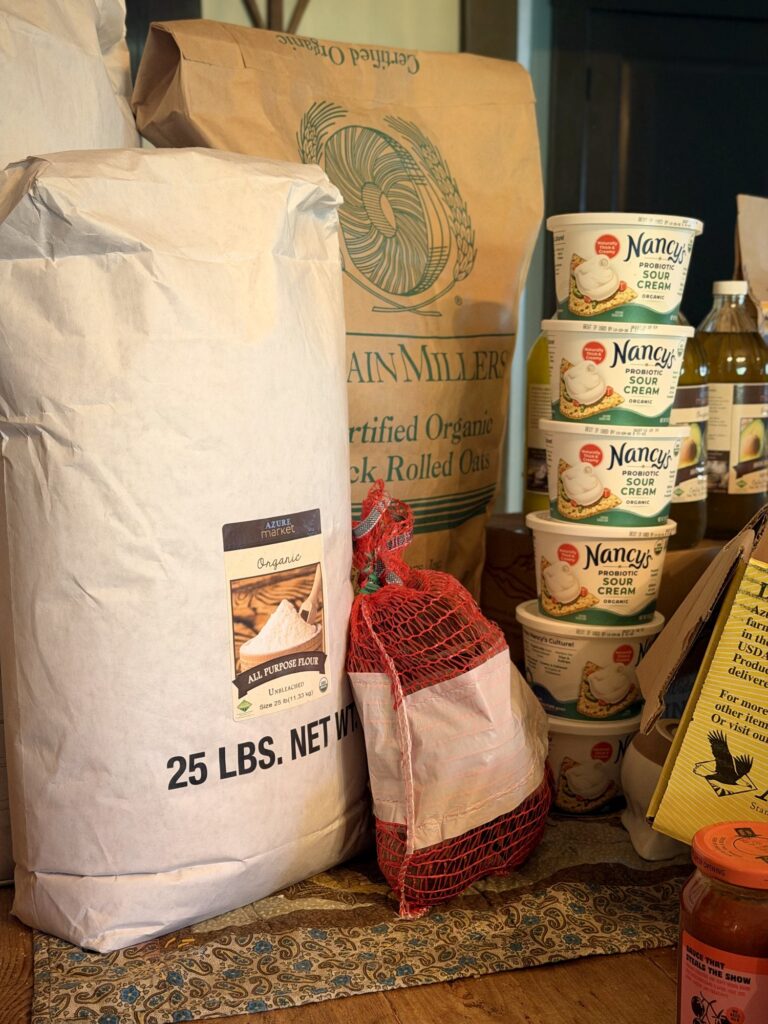
If you normally buy five pounds of flour, maybe buy ten pounds this time. The next time another staple runs low, buy a larger quantity of that too.
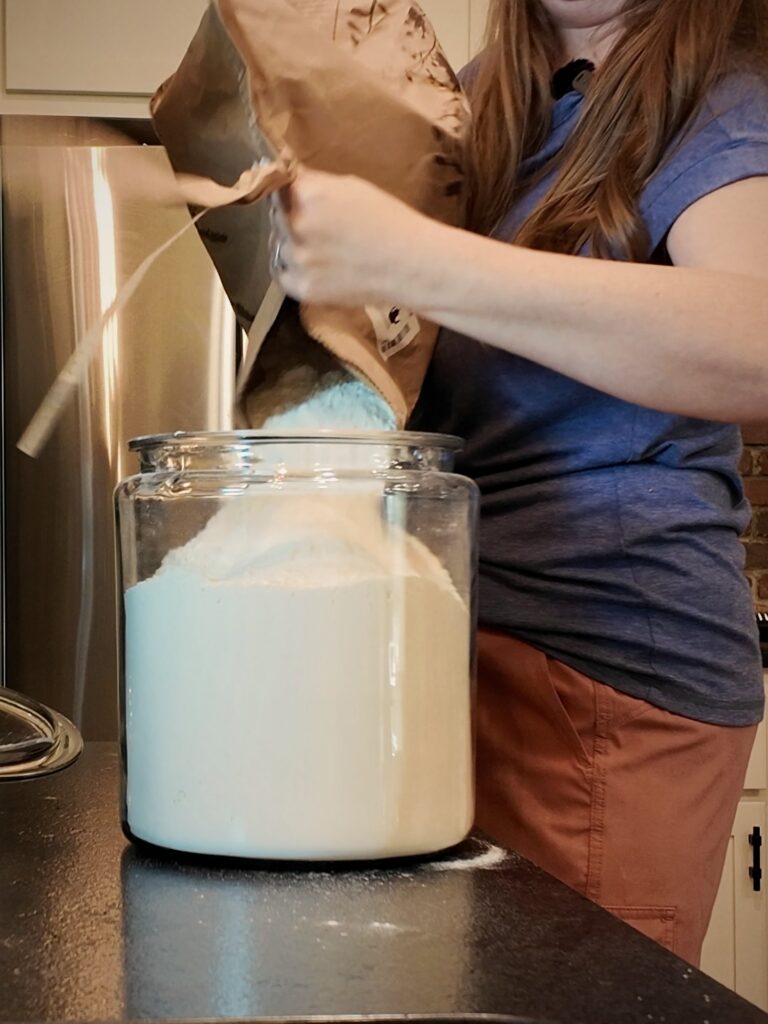
Keep doing that as your budget allows.
Eventually something interesting happens: you aren’t buying all of your basics every grocery trip anymore. That frees up room in the grocery budget to stock the next item.
Month after month, the pantry builds itself.
And your definition of bulk may look completely different from mine. Ten pounds might be the perfect amount for your household even if someone else buys 25 or 50.
What We Actually Buy in Bulk
I buy most of our pantry staples through Azure Standard.
Some of our regular purchases include:
- 25 pounds of flour
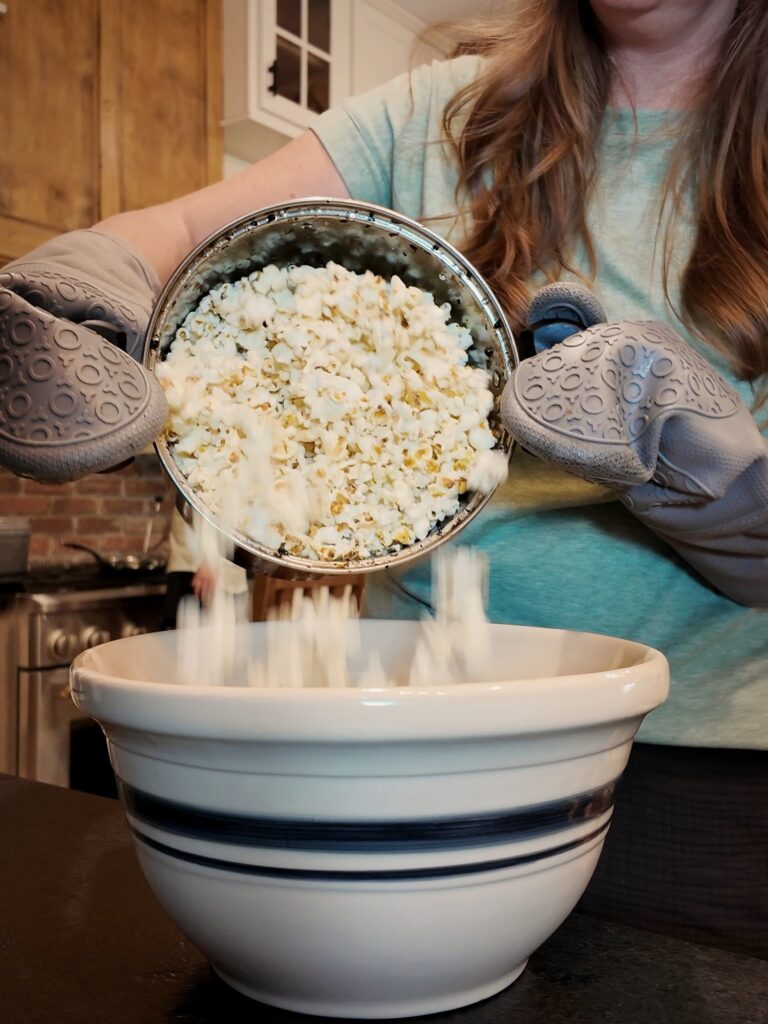
- 25 pounds of popcorn
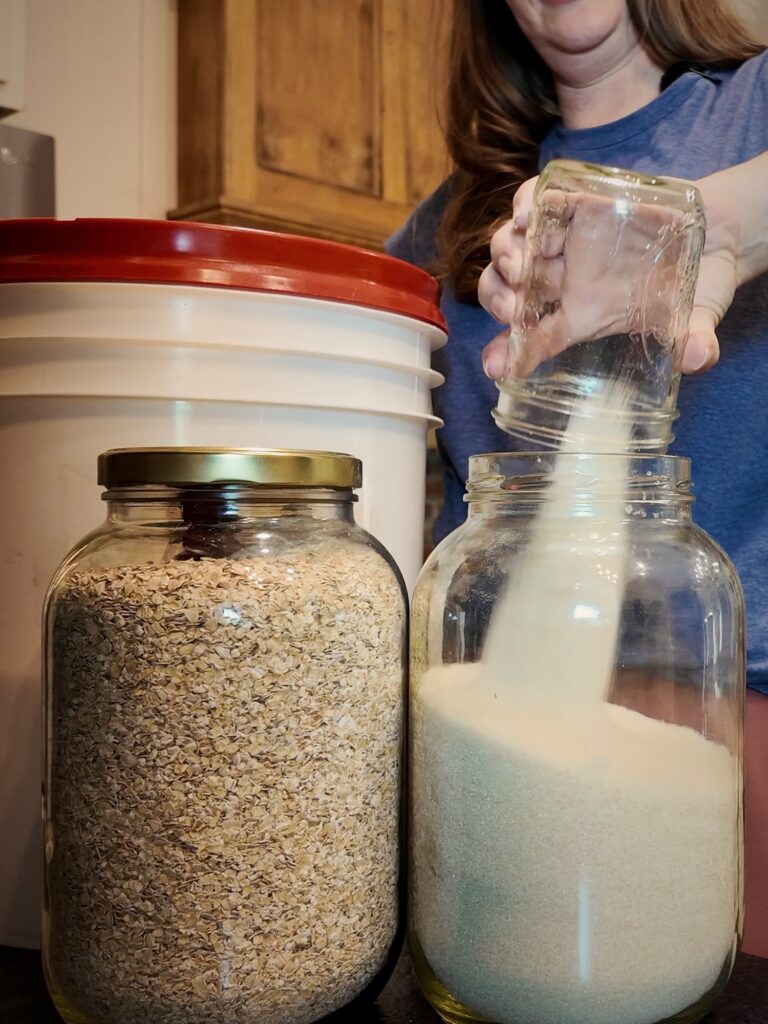
- 10 to 15 pounds of oatmeal
- 20 pounds of apples
- 10 pounds of cheese at a time
- 6 cartons of sour cream at a time
- onions in bulk
- 5-pound bags of frozen chopped carrots
- 5-pound bags of frozen chopped celery
The amounts aren’t all the same because our usage isn’t all the same.
We use plenty of oatmeal, for example, but not at the rate we use some of our other staples. There’s no reason for me to buy 25 pounds just because that size exists.
That’s one of the biggest mistakes people can make with bulk food: buying according to the package size instead of according to how much their household uses.
Azure Standard Is My Main Bulk Supplier
Azure is where I buy basically all of our other staples unless there’s a particular reason to get something elsewhere.
I also buy mostly organic foods, and Azure makes that much easier for our household.
That doesn’t mean everyone needs to make the same choices. Everyone has to find the line that works for their own budget, priorities and family.
For me, buying in bulk is as much about having ingredients available as it is about price.
When I have flour, oats, onions, cheese, vegetables and basic pantry ingredients already on hand, I can make meals without constantly running to the store.
That’s really the goal.
Sometimes Convenience Is Worth Buying in Bulk Too
Not everything I buy in bulk is the least processed version of the food.
Azure sells pre-chopped frozen carrots and celery in 5-pound bags, and I buy both for cooking.
Could I buy fresh carrots and celery and prep all of it myself? Absolutely.
But I cook enough that sometimes I’m perfectly happy to pay for someone else to do the chopping.
Five pounds is still a substantial quantity, though, so you need to make sure you have both the freezer space and the usage to justify it.
I use them for soups and other recipes where I’d otherwise be doing the same repetitive prep again and again.
Bulk buying isn’t only about asking:
What is the cheapest possible option?
I also ask:
Will I use it? Can I store it? And does buying it this way save enough time to make sense?
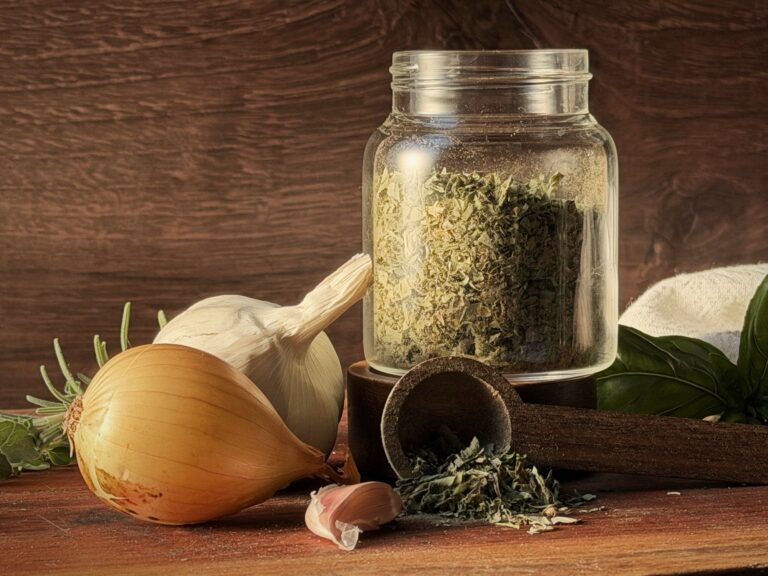
Be Careful Buying Spices and Herbs in Bulk
This one is worth knowing before you place an Azure order.
A pound is not always a pound when it comes to storage space.
One pound of onion powder is relatively compact.
One pound of a dried leafy herb is an enormous amount of leaves.
Things like parsley, basil and oregano take up far more space by weight than powdered spices, and most households simply aren’t going to use a full pound quickly enough to justify buying that much.
So don’t assume that because the one-pound package has a good unit price, it’s automatically the right size.
Buy based on how quickly you’ll actually use the ingredient.
How I Store Bulk Dry Goods
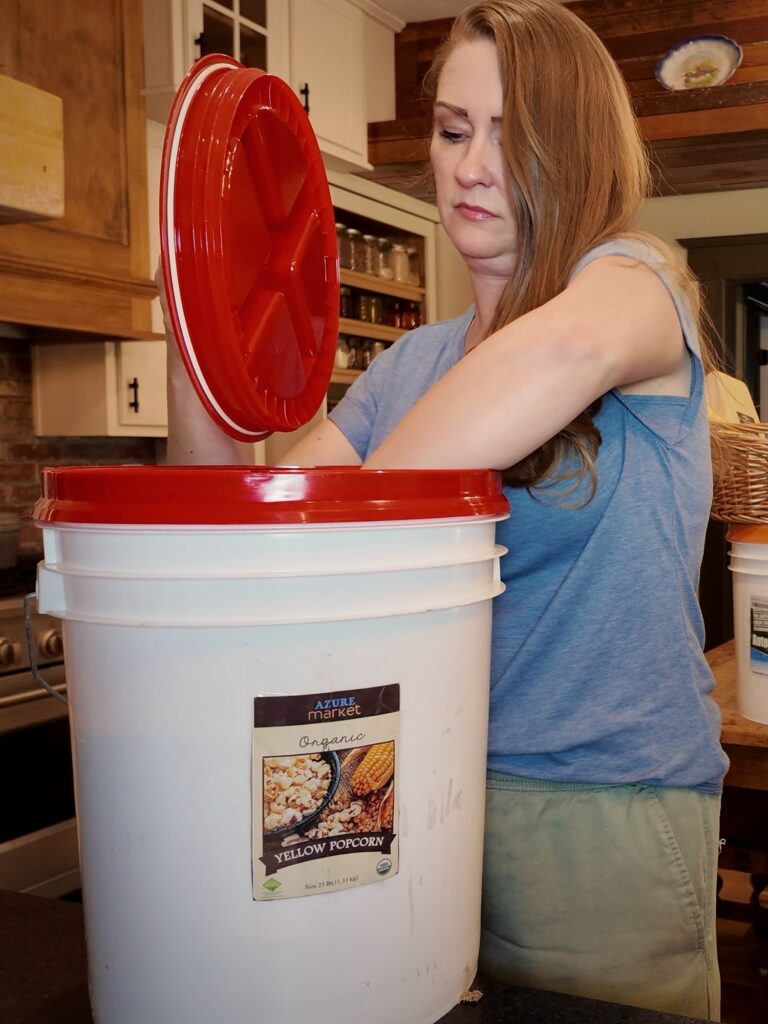
Most of our dry goods go into food-grade buckets with gamma lids.
I buy the buckets and lids through Azure too.
Gamma lids make a huge difference because I can twist the lid open rather than prying a standard bucket lid off every time I need flour, oats or another staple.
Good storage is part of the cost of buying in bulk.
If you buy 25 pounds of something and then lose part of it to moisture, pests or poor storage, you haven’t saved anything.
You Do Not Need a Giant Pantry
You also don’t need a walk-in pantry, basement full of shelves or dedicated storage room before you can begin.
Use the space you have.
A hall closet can become pantry storage.
Things you don’t need frequently can go under a bed.
Look for unused vertical space and areas of your home that aren’t being used efficiently.
You can store a surprising amount of food in a relatively small home when you choose the foods carefully.
The goal isn’t to cram food into every available corner. It’s to find a reasonable home for the things you actually use.
How I Store 10 Pounds of Cheese
We usually buy 10 pounds of cheese from Azure at a time—two 5-pound blocks.
I keep the blocks in the refrigerator in their original packaging.
I do not completely remove the wrapper.
Instead, I pull the wrapper back only far enough to cut off what I need and then cover the cheese again with the remaining packaging.
That minimizes how much of the cheese I’m handling and has worked well for us for keeping those large blocks in good condition.
There’s no need for me to freeze the cheese when I’m leaving it in block form.
If I shred cheese ahead of time, freezing is an option, but shredded cheese takes up substantially more space than the original 5-pound block.
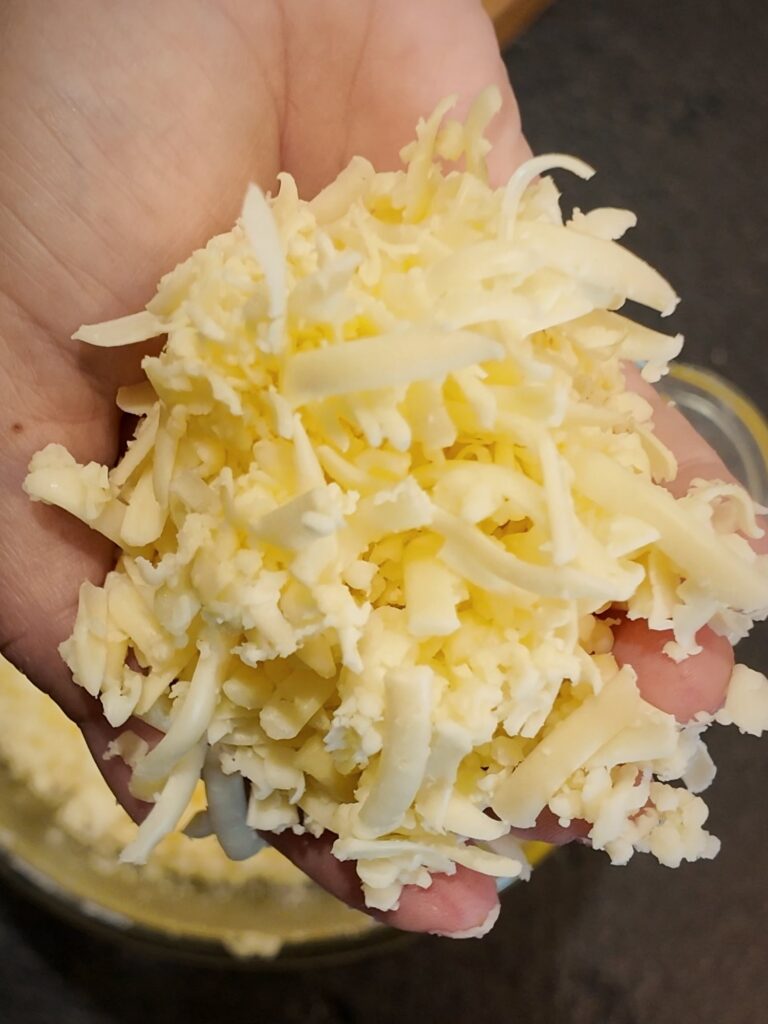
For us, leaving it in the block is simpler and much more space-efficient.
Buy Foods That Store Well—or Know Their Next Phase
My general rule for avoiding waste is simple:
Either buy foods that store well or have a plan for what happens next.
That might mean:
- freezing
- canning
- dehydrating
- cold storage
- planting
- cooking it into something else
You should know the plan before buying a huge quantity.
A low price doesn’t save you money if a third of the food ends up in the trash.
I Buy 50 Pounds of Potatoes in February
Potatoes are a good example of having a second phase planned before I buy them.
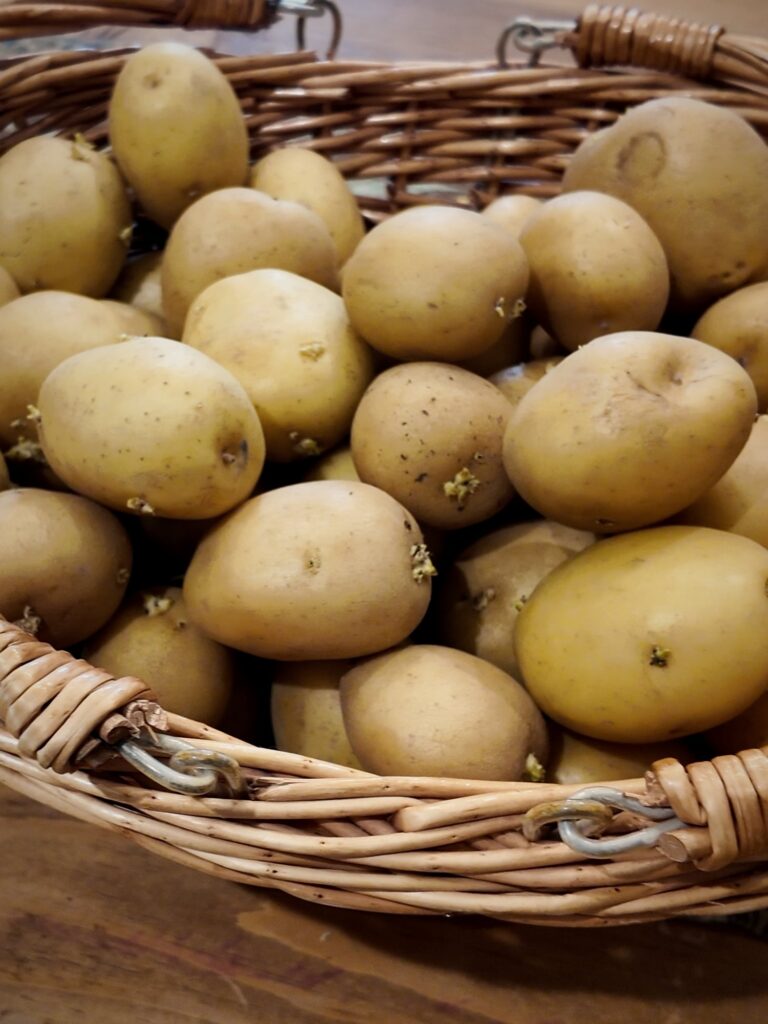
In February, I buy about 50 pounds.
We eat them fresh, but we don’t necessarily need to eat all 50 pounds.
The potatoes that remain become part of our spring garden.
So one bulk purchase supplies food for the kitchen and seed potatoes for the next growing season.
That same mindset can apply to plenty of foods. Think beyond what you’re going to eat this week.
- Can it be stored?
- Can it be frozen?
- Can it be preserved?
- Can it help produce more food later?
Store Bulk Onions for Good Airflow
We buy onions in bulk too.
To store them, I put them in pantyhose and hang them so the onions have plenty of air around them.
That keeps them from sitting together in a pile and gives them good airflow while they’re being stored.
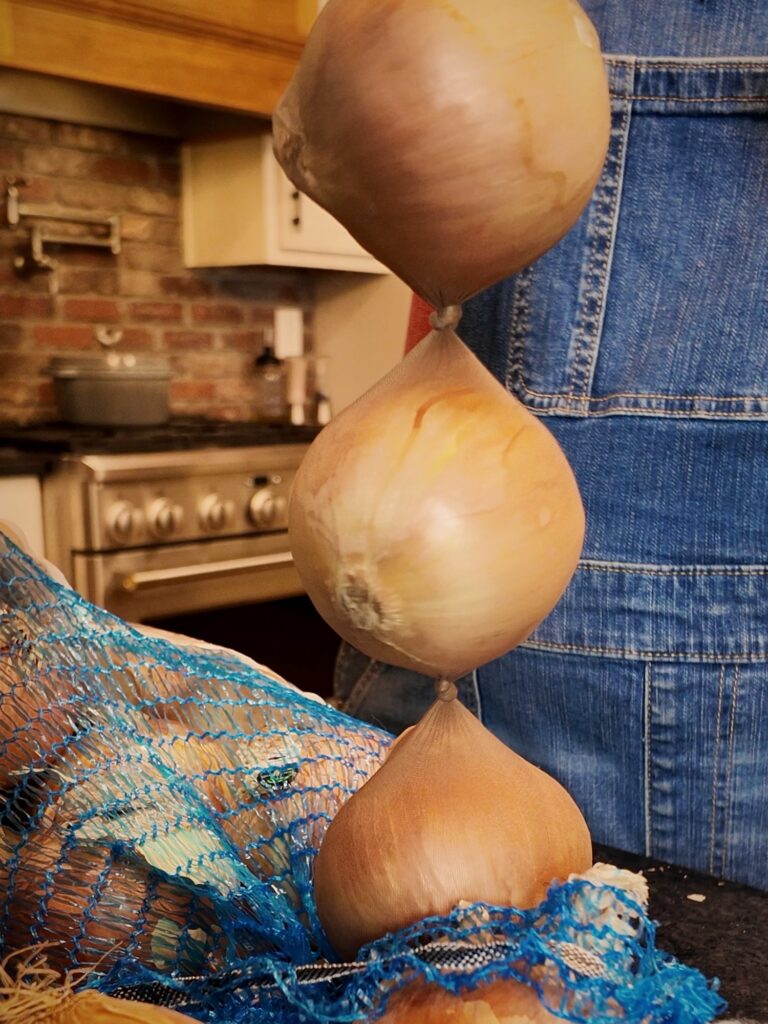
It’s a simple system, but it’s another example of why storage matters just as much as the purchase itself.
I Don’t Buy Everything at Azure
Azure is my primary supplier, but I don’t believe in buying everything from one store simply for convenience.
There are a few things I regularly get at Sam’s Club instead.
What I Buy at Sam’s
For us, that mainly means:
- cream cheese
- tortilla chips
- marked-down meat when I find a good deal
That’s about it.
One of my favorite ways to save on meat at Sam’s is shopping earlier in the day and checking for clearance packages.
If I find discounted meat we aren’t going to eat immediately, I bring it home and freeze it.
Buying food at the right time and preserving it for later can save just as much money as buying a giant package.
One Thing I Skip at Sam’s: Paper Towels
This isn’t technically a pantry staple, but it’s worth mentioning because warehouse clubs aren’t automatically the best choice for everything.
I skip Sam’s paper towels.
I’ve found the Dollar General brand to be stronger and more absorbent, and they’ve been worth the switch for us.
That’s a good reminder to compare the actual product—not just the size of the package.
Buying Beef in Bulk
We also buy beef in bulk rather than buying all of our beef one package at a time from the grocery store.
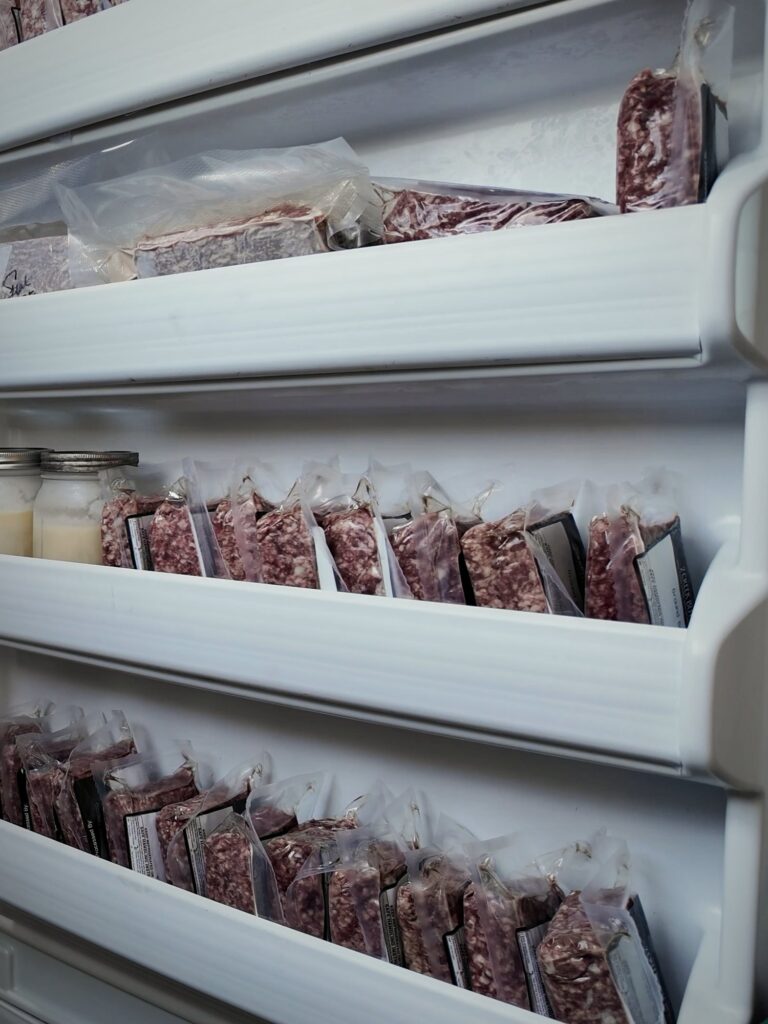
But I have one very strong recommendation before you commit to buying a half beef:
Taste the farmer’s beef first.
Don’t buy half a cow from someone without trying the meat.
If you don’t like it, that’s a very long haul to finish.
We did exactly that before choosing the beef we buy.
Our preference is grass-fed, grain-finished beef.
We tried grass-fed, grass-finished beef and decided the flavor wasn’t for us. To our family, that stronger flavor is closer to something we’d expect from venison. If that’s what we’re after, we’d rather harvest more deer than pay a premium for beef with a similar flavor profile.
That’s entirely a matter of preference.
Someone else may love grass-finished beef.
The important part is tasting that farmer’s beef before committing hundreds of pounds of freezer space and a substantial amount of money to it.
Questions to Ask Before Buying Half a Beef
Before committing, find out:
- how the beef is raised
- how it is finished
- whether you can purchase a small amount to try first
- price per pound and what weight that price is based on
- estimated hanging weight
- processing fees
- slaughter fees, if separate
- how the meat will be packaged
- which cuts you can choose
- when it will be ready
- how much freezer space you’ll need
Bulk beef can be an excellent way to stock your freezer, but it’s a much bigger commitment than buying a 25-pound bag of flour.
Do your homework first.
Use Your Online Cart as Your Shopping List
I don’t keep a separate running Azure list.
When something starts getting low, I immediately add it to my Azure cart.
Then it’s already waiting for me whenever I’m ready to place my next order.
If it’s something I don’t buy from Azure, I put it in the Notes app on my phone.
That’s about as complicated as my system gets.
I don’t want pantry management to become another full-time job.
Your Ordering Schedule May Change as Your Pantry Grows
For years, I ordered from Azure monthly.
As we accumulated a deeper supply of the foods we regularly use, there was less reason to order that often.
Now I’m ordering roughly every two months.
I’m even considering moving to once a quarter.
That is one of the benefits of building a pantry gradually. At first you’re replacing things constantly. Eventually you reach a point where you’ve built enough depth into your supply that you can simply refill what is getting low.
It becomes maintenance instead of starting over every month.
Make More of the Foods You Normally Buy
Bulk ingredients become even more valuable when you use them to make foods you’d otherwise purchase already prepared.
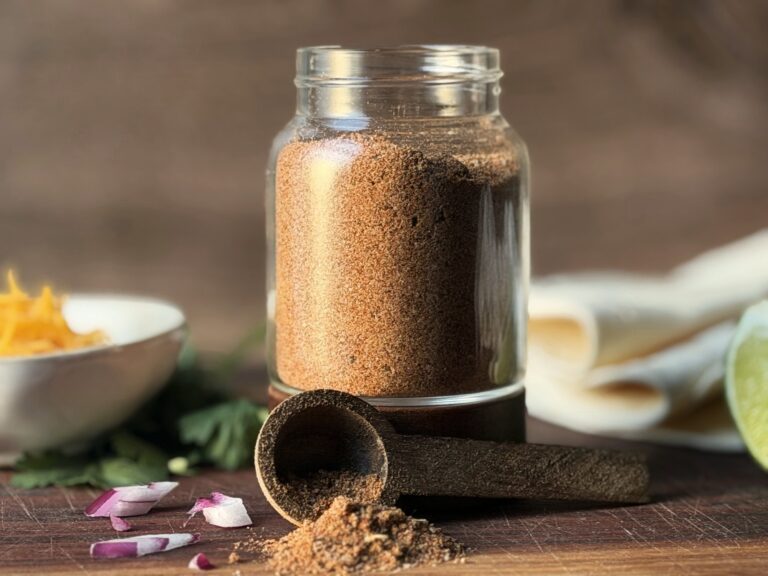
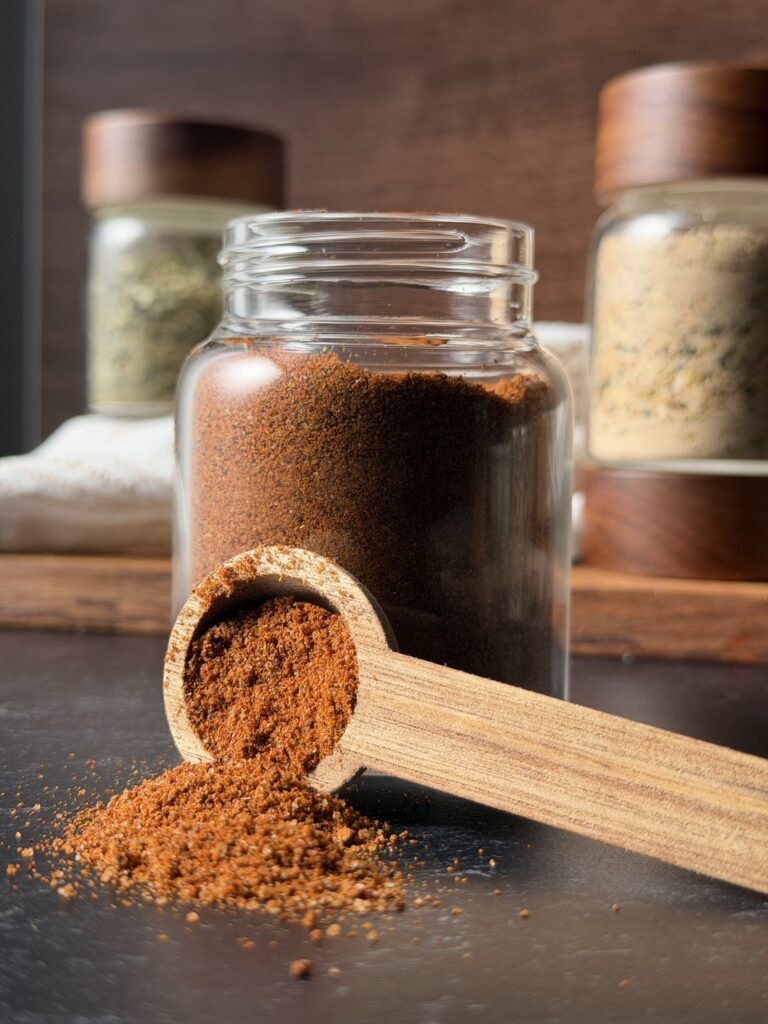
A stocked spice pantry, for example, means I can make:
- taco seasoning
- chili seasoning
- chicken bouillon powder
- beef bouillon powder
- cream of soup mix
- Italian dressing mix
- onion soup mix
- burger seasoning
You’re not just saving on the flour, salt or spices themselves.
You’re turning those inexpensive basic ingredients into foods you would otherwise buy repeatedly.
That’s where a stocked pantry really starts working for you.
You Don’t Have to Do It All at Once
If there’s one thing I want people to take away from this, it’s that you don’t need thousands of dollars, a giant pantry or six months of food before bulk buying starts helping you.
Start with the next thing you run out of.
Instead of buying your normal amount, buy a little more.
Maybe that’s 10 pounds instead of five.
Store it correctly.
Use it.
Then do the same thing with another staple the next month.
As those basics stop showing up on every grocery bill, use some of the room in the budget to stock the next item.
Eventually you’ll look around and realize you’ve built a pantry.
Not because you bought everything at once, but because you stopped starting from zero every time you went grocery shopping.
And that’s really the point.
Your pantry can do more.



4 Comments