
Homemade Italian Seasoning
This post may contain affiliate links, which means I may earn a small commission at no additional cost to you. As an Amazon Associate I earn from qualifying purchases.
One jar. Countless meals. That’s what I love about keeping homemade seasoning blends in my pantry.
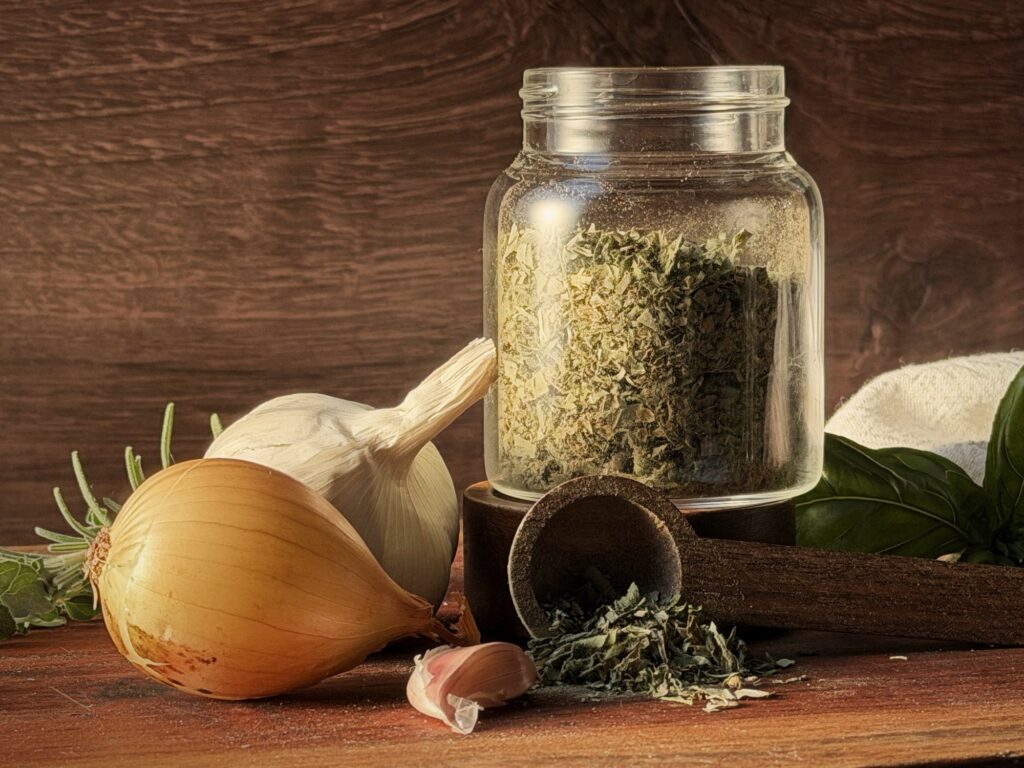
This homemade Italian seasoning combines six dried herbs into one simple blend you can use on everything from garlic bread and pasta to chicken, roasted vegetables, and homemade pizza.
There’s no salt, sugar, or other added ingredients. Just herbs you can measure, mix, and keep on hand whenever you need them.
And if you’re already stocking dried herbs in your pantry, there’s a good chance you have everything you need to make it.
Why Make Your Own Italian Seasoning?
I like keeping seasoning blends ready to use because it makes everyday cooking easier. Instead of pulling out several containers every time I want Italian herbs, I can reach for one jar.
This recipe is especially useful because:
- It uses six dried herbs. No specialty ingredients or complicated preparation.
- It’s salt-free. You can season your food with salt separately, depending on what you’re cooking.
- It’s versatile. Use it in sauces, marinades, on meats, or sprinkled over vegetables.
- It’s easy to scale. Make a small batch or multiply the measurements to stock your pantry.
- You control the ingredients. No fillers or extra seasonings you don’t want.
This is exactly the kind of recipe I like for Pantry to Plate: simple ingredients that can do more than one job.
Homemade Italian Seasoning Ingredients
Makes: approximately ¾ cup
You’ll need:
- 3 tablespoons dried oregano
- 3 tablespoons dried basil
- 3 tablespoons dried parsley
- 2 tablespoons dried marjoram
- 1 tablespoon ground thyme
- 2 teaspoons crushed dried rosemary
Each herb contributes something different to the finished blend.
Oregano provides the familiar savory flavor associated with Italian seasoning.
Basil adds a slightly sweet, aromatic flavor that works especially well with tomatoes.
Parsley provides a mild herbal base.
Marjoram has a softer, slightly sweeter flavor than oregano and helps round out the blend.
Thyme adds an earthy, savory note.
Rosemary brings a stronger, woodsy flavor that works particularly well with roasted meats, potatoes, and bread.
Together, they make an all-purpose herb blend you can keep beside your other everyday seasonings.
How to Make Homemade Italian Seasoning
Step 1: Measure the herbs
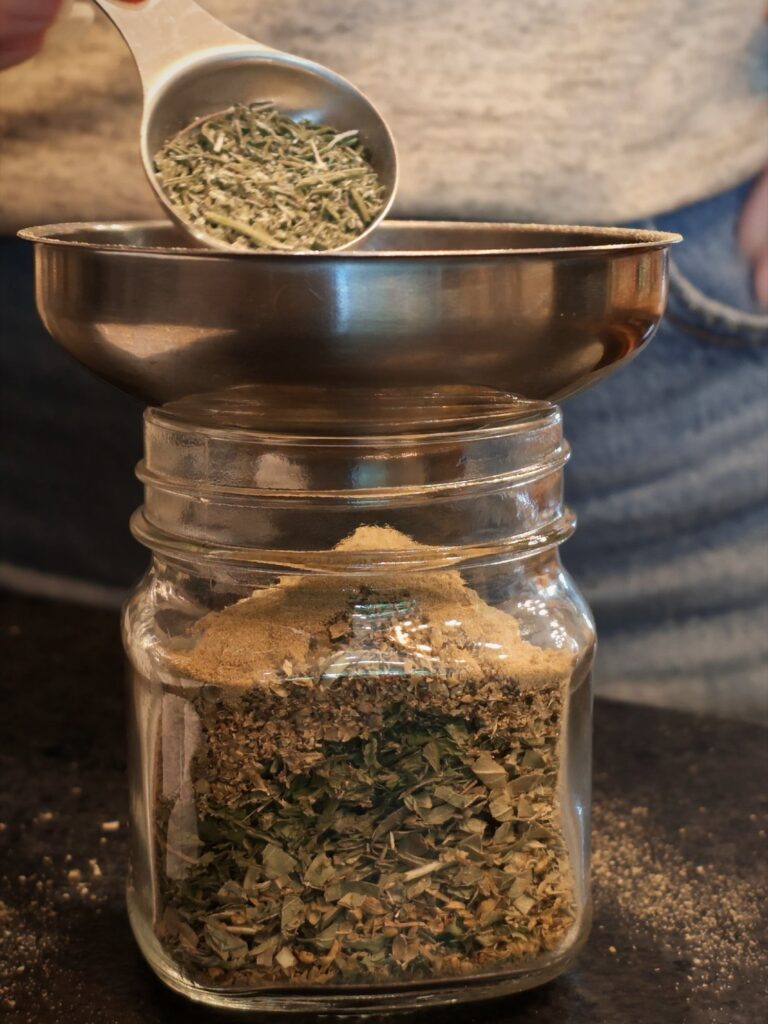
Measure all six dried herbs into a clean, dry bowl or directly into a mason jar.
Step 2: Combine
Stir the herbs together until evenly distributed.
If you’re using a mason jar, secure the lid and give it a good shake.
Step 3: Store
Transfer the seasoning to an airtight jar and keep it in a cool, dry cabinet away from direct sunlight and heat.
That’s it. Your Italian seasoning is ready to use.
My Favorite Way to Use It: Garlic Bread
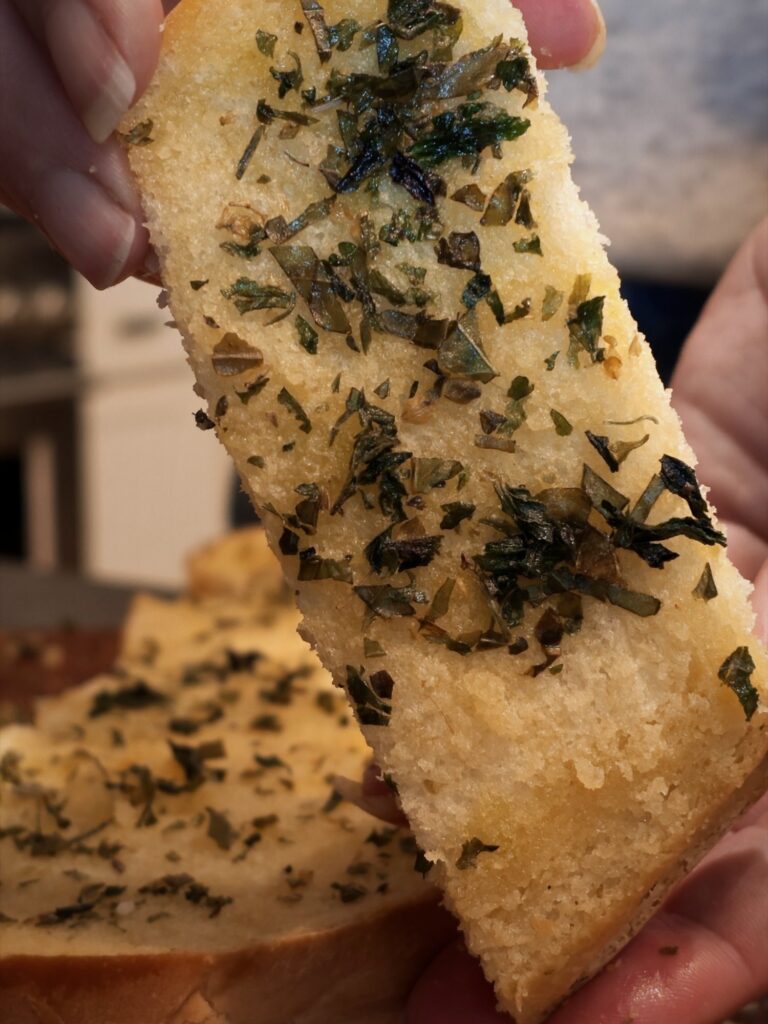
For the short video, I used this seasoning on French bread, and it’s a great example of how useful a homemade herb blend can be.
Slice a loaf of French bread, spread with softened butter, and sprinkle the Italian seasoning generously over the top.
Toast or bake until the bread is warm and the edges are golden.
You can also add fresh garlic, garlic powder, or Parmesan cheese if you want a more traditional garlic bread flavor.
Because the seasoning itself doesn’t contain salt or garlic, you can adjust those ingredients depending on how you’re serving the bread.
Other Ways to Use Homemade Italian Seasoning
This blend isn’t just for pasta sauce.
Chicken: Sprinkle over chicken breasts, thighs, or a whole roasted chicken with olive oil and salt.
Pasta: Stir into tomato sauce, cream sauces, or pasta dishes that need more herbal flavor.
Pizza: Add to homemade pizza sauce or sprinkle over the top before baking.
Roasted vegetables: Toss potatoes, carrots, zucchini, or other vegetables with oil, salt, and Italian seasoning before roasting.
Marinades: Combine with olive oil, vinegar or lemon juice, garlic, and salt for a simple marinade.
Bread: Mix into softened butter for garlic bread, or use it to season homemade bread dough.
Soups: Add to tomato-based soups, vegetable soups, or other savory dishes.
Start with a small amount and adjust to taste. Because the herbs are concentrated and dried, you can always add more as the dish cooks.
Can You Substitute Fresh Herbs?
This recipe is designed for dried herbs, not fresh ones.
Fresh herbs contain moisture and won’t store safely as a shelf-stable dry seasoning blend.
If you’re growing herbs in your garden, you can dry them thoroughly before adding them to the jar.
Make sure they’re completely dry before mixing and storing.
How to Store Homemade Italian Seasoning
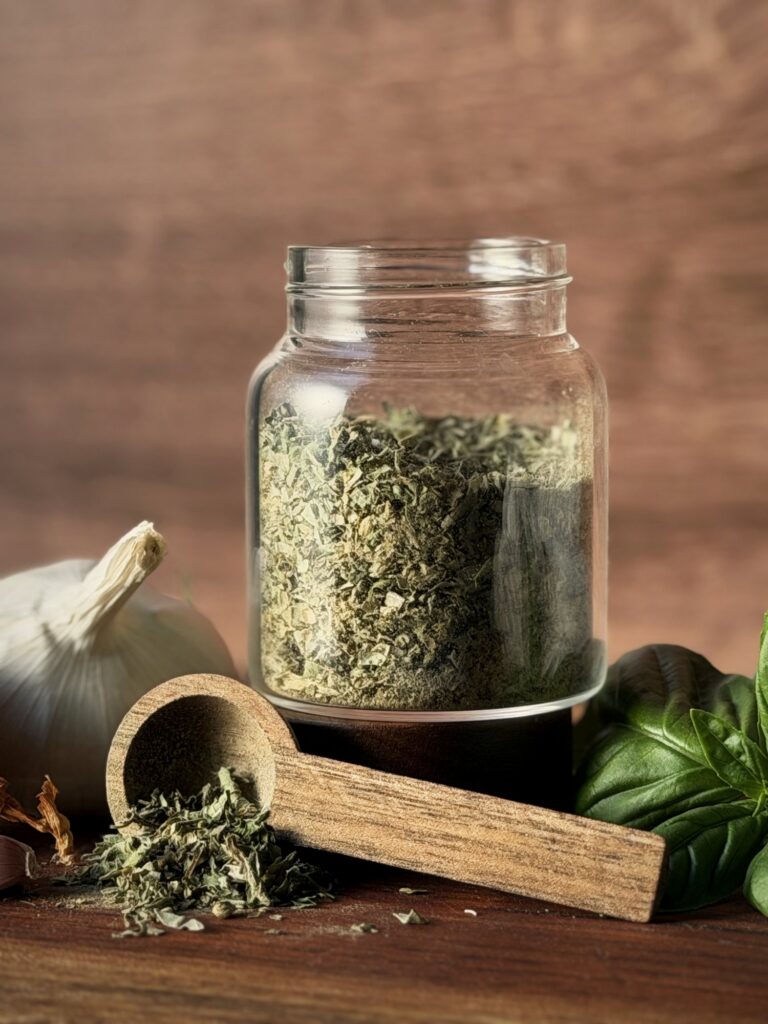
Store the finished blend in an airtight glass jar or spice container in a cool, dark, dry location.
For the best flavor, try to use it within six months to a year, depending on the freshness of your dried herbs.
Dried herbs gradually lose their aroma and potency, even when they’re stored properly.
If the seasoning has very little smell when you rub a pinch between your fingers, it’s probably time to make a fresh batch.
Avoid storing the jar directly beside the stove, where heat and steam can shorten its useful life.
Frequently Asked Questions
What is Italian seasoning made of?
Italian seasoning is generally a blend of dried herbs such as oregano, basil, thyme, rosemary, parsley, and marjoram. The exact combination varies by recipe and brand.
Is homemade Italian seasoning the same as Italian dressing mix?
No. Italian seasoning is primarily a blend of herbs, while Italian dressing mix usually contains additional ingredients such as garlic powder, onion powder, salt, and sugar.
If you’re making homemade salad dressing, use a dressing mix formulated for that purpose.
Does Italian seasoning contain salt?
This homemade recipe doesn’t. That makes it easy to control the salt level in whatever you’re cooking.
Can I use Italian seasoning instead of oregano?
Yes, in many savory recipes. Just remember that Italian seasoning includes several herbs, so the finished flavor will be more complex than oregano alone.
How much homemade Italian seasoning should I use?
For many dishes, start with 1 teaspoon and adjust to taste. Larger recipes, such as a pot of sauce or a pan of roasted vegetables, may need more.
Can I double the recipe?
Absolutely. Simply double each ingredient and mix everything together in a larger jar.
Final Thoughts
Making your own Italian seasoning is a small pantry project, but it’s one that pays off every time you cook.
Measure six herbs, shake them together, and you’ve got a blend ready for all kinds of everyday meals.
One jar. Countless meals.
Your pantry can do more.
A Few Things I Use
- Glass spice jars – for storing the finished seasoning blend.
- Magnetic measuring spoons – for measuring each of the dried herbs.
- OXO stainless steel mixing bowls – if you’d rather stir the herbs together in a bowl.

Homemade Italian Seasoning
Ingredients
Method
- Add all six dried herbs to a clean, dry bowl or mason jar.
- Stir or shake until thoroughly combined.
- Transfer to an airtight container, if necessary.
- Store in a cool, dry location away from direct sunlight and heat.
- Use to season chicken, pasta, pizza, vegetables, garlic bread, marinades, and more.
Notes
More Homemade Seasoning Recipes
If you’re working on replacing store-bought seasoning packets and blends with homemade versions, these are a few more recipes worth keeping in your pantry:
- Homemade Taco Seasoning
- Homemade Fajita Seasoning
- Homemade Poultry Seasoning
- Homemade Ranch Seasoning Mix
- Homemade Onion Soup Mix
- Homemade Italian Dressing Mix
- Homemade Pumpkin Pie Spice
- 5 Homemade Seasoning Mixes to Make Instead of Buying
- Homemade Apple Pie Spice
- Homemade Cream of Soup Mix
- Homemade Everything Bagel Seasoning
- Homemade Chicken Bouillon Powder
- Homemade Chili Seasoning
- Homemade Burger Seasoning
- Copycat Taco Bell Mild Sauce Recipe
- 5 Grocery Store Staples You Can Stop Buying
2 Comments