Homemade Poultry Seasoning
This post may contain affiliate links, which means I may earn a small commission at no additional cost to you. As an Amazon Associate I earn from qualifying purchases.
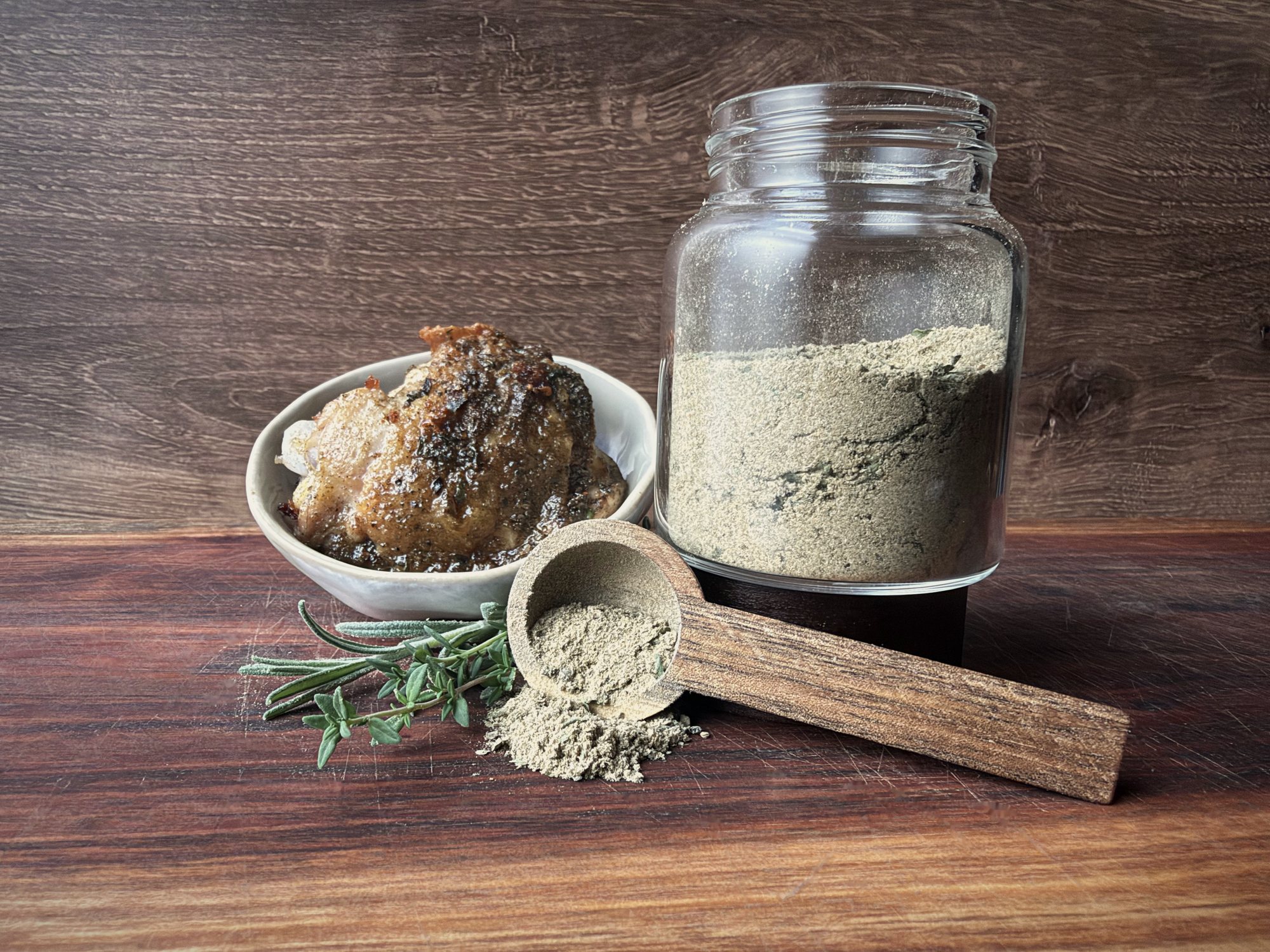
Poultry seasoning is one of those little spice jars that can sit in the cabinet for a long time, but when you need it, there really isn’t another blend that tastes quite the same.
The classic combination of sage and thyme instantly gives chicken and turkey that warm, savory flavor we associate with roast dinners and Thanksgiving. But I wanted my homemade version to have a little more depth than simply mixing together a handful of dried herbs.
This blend starts with the familiar sage-and-thyme base, then adds marjoram and rosemary along with onion, garlic, celery seed, black pepper, and just a touch of nutmeg.
The result is still unmistakably poultry seasoning, but it has a fuller, more savory flavor.
And because I leave the salt out, you can control the salt separately depending on how you’re using it.
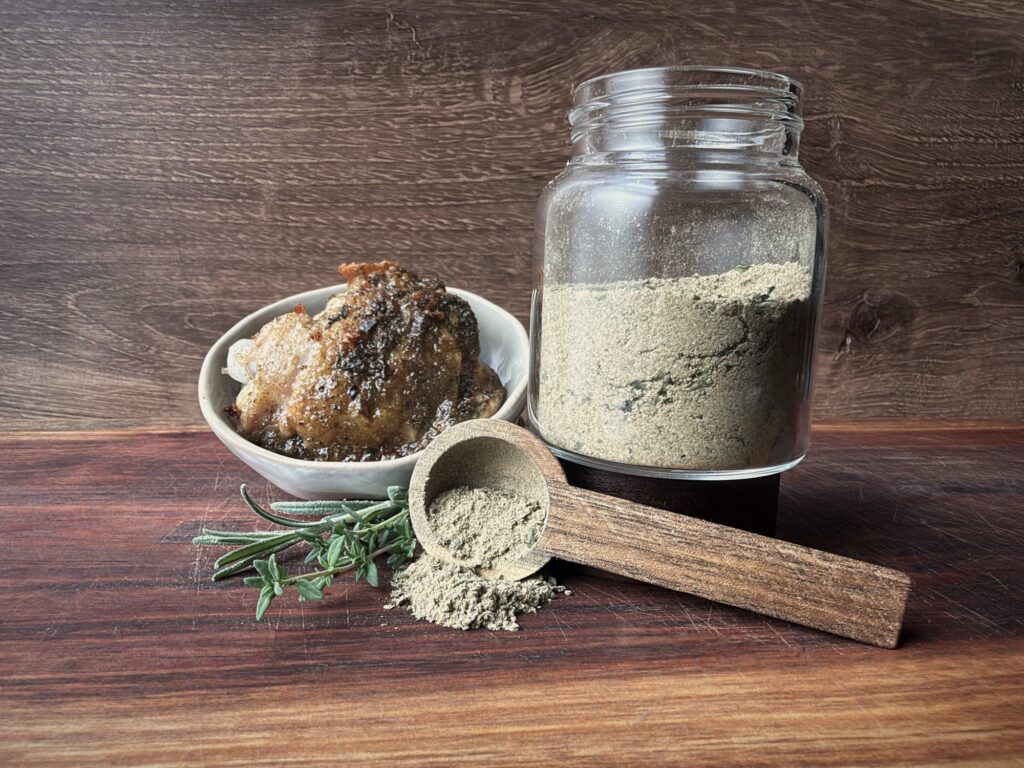
Why Make Poultry Seasoning at Home?
There are plenty of poultry seasoning blends at the grocery store, but this is an especially easy pantry staple to make yourself.
You only need a few minutes, and making your own lets you control both the flavor and the freshness of the blend.
I also like keeping this recipe salt-free. Chicken, turkey, stuffing, broth, gravy, and casseroles can all require very different amounts of salt. Keeping the seasoning separate means you aren’t locked into one salt level every time you use it.
This recipe also makes a relatively small batch — about 3/8 cup — which is plenty for a spice jar without making so much that you’ll be storing it forever.
What Is Poultry Seasoning?
Despite the name, poultry seasoning doesn’t contain poultry.
It’s simply a dried herb and spice blend traditionally used to season chicken and turkey.
Sage and thyme are usually the dominant flavors, with other herbs such as marjoram and rosemary rounding everything out.
My version keeps that traditional base but adds a few savory pantry ingredients to make the flavor more complete.
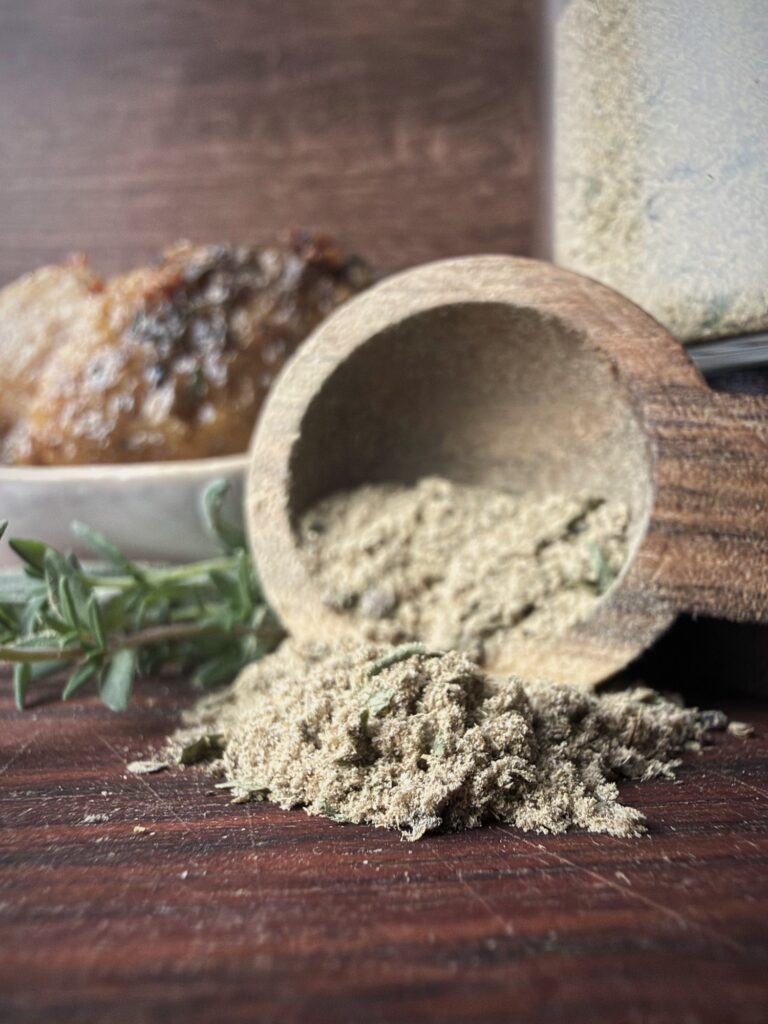
Ingredients
Rubbed Sage
Sage is the flavor most people immediately associate with poultry seasoning.
I’m using rubbed sage, which is dried sage that has been crumbled into a light, fluffy texture. It is much less concentrated by volume than finely ground sage, so don’t substitute equal amounts of ground sage.
Thyme
Thyme balances the sage and gives the blend another classic savory herb flavor.
I used powdered thyme when developing this recipe. If you’re using coarser dried thyme leaves, the volume may need to be adjusted.
Marjoram
Marjoram is slightly sweet and mild and helps soften some of the stronger flavors of sage and rosemary.
Rosemary
Rosemary can quickly overpower a seasoning blend, so this recipe uses just a small amount of powdered rosemary.
You should notice it in the background without having the entire blend taste like rosemary.
Parsley
Parsley adds a mild herb flavor and a little color to the finished seasoning.
Onion and Garlic Powder
These aren’t always included in traditional poultry seasoning, but they’re one of the reasons I like this blend.
They add savory depth without turning it into an onion or garlic seasoning.
Celery Seed
Celery is a natural fit with chicken, broth, stuffing, and gravy. A small amount of celery seed adds another layer of savory flavor without being obvious.
Black Pepper
Black pepper gives the seasoning a little warmth without adding heat.
Nutmeg
Don’t skip this one just because it sounds unusual.
A very small amount of nutmeg adds warmth and rounds out the herbs without making the seasoning taste sweet.
Homemade Poultry Seasoning Recipe
Prep time: 5 minutes
Yield: About 3/8 cup, or approximately 6 tablespoons
Ingredients
- 2 tablespoons rubbed sage
- 2 1/2 teaspoons powdered thyme
- 1 tablespoon dried marjoram
- 1/2 teaspoon powdered rosemary
- 2 teaspoons dried parsley
- 1 teaspoon onion powder
- 1 teaspoon garlic powder
- 1 teaspoon ground black pepper
- 1/2 teaspoon celery seed
- 1/4 teaspoon ground nutmeg
Instructions
- Add all of the herbs and spices to a small bowl.
- Stir or whisk thoroughly until evenly combined.
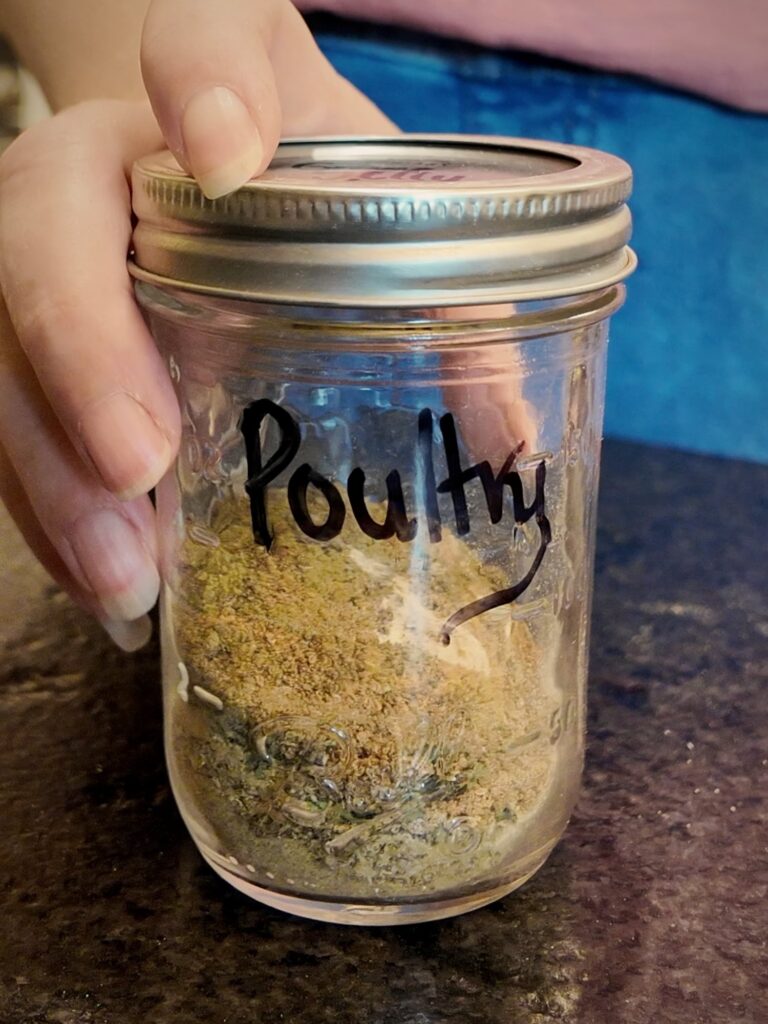
- Transfer the poultry seasoning to an airtight spice jar.
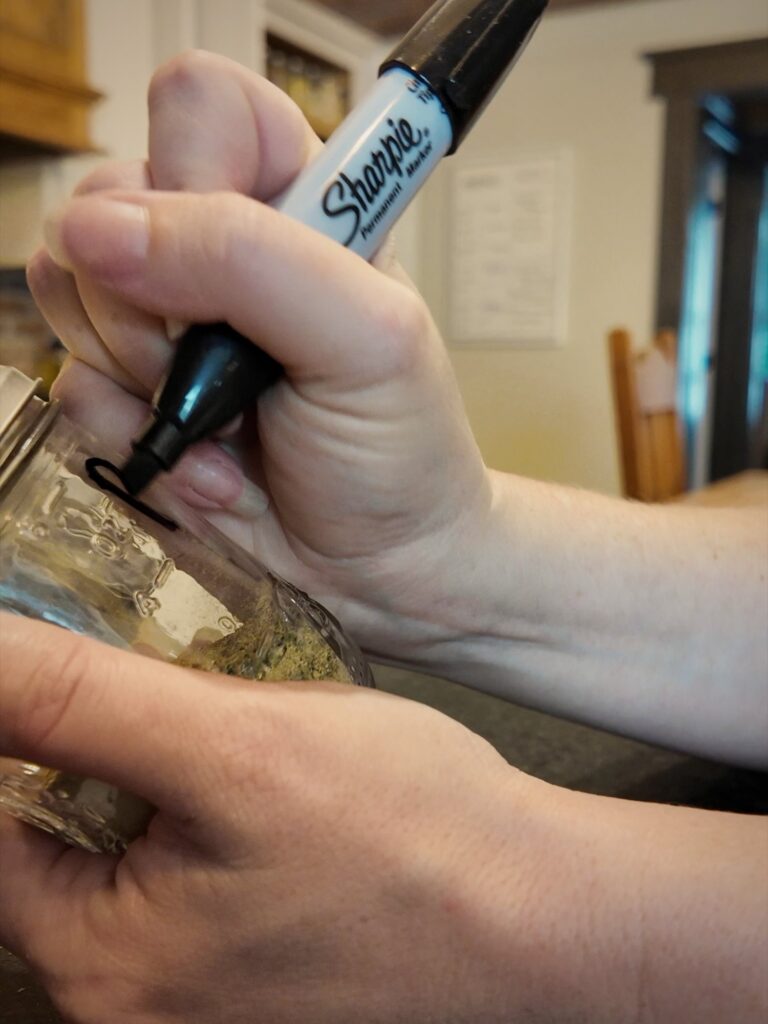
- Label and store in a cool, dry pantry away from heat and direct sunlight.
- Shake or stir before using, since the finer spices can settle during storage.
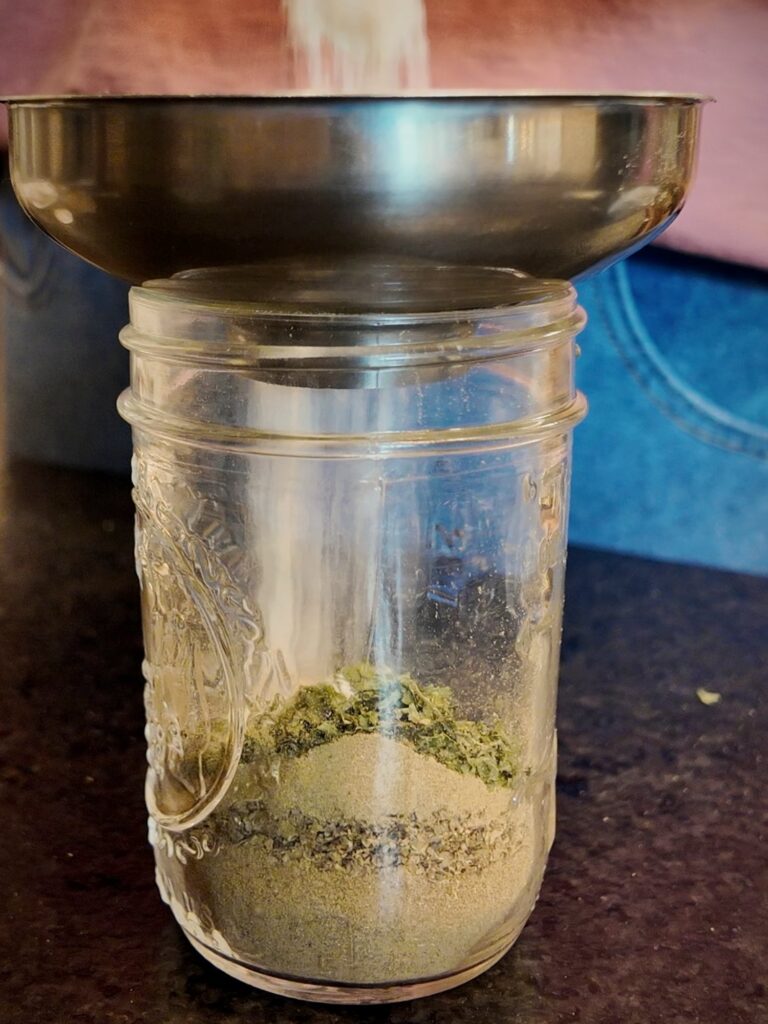
How Much Poultry Seasoning Should I Use?
Poultry seasoning is fairly concentrated, so more isn’t necessarily better.
When I tested this blend on chicken, I preferred a lighter coating over a heavy herb crust.
As a starting point, use approximately:
2 to 2 1/2 teaspoons poultry seasoning per pound of chicken
You can always add more depending on the recipe.
Because this seasoning contains no added salt, salt your food separately to taste.
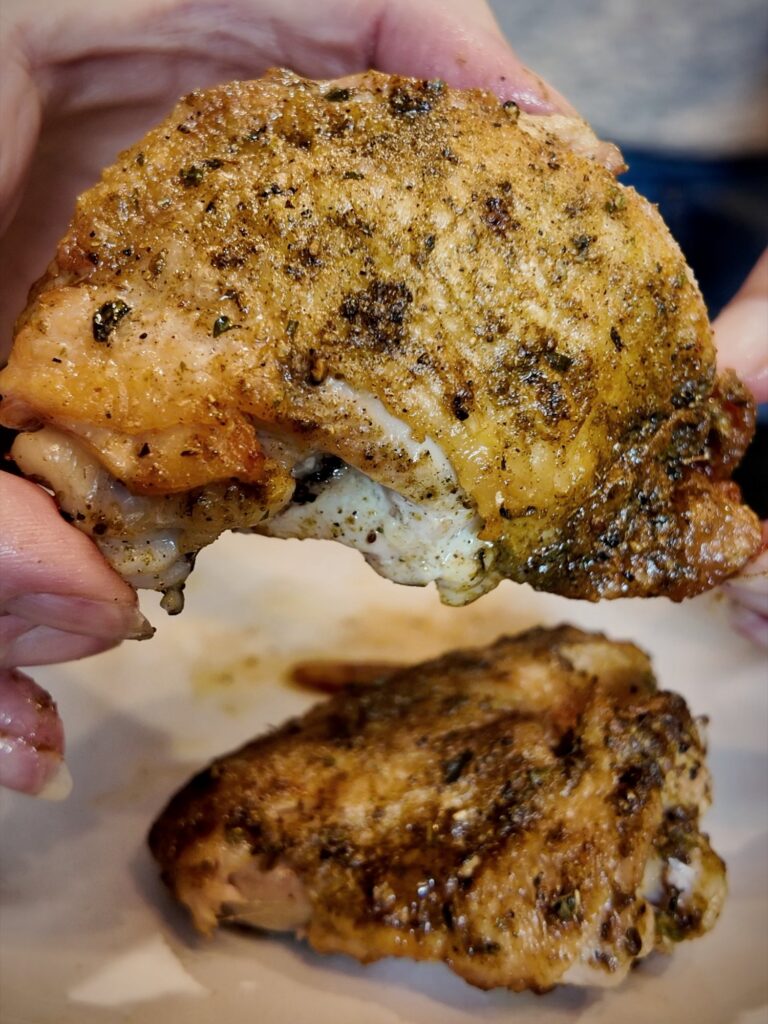
How to Use Poultry Seasoning
This blend isn’t limited to a Thanksgiving turkey. Keep it in your pantry for:
- Roast chicken
- Spatchcock chicken
- Turkey
- Chicken thighs or drumsticks
- Stuffing or dressing
- Chicken gravy
- Homemade broth
- Chicken soup
- Casseroles
- Roasted vegetables
- Savory breads or biscuits
For skillet chicken, I like to salt and sear the chicken first, then add the poultry seasoning after flipping before finishing it in the oven. That keeps the finely ground herbs, onion powder, and garlic powder from scorching against a very hot skillet.
Why Isn’t There Salt in Poultry Seasoning?
I deliberately leave it out.
If you’re seasoning plain chicken, you’ll probably need a good amount of salt. But if you’re adding poultry seasoning to broth, gravy, stuffing, or a brined turkey, those foods may already contain plenty.
Keeping the blend salt-free gives you much more control.
It also means you’re paying for a jar full of herbs and spices rather than salt.
Rubbed Sage vs. Ground Sage
These aren’t interchangeable tablespoon for tablespoon.
Rubbed sage is light and fluffy, while ground sage is very fine and much more concentrated.
This recipe was developed using 2 tablespoons rubbed sage.
If you only have ground sage, start with considerably less. I’d begin around 2 teaspoons ground sage, mix the blend, and adjust from there.
Can I Use Dried Thyme and Rosemary Leaves Instead?
Yes, although this specific recipe was tested with powdered thyme and powdered rosemary.
If your herbs are much coarser, you can briefly crush them with a mortar and pestle before mixing.
You don’t need the entire seasoning to be powdered. A little texture is perfectly fine.
How Long Does Homemade Poultry Seasoning Last?
For the best flavor, I’d aim to use it within about 6 to 12 months.
Dried spices don’t suddenly become unusable after that point, but their aroma and flavor gradually fade.
Store your poultry seasoning in an airtight container somewhere cool, dark, and dry.
A Pantry Staple Worth Making Yourself
Poultry seasoning may come in one of the smallest bottles in the spice aisle, but a little goes a long way.
Making it yourself takes only a few minutes, gives you control over every ingredient, and leaves you with a versatile savory seasoning you can reach for far beyond Thanksgiving.
Once the jar is mixed, it’s ready whenever chicken, turkey, stuffing, gravy, or a cozy pot of soup needs a little more flavor.
Your pantry can do more.
A Few Things I Use
- Glass spice jars – airtight storage for homemade seasoning blends.
- Canning funnel – keeps dry mixes off the counter when filling jars.
- Measuring spoons – for measuring each herb and spice in the blend.
- Rubbed sage – organic dried rubbed sage leaf.
- Cast iron skillet – for searing chicken before finishing it in the oven.
Homemade Poultry Seasoning
Ingredients
Method
- Add all of the herbs and spices to a small bowl.
- Stir or whisk thoroughly until evenly combined.
- Transfer the poultry seasoning to an airtight spice jar.
- Label and store in a cool, dry pantry away from heat and direct sunlight.
- Shake or stir before using, since the finer spices can settle during storage.
Notes
More Pantry to Plate Recipes
- Homemade Chicken Bouillon Powder
- Homemade Onion Soup Mix
- Homemade Burger Seasoning
- Homemade Chili Seasoning
- Homemade Everything Bagel Seasoning
- Homemade Fajita Seasoning
- Homemade Taco Seasoning
- Homemade Ranch Seasoning Mix
- Homemade Italian Seasoning
- Homemade Italian Dressing Mix
- Homemade Seasoned Salt
- Homemade Lemon Pepper Seasoning
- 5 Homemade Seasoning Mixes to Make Instead of Buying
- Browse all Pantry Staples
- Homemade Pumpkin Pie Spice