
Homemade Lemon Pepper Seasoning
This post may contain affiliate links, which means I may earn a small commission at no additional cost to you. As an Amazon Associate I earn from qualifying purchases.
This homemade lemon pepper seasoning is bright, peppery, and actually tastes like lemon. It uses six simple ingredients and takes just a few minutes to mix.
I developed this one by testing several lemon-to-pepper ratios side by side on chicken wings. The version I kept uses equal amounts of lemon peel zest and freshly ground black pepper. The lemon hits first when you take a bite, then the pepper follows behind it.
That was the balance I wanted.
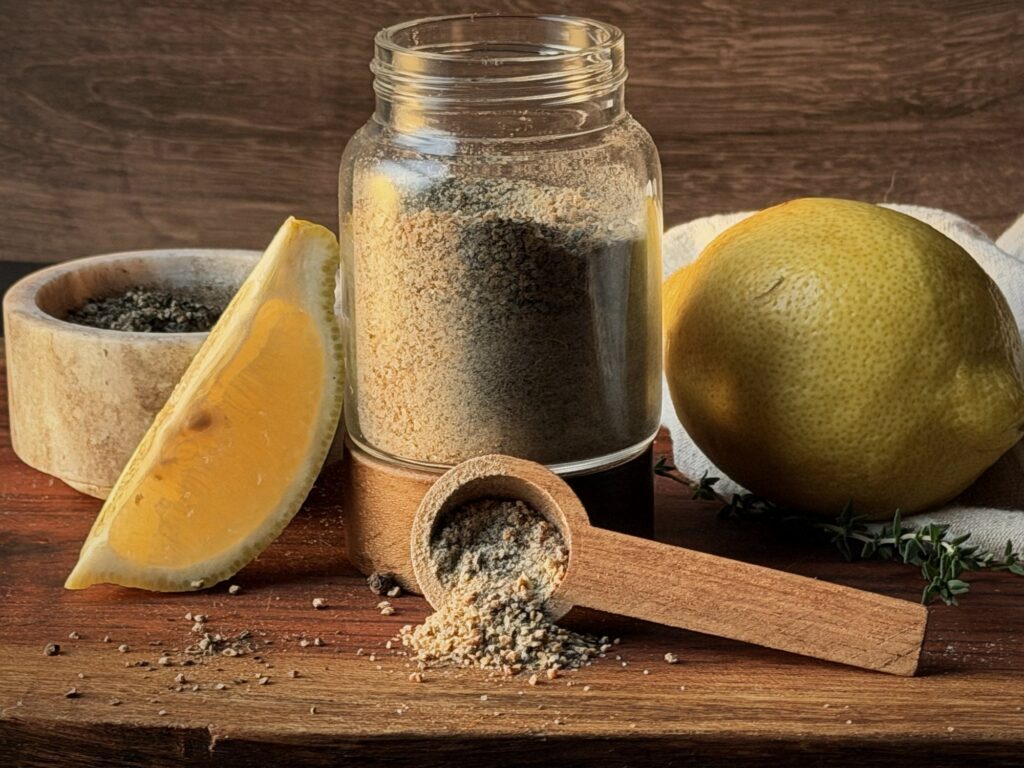
Why I Make My Own Lemon Pepper Seasoning
Lemon pepper sounds simple, but store-bought versions can vary quite a bit.
When I tasted a store-bought blend next to one of my test batches, mine was noticeably more lemon-forward. Part of that comes from using lemon peel zest instead of relying on a finer commercial-style seasoning blend.
I wanted this recipe to taste clearly like both parts of its name.
Not just pepper with a little lemon in the background.
The final blend held onto that lemon flavor even after cooking on chicken wings, which was important to me. The lemon was still the first thing I noticed in the bite, followed by the pepper.
Homemade Lemon Pepper Ingredients
You only need six ingredients:
- 1/4 cup lemon peel zest
- 1/4 cup freshly ground black pepper, medium-fine
- 2 tablespoons fine salt
- 1 tablespoon garlic powder
- 1 1/2 teaspoons onion powder
- 1 1/2 teaspoons sugar
That is the exact ratio I settled on after testing.
The small amount of sugar does not make the blend taste sweet. It stays in the background and helps round out the lemon and pepper.

The Black Pepper Matters
Freshly ground black pepper gave me the flavor I wanted in this recipe.
For testing, I used freshly ground pepper that was fairly fine but not powdery. It also wasn’t coarse or chunky.
Think medium-fine: small visible pieces of pepper, but fine enough to distribute evenly through the seasoning.
For a full batch, grinding 1/4 cup of pepper by hand with a pepper mill can get tedious. A spice grinder works well for this. Pulse whole peppercorns until they look similar to a medium-fine hand grind, then measure the pepper after grinding.
If you only have store-bought finely ground black pepper, use:
3 tablespoons finely ground black pepper
instead of the 1/4 cup freshly ground amount.
Finely ground pepper packs more densely into a measuring spoon or cup and can taste stronger, so I would not use a full 1/4 cup of very finely ground pepper as a direct substitute.
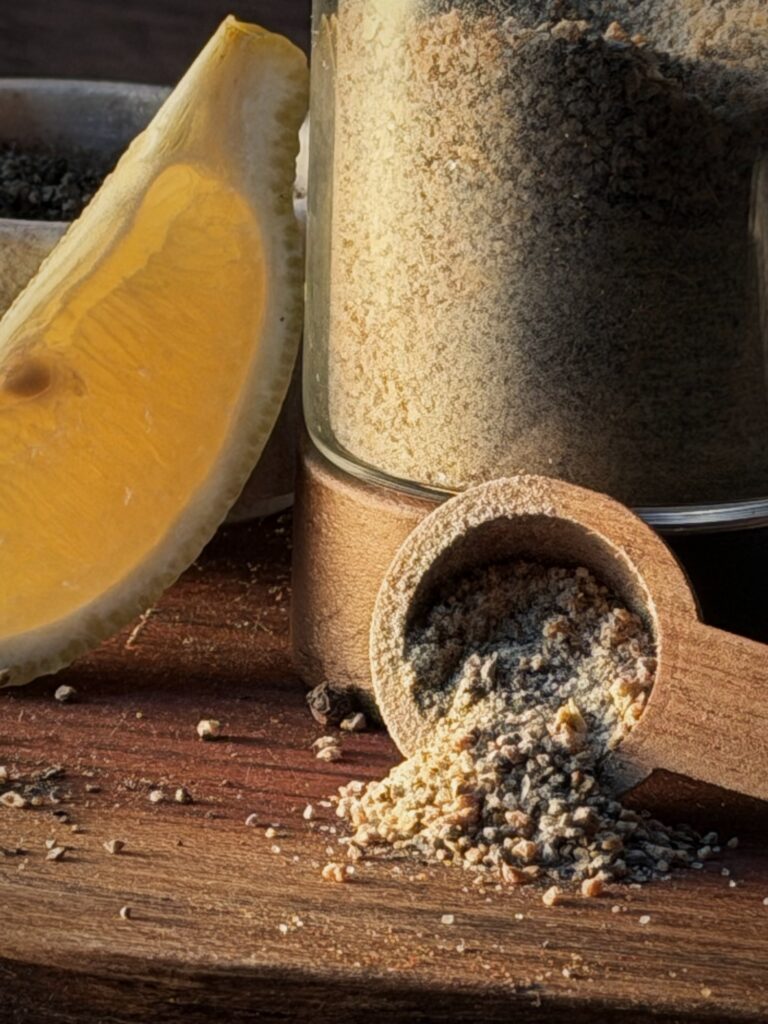
How I Tested This Lemon Pepper Seasoning
I didn’t want to make one batch, decide it was good enough, and call it finished.
For the first test, I divided chicken wings into three small batches and cooked all three at the same time so the cooking method wouldn’t become another variable.
The three versions changed the lemon-to-pepper balance:
- One was more pepper-forward.
- One was balanced.
- One leaned more heavily into the lemon.
The middle version was clearly the best of those three.
It used:
- 1 teaspoon lemon peel zest
- 3/4 teaspoon freshly ground black pepper
- 1/2 teaspoon fine salt
- 1/4 teaspoon garlic powder
- 1/8 teaspoon onion powder
- 1/8 teaspoon sugar
That batch was already good.
The lemon carried through the cook, and when I tasted the finished wing, the lemon hit first and the pepper followed.
But because it was so close, I wanted to know whether taking the lemon and pepper all the way to a 1:1 ratio would improve it.
So I made one more test.
That version used:
- 1 teaspoon lemon peel zest
- 1 teaspoon freshly ground black pepper
- 1/2 teaspoon fine salt
- 1/4 teaspoon garlic powder
- 1/8 teaspoon onion powder
- 1/8 teaspoon sugar
That was the one.
I didn’t feel like anything else needed adjusting.
The 1:1 lemon-to-pepper ratio gave me a strong lemon flavor up front, followed by the pepper, while the garlic, onion, salt, and sugar stayed in the background.
I scaled that exact ratio up for the full recipe below.
Why I Don’t Give an Exact Amount Per Pound
During testing, I weighed both the wings and the seasoning so I could see how much I naturally used.
That was useful for development, but wings aren’t a great food for establishing one universal seasoning rate. They have a lot of surface area compared with the amount of meat, and bone-in wings behave very differently from chicken breasts, potatoes, vegetables, or fish.
So rather than publish a number that sounds precise but isn’t useful across different foods, I keep the directions simple:
Season to taste.
That’s how I use it.
Add enough to give the food an even coating and adjust based on what you’re cooking and how strongly seasoned you like it.
How to Make Homemade Lemon Pepper Seasoning
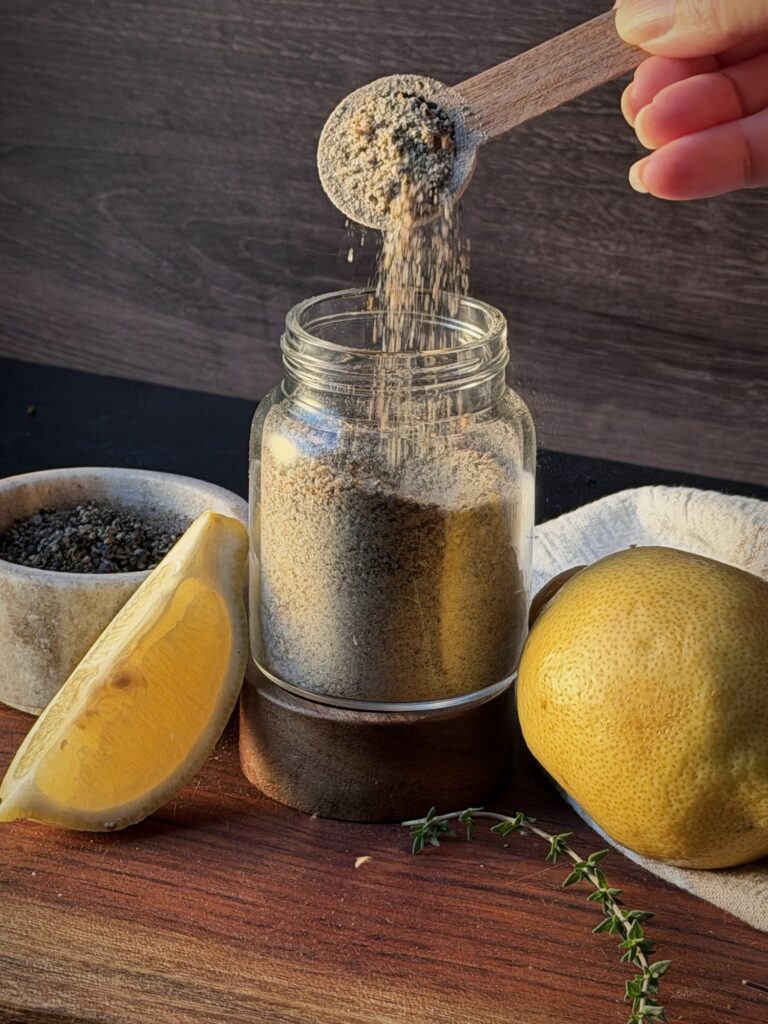
Add the lemon peel zest, freshly ground black pepper, fine salt, garlic powder, onion powder, and sugar to a bowl.
Stir thoroughly until the ingredients are evenly distributed.
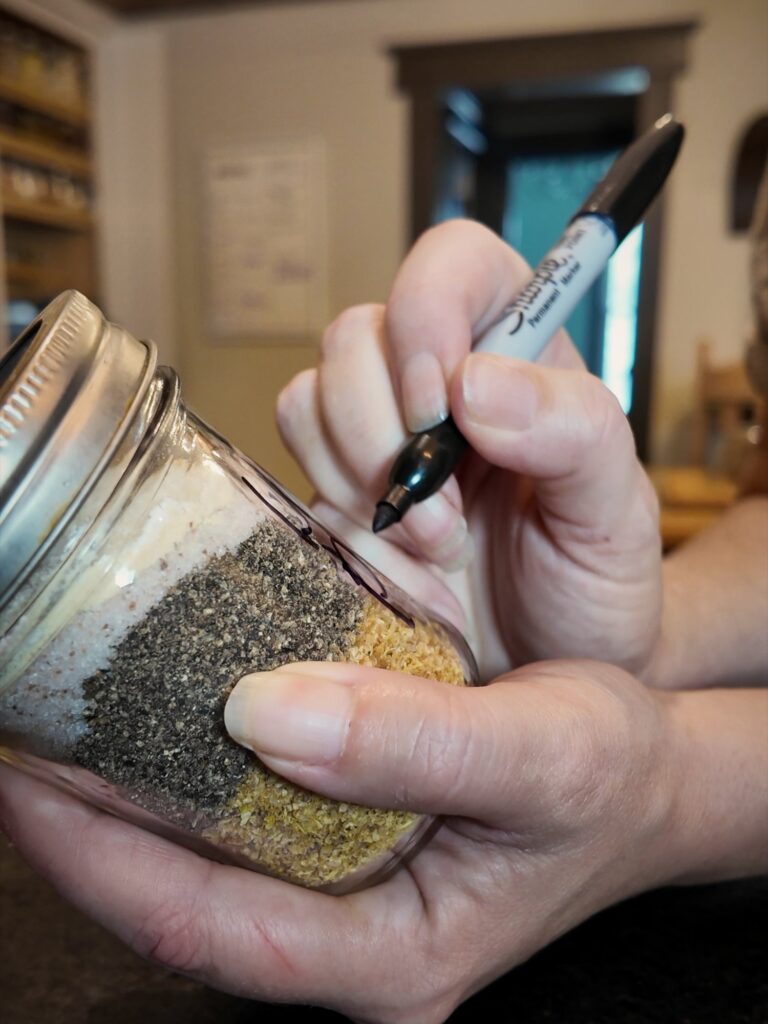
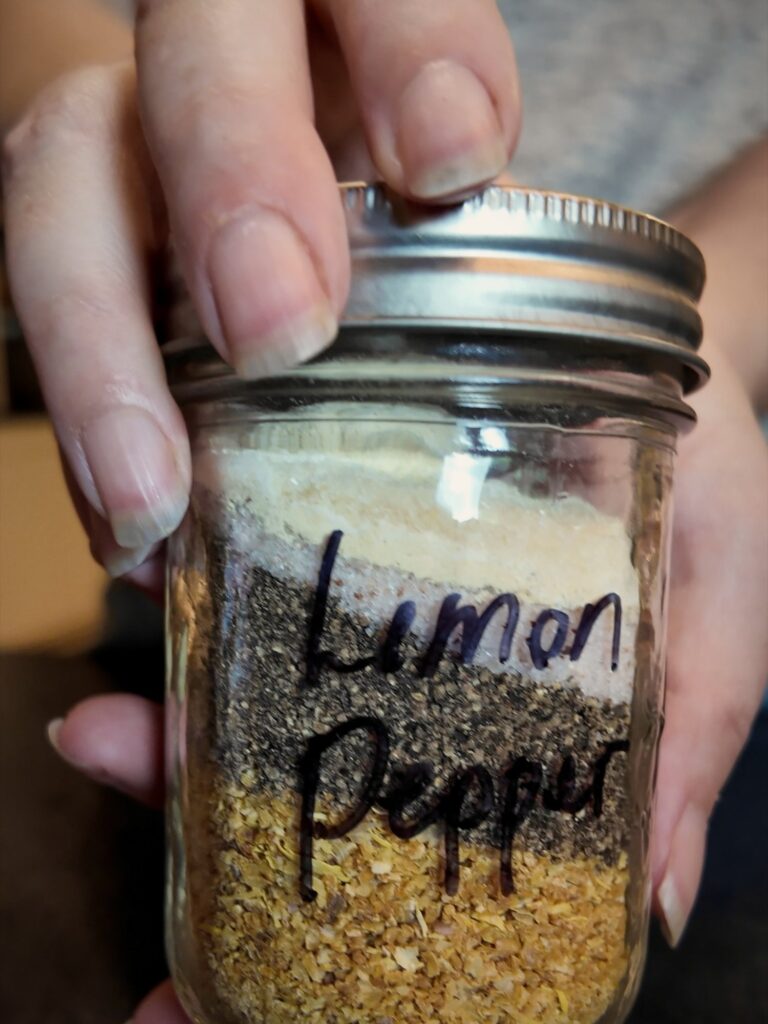
Transfer the seasoning to a clean, dry airtight jar.
Note: You can also layer the ingredients right into the jar using a canning funnel. Stirring them together in a bowl is optional.
That’s it.
This is one of those pantry staples that takes longer to pull the ingredients out than it does to actually make.
How to Use Lemon Pepper Seasoning
Use this anywhere you would normally reach for bottled lemon pepper.
Good options include:
- Chicken wings
- Chicken breasts
- Chicken thighs
- Fish
- Shrimp
- Roasted potatoes
- Green beans
- Broccoli
- Asparagus
- Corn
- Roasted vegetables
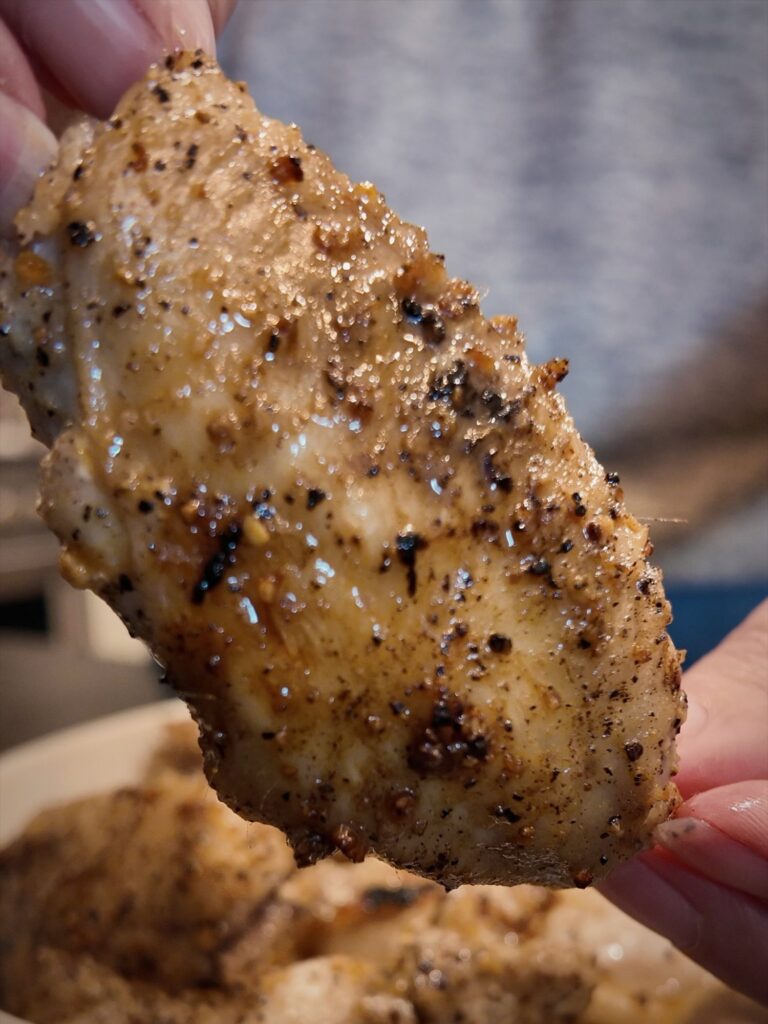
I developed the recipe using chicken wings, and that remains an easy way to use it.
Lightly coat the wings with oil, season to taste, and cook using your preferred method.
Air Fryer Lemon Pepper Wings
I used the air fryer while developing this recipe because it gave me a quick, consistent way to cook several small test batches at once.
Disclosure: The air fryer I used is the Ciarra Nosh Oven Pro. This is a paid partnership with Ciarra, and the link above is also an affiliate link.
For the tests, I cooked the wings at:
400°F for about 18–22 minutes
I flipped or shook them partway through cooking.
Cooking time will vary depending on wing size and your air fryer, so use the time as a general guide rather than the only sign they’re done.
When cooking poultry, verify doneness with a food thermometer. Poultry should reach a safe internal temperature of 165°F.
Why Use Lemon Peel Zest?
Lemon peel zest gives this seasoning concentrated lemon flavor without adding moisture to the jar.
That matters because this is meant to be a dry pantry seasoning.
More importantly, the lemon flavor held up during cooking.
That was one of the main things I was watching during the wing tests. A seasoning can taste plenty lemony on your finger and then lose that character once it gets heated.
This one didn’t.
The lemon was still obvious after the wings came out of the air fryer.
Can I Use Regular Ground Black Pepper?
Yes, but I would reduce the amount.
The version I developed used freshly ground black pepper with a medium-fine texture.
If you’re using a finely ground store-bought black pepper, use:
3 tablespoons finely ground black pepper
instead of 1/4 cup.
Then taste the finished blend and adjust if needed.
Pepper grind can make a surprising difference in both volume and intensity.
Storage
Transfer the seasoning to a clean, dry airtight container and keep it in a cool, dry place away from heat and moisture.
Because this blend is made from several different dried ingredients, its freshness depends in part on how fresh those ingredients were when you started.
For the best flavor, start with ingredients that still smell fresh and aromatic.
If moisture gets into the jar, or you notice an off odor or other signs of spoilage, discard the blend.
I don’t put a fixed shelf-life on homemade spice blends because the starting age and storage conditions of the individual ingredients can vary so much.
Tips From Testing
Grind the pepper before measuring
If you’re starting with whole peppercorns, grind them first and then measure 1/4 cup.
The recipe ratio is based on the volume of the finished ground pepper, not whole peppercorns.
Don’t make the pepper too coarse
Large pieces of cracked pepper won’t distribute through the seasoning the same way the medium-fine grind I tested did.
You want visible pepper, but not big chunks.
Don’t automatically use 1/4 cup of finely pre-ground pepper
Finely ground pepper packs more tightly and can become overpowering.
Use 3 tablespoons as the alternate amount.
Don’t be afraid of the lemon
One thing I learned during testing is that the lemon peel zest can carry through a high-heat cook.
You don’t need to hold back so much that the finished blend becomes mostly pepper.
The final 1:1 ratio is intentionally lemon-forward at the beginning of the bite.
Season to taste
I considered giving a specific amount per pound, but after weighing the seasoning I used on wings, I decided that would create more false precision than helpful guidance.
Different foods need different amounts.
Season until the food looks evenly coated, cook, and adjust to your preference the next time if needed.
Frequently Asked Questions
Is homemade lemon pepper spicy?
It has a definite black pepper bite, but I would describe it as peppery rather than hot.
The lemon hits first, and the pepper follows.
Does this actually taste strongly like lemon?
Yes.
That was one of the main things I tested for.
One of the earlier batches already had good lemon flavor, but the final 1:1 ratio gave me the lemon-forward bite I wanted, and the lemon flavor still came through after the wings were cooked.
Why not use less pepper?
I tested a version with 1 teaspoon lemon peel zest and 3/4 teaspoon pepper, and it was very good.
But once I tested equal amounts of lemon and pepper, I preferred the 1:1 version.
Can I use pre-ground pepper?
Yes.
Use 3 tablespoons finely ground black pepper instead of the 1/4 cup freshly ground medium-fine pepper.
Can I use this on wings?
Yes. Wings are what I used to develop the recipe.
I air-fried my test batches at 400°F and found that the lemon flavor carried through the cook well.
Cook poultry until it reaches a safe internal temperature of 165°F as measured with a food thermometer.
How much lemon pepper should I use?
Season to taste.
I intentionally don’t give one fixed amount per pound because wings, boneless chicken, fish, vegetables, and potatoes all have different surface areas and seasoning needs.
Does homemade lemon pepper need to be refrigerated?
This recipe is made entirely from dry ingredients and is intended to be stored as a dry pantry seasoning in a clean, dry airtight container.
Keep moisture out of the jar and store it away from heat.
A Few Things I Use
- Glass spice jars – for storing the finished seasoning blend.
- Spices Village dried lemon peel zest – the lemon peel I used for this blend.
- Electric spice grinder – for grinding whole peppercorns before measuring.
- Canning funnel – for layering the ingredients into the jar.
- OXO stainless steel mixing bowls – for mixing the seasoning.
- OXO measuring cups – for the lemon peel zest and black pepper.
- Magnetic measuring spoons – for the salt, garlic powder, onion powder, and sugar.
- Redmond Real Salt, fine – a fine salt that mixes evenly into seasoning blends.
- Instant-read thermometer – for checking that chicken reaches 165°F.
- Ciarra Nosh Oven Pro – the air fryer I used for the wing tests (paid partnership with Ciarra).

Homemade Lemon Pepper Seasoning
Ingredients
Method
- Grind whole black peppercorns to a medium-fine texture if using freshly ground pepper.
- Measure 1/4 cup of the ground pepper.
- Add the lemon peel zest, black pepper, salt, garlic powder, onion powder, and sugar to a bowl.
- Stir until thoroughly combined.
- Transfer to a clean, dry airtight container.
- Store in a cool, dry place away from heat and moisture.
- Season food to taste.
Notes
More Homemade Pantry Staples
If you like keeping homemade mixes ready to grab, try these next:
- Homemade Chicken Bouillon Powder
- Homemade Taco Seasoning
- Homemade Fajita Seasoning
- Homemade Italian Dressing Mix
- Homemade Cream of Soup Mix
- Homemade Ranch Seasoning Mix
- Homemade Poultry Seasoning
- Homemade Everything Bagel Seasoning
- Homemade Onion Soup Mix
- Homemade Chili Seasoning
- Homemade Burger Seasoning
- 5 Homemade Seasoning Mixes to Make Instead of Buying
- 5 Grocery Store Staples You Can Stop Buying
- Browse all Seasoning Mixes
- Homemade Pumpkin Pie Spice
Homemade lemon pepper is a small pantry project, but it’s exactly the kind I like: simple ingredients, easy to mix, and useful enough to keep reaching for.
And after testing several versions side by side, the final ratio was surprisingly simple:
Equal parts lemon and freshly ground pepper.
Sometimes that’s all it takes.
Your Pantry Can Do More.




One Comment