
Homemade Fajita Seasoning
This post may contain affiliate links, which means I may earn a small commission at no additional cost to you. As an Amazon Associate I earn from qualifying purchases.
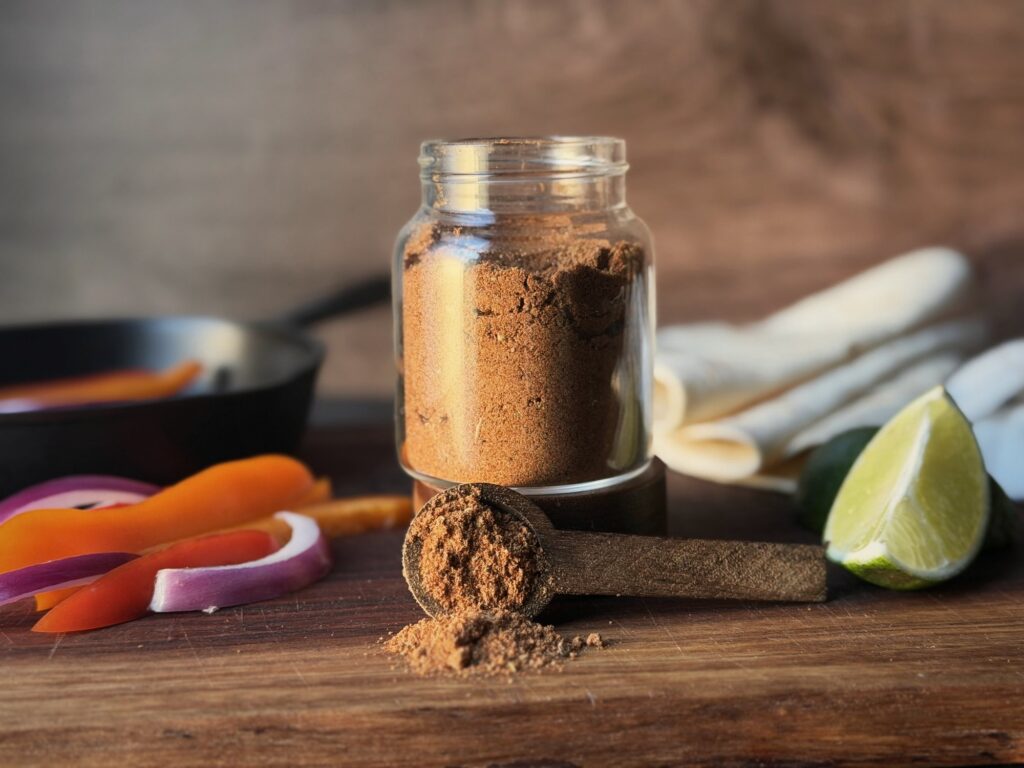
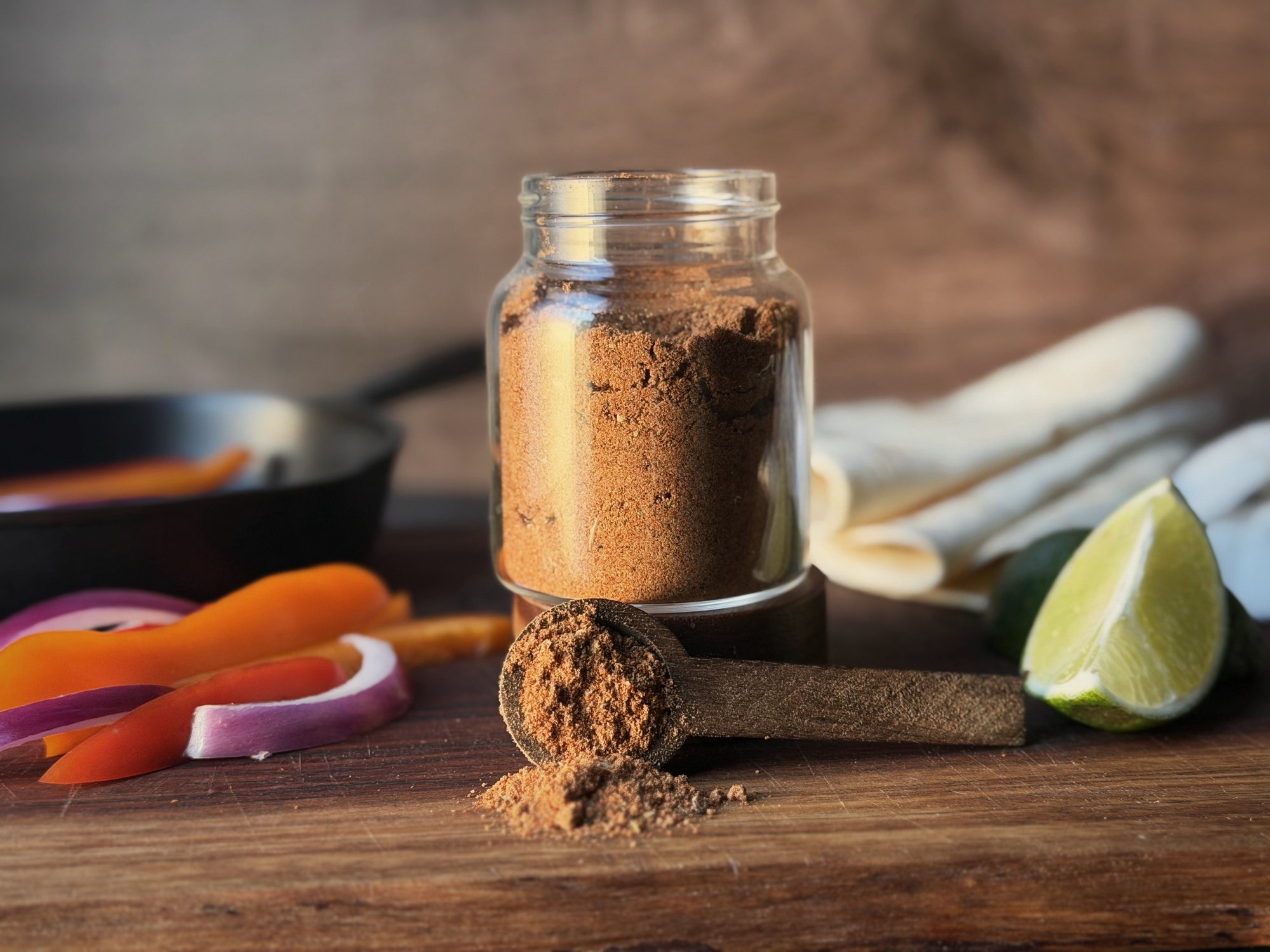
If you normally grab a fajita seasoning packet at the grocery store, this is the bulk version I wanted in my pantry instead.
When I worked on this homemade fajita seasoning recipe, I wasn’t trying to turn it into a heavily cumin-forward or especially spicy Tex-Mex blend. I wanted the flavor profile to stay familiar—the kind of fajita seasoning most people are used to buying in a packet—but in a larger batch I could mix once and keep on hand.
The finished recipe makes about 1¼ cups, which is enough for roughly 10 pounds of meat when you use 2 tablespoons per pound. That’s about the equivalent of keeping 10 individual fajita seasoning packets in the pantry.
And because this is a bulk recipe, I paid attention to more than just multiplying a smaller batch. I added onion powder for a fuller savory flavor, kept the oregano in the background, and chose fine salt so it distributes evenly throughout the jar.
Why I Make Fajita Seasoning in Bulk
Seasoning blends are one of the easiest pantry staples to make ahead because you’re already pulling out all the spices. Measuring enough for ten dinners isn’t much more work than measuring enough for one.
This batch gives me:
- About 1¼ cups of fajita seasoning
- Approximately 20 tablespoons
- Enough for about 10 pounds of meat
- A ready-to-use blend for chicken, steak, shrimp, or vegetables
The point isn’t to make dinner more complicated. It’s to do the measuring once so I don’t have to think about it the next time we’re having fajitas.
That’s the kind of pantry prep I actually find useful.
What Does This Fajita Seasoning Taste Like?
I developed this blend specifically to stay close to the familiar grocery-store fajita seasoning packet flavor.
Chili powder is the main flavor, with cumin underneath it rather than taking over. Garlic and onion give it the savory flavor I was looking for, paprika adds color and mild sweetness, and oregano stays firmly in the background.
I considered taking the cumin higher, but that starts pushing the blend toward a more cumin-heavy Tex-Mex flavor. For this recipe, I wanted something recognizable and family-friendly rather than reinventing what people expect fajita seasoning to taste like.
There is also no added cayenne in this version. The heat level will depend largely on the chili powder you use.
Homemade Fajita Seasoning Ingredients
You’ll need:
- ¼ cup + 2 tablespoons chili powder
- 3 tablespoons ground cumin
- 3 tablespoons garlic powder
- 3 tablespoons onion powder
- 2 tablespoons paprika
- 1 tablespoon dried oregano
- 1 tablespoon fine salt
- 2 teaspoons black pepper
That’s it. Eight basic spices, mixed together and ready for the pantry.
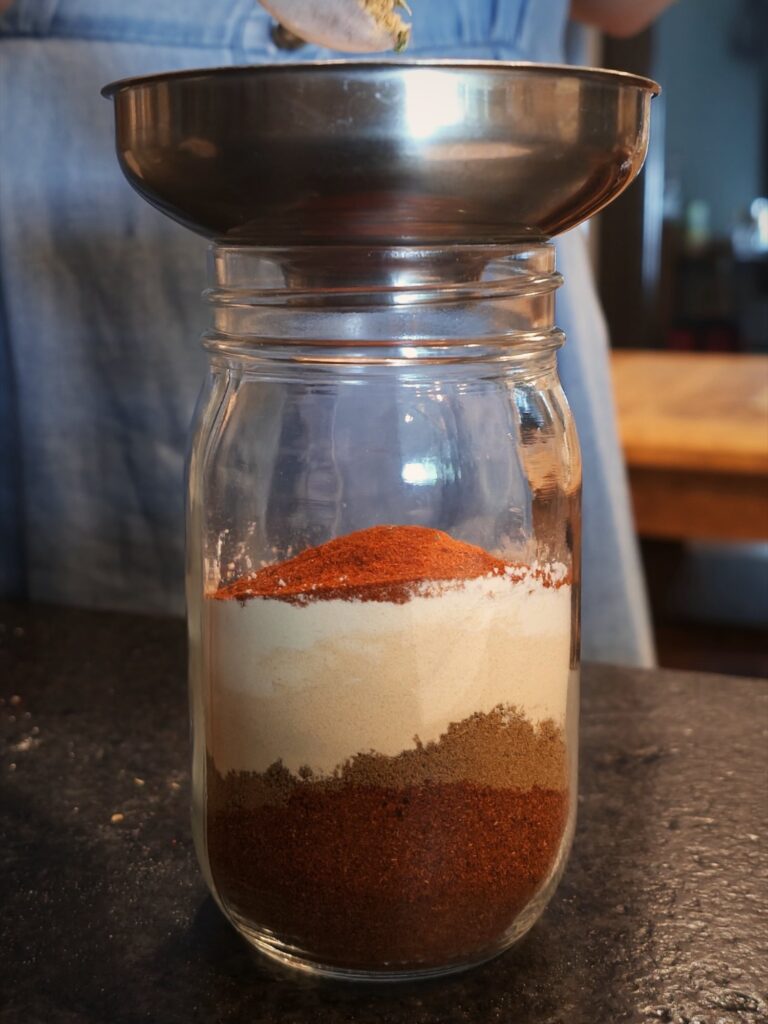
Why I Added Onion Powder
The smaller fajita seasoning recipe I started with didn’t include onion powder, but I wanted it in the bulk version.
Fajitas already pair naturally with onions, and adding onion powder seasons the meat itself with that same savory flavor. It also rounds out the garlic and cumin and makes this taste more like the seasoning packet profile I was trying to duplicate.
For a bulk blend, 3 tablespoons gives the onion enough presence without becoming the main flavor.
Why I Use Fine Salt in Seasoning Blends
I keep both kosher salt and fine salt in my kitchen, but I specifically chose fine salt here.
The smaller crystals distribute much more evenly among the powdered spices. That’s particularly useful when you’re storing almost 1¼ cups of seasoning in one jar and scooping out just 2 tablespoons at a time.
With a coarse kosher salt, the larger crystals can separate from the finer ingredients more easily, and salt measurements also vary considerably by brand and crystal size.
For the most repeatable version of this recipe, use fine salt.
How to Make Homemade Fajita Seasoning
Add all of the spices to a bowl:
- Chili powder
- Cumin
- Garlic powder
- Onion powder
- Paprika
- Oregano
- Fine salt
- Black pepper
Whisk until everything is thoroughly combined and you don’t see pockets of any one spice.
Transfer the mixture to a clean, dry jar with a tight-fitting lid.
That’s the entire recipe.
For a bulk seasoning like this, I do recommend giving the jar a quick shake before measuring from it. Even well-mixed spices can settle somewhat while sitting in the pantry.
How Much Fajita Seasoning Per Pound of Meat?
Use:
2 tablespoons fajita seasoning per 1 pound of meat.
That’s the amount I used when I made 1 pound of chicken breast with this batch.
For the chicken, I sliced the breasts into strips before cooking rather than cooking them whole. That gives the seasoning much more surface area to coat and gives you more browned edges in the skillet.
I tossed the chicken with:
- 1 pound sliced chicken breast
- 2 tablespoons homemade fajita seasoning
- About 1 tablespoon avocado oil
Then I cooked it in cast iron.
If you’re cooking chicken, use a food thermometer and cook it to the current USDA-recommended safe internal temperature for chicken.
Making Chicken Fajitas in Cast Iron
You don’t need to cook fajitas in cast iron to use this seasoning, but that’s how I used this batch.
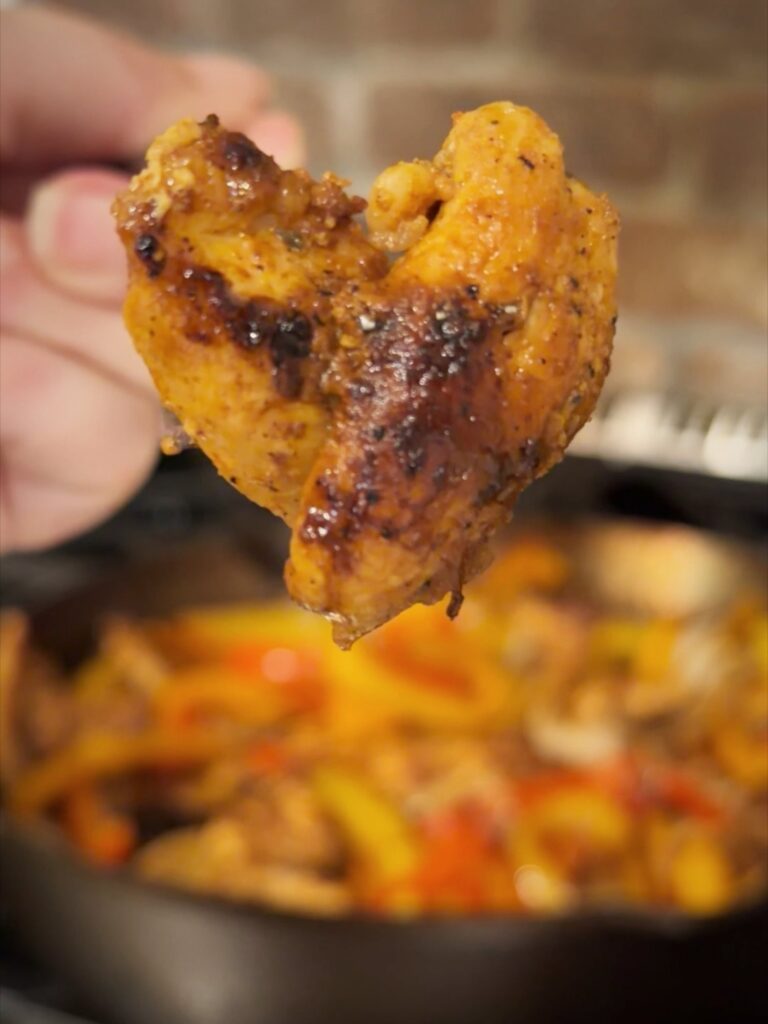
For the vegetables, I used a mix of colored bell peppers and onion. I intentionally didn’t cook the peppers until they were completely soft. I wanted some browning and blistering while still keeping their color and a little texture.
That’s a good target at home, too.
Rather than cooking peppers and onions until they’re deeply caramelized, cook them until:
- The onions have softened.
- The vegetables have browned edges.
- The peppers are tender but still hold their shape.
- Their color is still bright.
I like cooking the peppers and onions first, removing them, and then cooking the chicken in the same skillet. Once the chicken is done, the vegetables can go back in briefly to bring everything together.
You get better browning that way than crowding the skillet with everything at once.
Should You Slice Chicken Before Cooking Fajitas?
For skillet fajitas, I prefer to slice the chicken first.
There are a couple of practical reasons.
First, you get seasoning over much more of the chicken instead of having most of it sitting on the outside of a whole breast.
Second, the strips give you more surface area against the skillet, which means more browned edges.
Keep the strips fairly even in thickness so they cook at about the same rate.
Chicken, Steak, Shrimp—or More
Although I tested this batch with chicken, the seasoning itself can be used anywhere you’d normally reach for a fajita packet.
Try it with:
- Chicken
- Steak
- Shrimp
- Peppers and onions
- Fajita bowls
- Sheet-pan meat and vegetables
- Grilled vegetables
- Quesadillas
- Skillet potatoes
Start with the 2 tablespoons per pound ratio for meat and adjust to taste from there.
Fajita Seasoning vs. Taco Seasoning
These blends overlap quite a bit, but I don’t make them identical.
This fajita seasoning was built around that familiar packet-style combination of chili powder, cumin, garlic, onion, paprika, and a little oregano.
So if you already have a jar of homemade taco seasoning in your pantry, I would still keep a separate fajita blend.
The nice part about making both yourself is that you’re not buying half-used packets or trying to remember which ones are still hiding in the cabinet.
How Many Fajita Seasoning Packets Does This Replace?
This recipe makes approximately 1¼ cups, or just under 20 tablespoons.
Using 2 tablespoons per pound of meat, you’ll get roughly 10 uses from one batch.
So for practical purposes:
One jar replaces about 10 standard fajita seasoning packets.
That was actually one of the things I liked most about scaling this recipe up. Instead of making one dinner’s worth of seasoning, I can measure everything once and have enough sitting in the pantry for several meals.
How to Store Homemade Fajita Seasoning
Transfer the seasoning to a clean, completely dry airtight container and keep it in a cool, dry place away from heat and direct sunlight.
Because this recipe contains only dried herbs, spices, and salt, it doesn’t require refrigeration.
The flavor quality of a homemade spice blend will depend largely on the freshness of the individual spices you start with. Rather than relying on an arbitrary expiration date, I label the jar and pay attention to aroma and flavor over time.
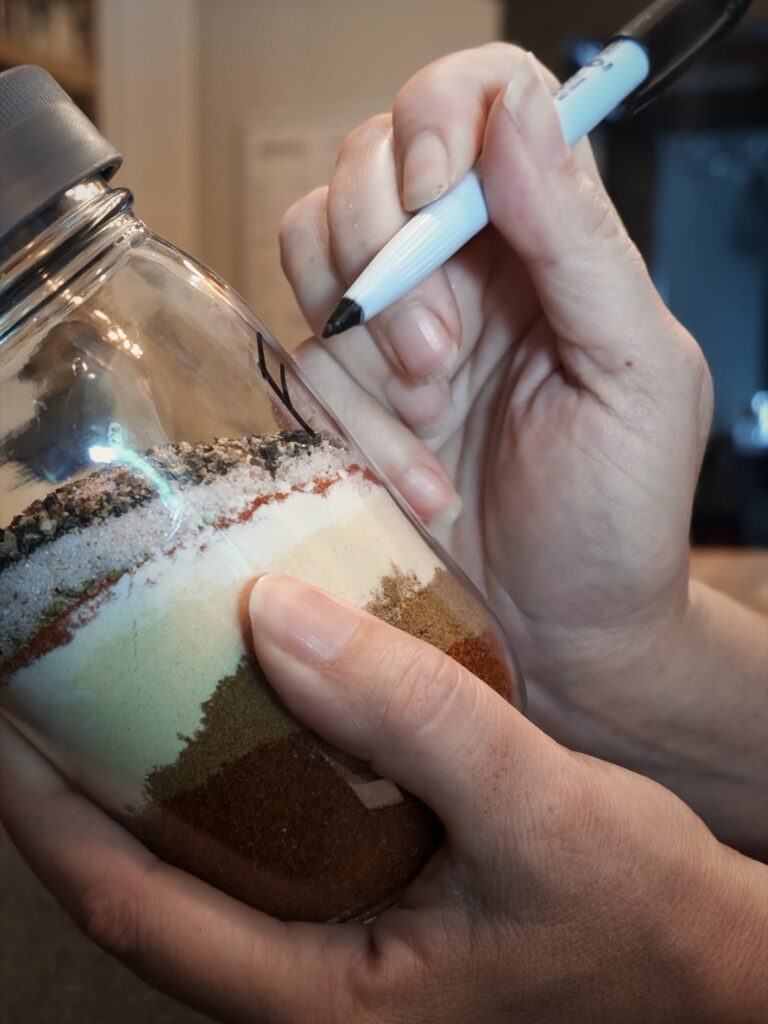
Also, keep moisture out of the jar. Always use a dry spoon when measuring the seasoning.
A Few Practical Tips
- Shake before measuring. Different spices have different particle sizes, so give the jar a quick shake before scooping out your seasoning.
- Use fine salt. It distributes more evenly through a bulk spice mix than coarse salt.
- Choose your chili powder carefully. Chili powders vary in both flavor and heat. If you’re trying to keep this family-friendly and similar to a typical seasoning packet, use a mild chili powder.
- Don’t overcrowd your skillet. If you’re making chicken fajitas, giving the chicken some space helps it brown instead of steam.
- Don’t overcook the peppers. A little browning is great. Cooking them until they’re completely limp isn’t necessary. I prefer them tender with some color and texture left.
Homemade Fajita Seasoning FAQ
How much homemade fajita seasoning equals one packet?
For this recipe, I use 2 tablespoons per pound of meat, which is a practical replacement for one standard-use fajita seasoning packet.
How much fajita seasoning do I need for 2 pounds of chicken?
Use approximately ¼ cup, or 4 tablespoons, of seasoning for 2 pounds of chicken.
Is fajita seasoning spicy?
This version isn’t designed to be especially spicy. The heat will depend primarily on the chili powder you use. Choose a mild chili powder for a more traditional packet-style flavor.
Can I use this on steak?
Yes. Use the same starting ratio of 2 tablespoons seasoning per pound of steak.
Can I use fajita seasoning on shrimp?
Yes. The blend also works with shrimp. Season to taste rather than assuming every protein needs exactly the same amount, particularly with smaller or more delicate pieces.
Do I need to add water?
Not necessarily. When I made the chicken, I used the seasoning with avocado oil. A small amount of water can be added during cooking if you want additional moisture, but it isn’t required for the dry seasoning blend itself.
A Few Things I Use
- Glass spice jars – for storing the finished seasoning blend.
- OXO stainless steel mixing bowls – for mixing the spices.
- Stainless steel whisk – for blending everything evenly.
- OXO measuring cups – for the chili powder.
- Magnetic measuring spoons – for the cumin, garlic powder, onion powder, paprika, oregano, salt, and pepper.
- Frontier Co-op organic chili powder – comes in a 1-pound bag, which is handy for a bulk blend.
- Redmond Real Salt, fine – a fine salt that mixes evenly into seasoning blends.
- Cast iron skillet – for cooking the chicken fajitas.
- Instant-read thermometer – for checking meat temperatures.
Homemade Fajita Seasoning
Ingredients
Method
- Add the chili powder, cumin, garlic powder, onion powder, paprika, oregano, salt, and black pepper to a mixing bowl.
- Whisk thoroughly until the spices are evenly combined and there are no visible clumps.
- Transfer the seasoning to a clean, completely dry airtight jar.
- Give the jar a quick shake before each use.
- Use 2 tablespoons of fajita seasoning per pound of meat.
Notes
More Homemade Pantry Staples
If you’re already pulling spices out of the cabinet, these are the kinds of mixes that are worth making in batches:
- Homemade Taco Seasoning
- Homemade Chili Seasoning
- Homemade Burger Seasoning
- Homemade Chicken Bouillon Powder
- Homemade Onion Soup Mix
- Homemade Ranch Seasoning Mix
- Homemade Italian Seasoning
- Homemade Italian Dressing Mix
- Homemade Seasoned Salt
- Homemade Poultry Seasoning
- Homemade Everything Bagel Seasoning
- Homemade Lemon Pepper Seasoning
- Copycat Taco Bell Mild Sauce Recipe
- Homemade Pumpkin Pie Spice
- 5 Homemade Seasoning Mixes to Make Instead of Buying
- Homemade Apple Pie Spice
- Homemade Cream of Soup Mix
- 5 Grocery Store Staples You Can Stop Buying
Once you have a few of these jars going, weeknight cooking gets considerably easier.



2 Comments