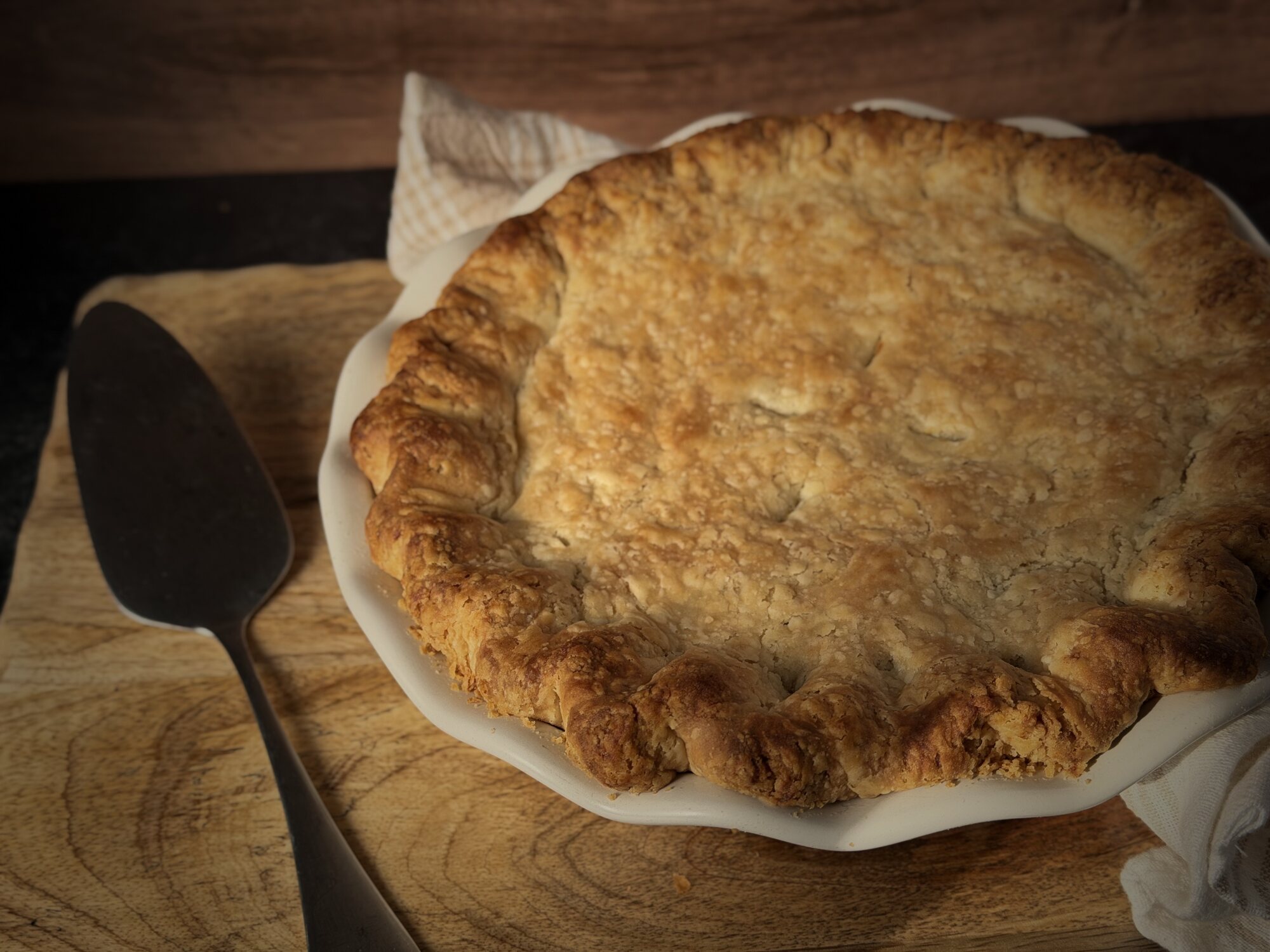
Ingredients
Equipment
Method
- Grate the frozen butter. Measure 56 g of the butter and freeze until firm enough to grate. Grate it by hand on the large holes of a box grater, keeping the shreds as separated as possible. Return the shreds to the freezer while you prepare the rest of the dough. Don’t use a food processor shredding attachment for this step.
- Make the butter paste. Add 212 g flour, all of the sugar, and all of the salt to a food processor fitted with the standard metal blade. Pulse briefly to combine. Add the remaining 228 g cold butter, cut into cubes, and process until the butter and flour are thoroughly incorporated and form a cohesive, paste-like mixture.
- Add the remaining flour. Add the remaining 142 g flour and pulse briefly, about 4–5 times, to incorporate it and break the paste into smaller pieces. The mixture should look crumbly again. Avoid processing excessively.
- Fold in the grated butter. Transfer the mixture to a large bowl. Remove the grated butter from the freezer and gently fold it in, keeping the butter pieces distinct rather than mixing them into a paste.
- Add ice water gradually. Start with about 2 tablespoons of ice-cold water and gently work it into the dough. Continue adding small amounts as needed until the dough is slightly more hydrated than the bare minimum needed to hold together when squeezed. It should be cohesive and workable without becoming wet or sticky.
- Divide and shape. Gently gather the dough together without excessive kneading. Divide it into two equal portions and form each into a disk about 1 inch thick. Don’t knead until perfectly smooth.
- Wrap and refrigerate. Wrap each disk individually in cling wrap, then place both wrapped disks in one large zip-top bag. Press out the excess air, seal, and refrigerate for at least 2 hours.
- Roll and use. Let the chilled dough become just workable enough to roll while keeping it cool. Roll on a lightly floured surface to about ⅛-inch thickness. Expect some cracks or rough edges; gently patch them. Use for a double-crust pie, and follow your filling recipe for baking temperature and time.
Notes
Water: The total amount of water varies with your flour, butter, humidity, and mixing conditions. Add it by consistency rather than an exact measurement.
Single crust: Halve the ingredient quantities.
Baking: This is a master crust for sweet and savory pies, so follow the baking temperature and time in your filling recipe.
Rustic by nature: All-butter dough is less flexible than dough made with shortening or lard and may crack at the edges. That’s normal; patch as needed.
