
Homemade Beef Bouillon Powder (Clean, Made With Real Beef)
This post may contain affiliate links, which means I may earn a small commission at no additional cost to you. As an Amazon Associate I earn from qualifying purchases.
If you use beef bouillon in soups, gravies, casseroles, or slow cooker meals, this homemade beef bouillon powder is worth keeping in your pantry.
The best part? It actually contains beef.
Beef bone broth powder is the foundation of this recipe, with onion, garlic, mushroom powder, tomato powder, and a few other seasonings adding depth.
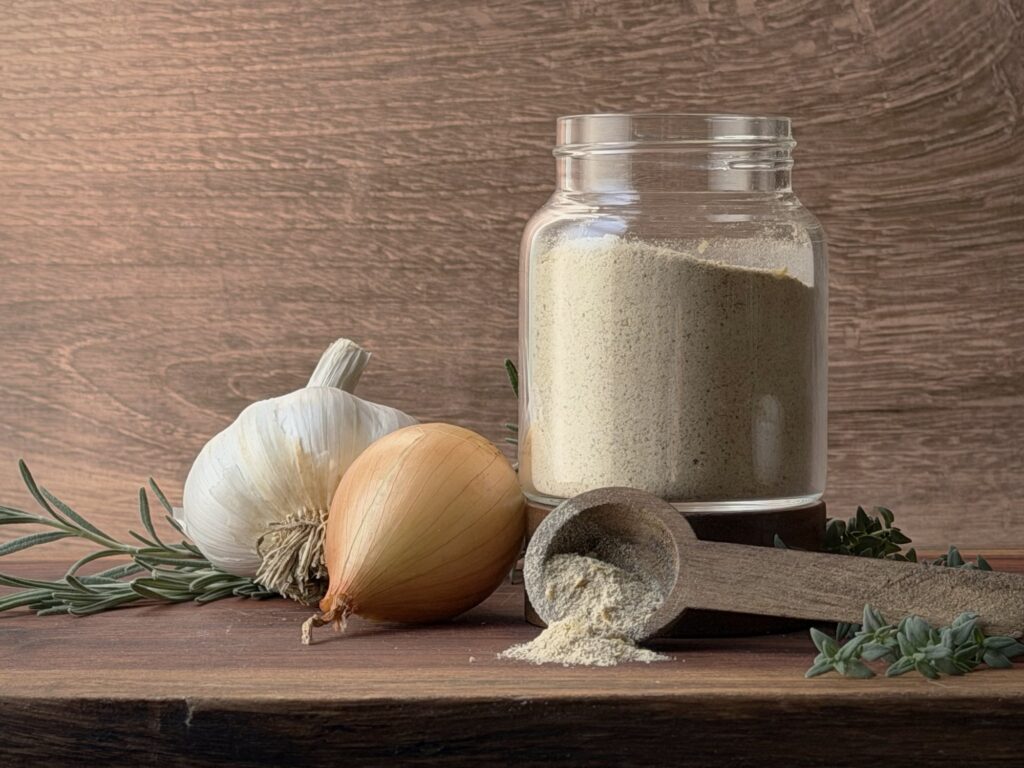
I already make my own homemade chicken bouillon powder, so developing a beef version was a natural next step. Both are pantry staples I want to have ready when a recipe needs more flavor without opening a carton of broth.
This recipe is also easy to scale. You can make a small batch to try it out or mix a larger jar once you know how quickly you’ll use it.
Why Make Your Own Beef Bouillon Powder?
Commercial beef bouillon is convenient, but making your own gives you more control over the ingredients and seasoning.
Here’s why I like the homemade approach:
- Real beef flavor: Beef bone broth powder provides the foundation.
- Control over ingredients: You decide how much salt and seasoning goes into the mixture.
- Convenient: Keep a jar ready for recipes that call for beef bouillon.
- Easy to scale: Make a small batch or multiply the recipe for bulk pantry storage.
- Versatile: Use it in soups, gravies, rice, casseroles, and other savory dishes.
This is the kind of pantry staple that makes everyday cooking easier.

Ingredients for Homemade Beef Bouillon
You don’t need a long list of complicated ingredients, but a few of these powders may be new to your pantry.
Beef Bone Broth Powder
This is the most important ingredient.
Rather than trying to create beef flavor entirely from seasonings, we’re starting with actual beef bone broth powder.
Look for an unflavored product without added seasonings, and check the ingredient label. Some powders contain salt or other ingredients that will change the flavor of the finished blend.
I use Bluebird Provisions beef bone broth powder because it contains only one ingredient: beef bone broth. Many commercially available options aren’t that clean, so it’s worth reading the label before you buy.
Mushroom Powder
Mushroom powder adds savory depth without needing to make the finished bouillon taste like mushroom soup.
It complements the beef powder and helps round out the flavor.
Tomato Powder
Tomato powder adds another layer of savory flavor and a little acidity.
The amount is small enough that the goal isn’t to make the bouillon taste like tomatoes.
Nutritional Yeast
Nutritional yeast contributes savory flavor and helps round out the seasoning mixture.
This is not the same ingredient as active dry yeast used for bread.
Onion Powder and Garlic Powder
Both provide the familiar savory seasoning found in many bouillon products.
I use onion powder rather than dried minced onion because it blends more evenly with the other powdered ingredients.
Salt, Black Pepper, Thyme, and Celery Seed
These complete the seasoning mixture.
I use ground thyme and finely ground celery seed so the finished bouillon stays as uniform as possible.
Homemade Beef Bouillon Powder Recipe
Yield: Approximately ½ cup, depending on ingredient density
Ingredients
| Ingredient | Grams | Approximate Volume |
|---|---|---|
| Beef bone broth powder | 28 g | 4 Tbsp |
| Fine sea salt | 12 g | 2 tsp |
| Onion powder | 4 g | 1½ tsp |
| Garlic powder | 3 g | 1 tsp |
| Mushroom powder | 3 g | 1 tsp |
| Tomato powder | 3 g | 1 tsp |
| Nutritional yeast | 2.5 g | 2 tsp |
| Ground black pepper | 0.5 g | ¼ tsp |
| Ground thyme | 0.25 g | ⅛ tsp |
| Ground celery seed | 0.3 g | ⅛ tsp |
Important: The gram measurements are the intended recipe weights. Volume measurements are approximate and may vary significantly by brand, grind, and how the ingredients are packed.
Instructions
- Measure the ingredients. Place a small bowl on a kitchen scale and weigh each ingredient. For the very small spice quantities, use a scale capable of measuring fractions of a gram, or use the approximate volume measurements.
- Combine. Add all ingredients to a mixing bowl.
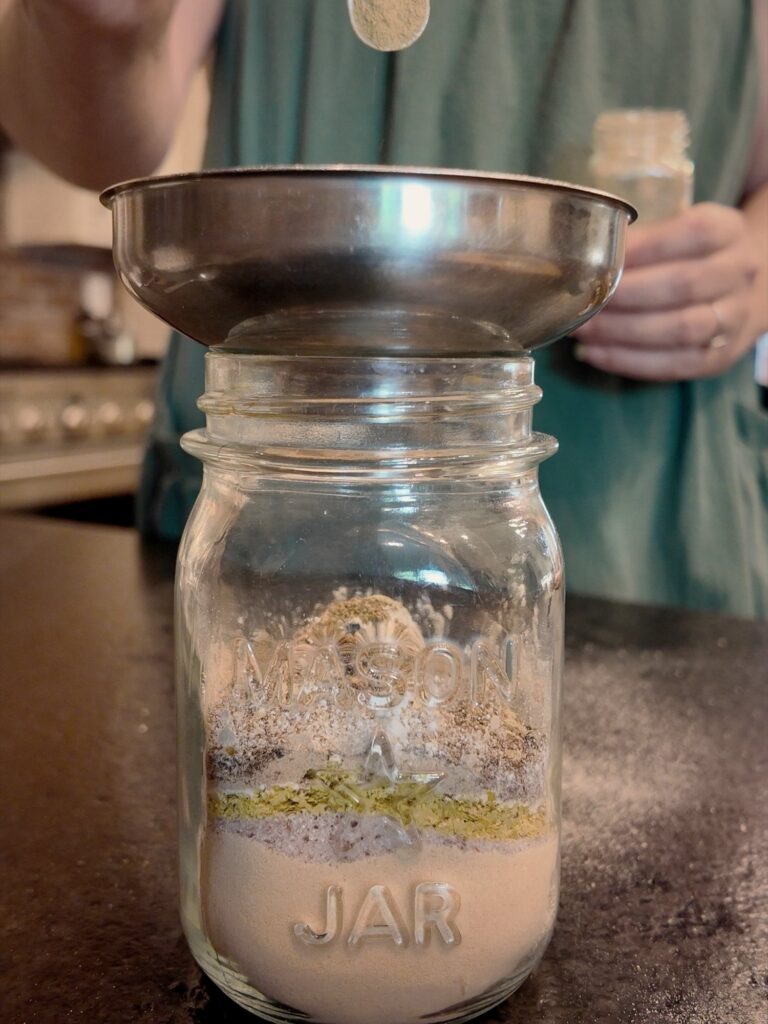
- Mix thoroughly. Whisk until the seasonings are evenly distributed throughout the beef powder.
- Check the texture. If any ingredients are clumpy or noticeably coarser than the others, briefly pulse the mixture in a clean, completely dry spice grinder.
- Store. Transfer to a clean, dry, airtight jar. Label the container with the contents and preparation date.

How to Use Homemade Beef Bouillon
These are starting amounts. The strength and saltiness will depend on the particular beef bone broth powder used.
For sipping broth:
For a flavorful cup of sipping broth, use 1 teaspoon of homemade beef bouillon powder per cup of hot water.
For cooking:
For a stronger bouillon flavor when cooking, start with 1¼ teaspoons per cup of water or liquid, adjusting to taste.
As a substitute for Better Than Bouillon:
Start with approximately 1¼ teaspoons homemade powder for every 1 teaspoon of beef Better Than Bouillon called for in a recipe.
This is a starting substitution, not an exact equivalent. Taste and adjust the seasoning.

Why I Recommend Measuring in Grams
If you’re going to make homemade seasoning blends regularly, a kitchen scale is one of the most useful tools you can own.
This is especially true for a recipe containing several different powdered ingredients.
A tablespoon of nutritional yeast doesn’t weigh the same as a tablespoon of salt, and even different brands of the same ingredient can have different densities.
Measuring by weight gives you a more consistent blend and makes scaling much easier.
That’s particularly important when you’re making a small test batch.
Once you find the combination you like, you can multiply the gram measurements without having to worry about how tightly an ingredient was packed into a measuring spoon.
I still include approximate teaspoon and tablespoon measurements for convenience, but grams are my preferred method.
Tips for Making the Best Homemade Beef Bouillon
Start With Unseasoned Beef Powder
The flavor of your beef bone broth powder matters.
If your powder already contains salt, onion, garlic, or other seasonings, you’ll need to account for those ingredients before mixing the recipe.
Don’t Confuse Beef Broth Powder With Beef Protein Powder
Not every beef-derived powder is intended for making broth.
Look for a product specifically designed for broth or culinary use rather than an unflavored beef protein supplement.
The Bluebird powder I use is labeled as a bone broth protein powder, but its only ingredient is beef bone broth, so it works well here. The label is what matters.
Mix Thoroughly
Some ingredients are heavier than others, and fine powders can settle.
Whisk the mixture thoroughly when making it and give the jar a shake before measuring it into recipes.
Use Ground Spices
For a bouillon powder, finer ingredients generally work better.
Ground thyme and ground celery seed blend more uniformly than larger dried leaves or whole seeds.
Taste Before Adding Extra Salt
This homemade bouillon already contains salt.
When adding it to a recipe, particularly one with other salty ingredients, taste before adding additional salt.
Can You Make a Larger Batch?
Absolutely.
One of the benefits of using grams is how easily the recipe scales.
If you like the small batch, you can double, triple, or quadruple it without changing the proportions.
For example, to make a double batch, simply multiply every ingredient weight by two.
I recommend testing the smaller batch first, especially if you’re using a new brand of beef bone broth powder.
Different products can vary in flavor intensity, sodium content, and how readily they dissolve.
How to Store Homemade Beef Bouillon Powder
Keep the mixture in a clean, dry, airtight container away from heat, light, and moisture.
A small glass jar with a tight-fitting lid works well.
Always use a dry measuring spoon. Introducing moisture can cause clumping and may compromise the mixture.
How long does it last?
Because this recipe contains beef bone broth powder, follow the storage instructions and earliest expiration date of the ingredients used.
Don’t assume the finished mixture will have the same shelf life as commercial bouillon.
If your beef powder requires refrigeration after opening, follow those instructions for the finished blend as well.
For larger batches, it’s best to confirm that your chosen powder is intended for dry pantry storage.
Ways to Use Homemade Beef Bouillon Powder
This is one of those ingredients that can work its way into all kinds of everyday meals.
Soups and Stews
Add it to vegetable soup, beef stew, or other hearty soups when you want additional beef flavor.
Homemade Gravy
Use it to strengthen the flavor of homemade beef gravy, especially when you don’t have enough pan drippings.
Pot Roast
Add a little to the cooking liquid for a pot roast along with onions, garlic, and your favorite seasonings.
Rice
Use prepared beef broth instead of plain water when cooking rice for a savory side dish.
Casseroles
A small amount can add depth to casseroles, particularly those made with ground beef.
Homemade Soup Mixes
If you already make pantry mixes, beef bouillon can be a useful ingredient to keep alongside them.
Try pairing it with recipes such as homemade onion soup mix or use it to add beef flavor when adapting homemade cream of soup mix for savory casseroles.
Frequently Asked Questions
Is homemade beef bouillon the same as beef broth?
Not exactly.
Beef broth is a liquid, while bouillon powder is a concentrated seasoning mixture intended to add flavor to water or directly to recipes.
The strength of prepared broth depends on how much powder you use.
Can I leave out the mushroom powder?
You can, but it will change the flavor.
Mushroom powder adds savory depth. If you omit it, test the mixture before deciding whether other seasonings need adjustment.
Does homemade beef bouillon contain MSG?
This recipe does not call for added monosodium glutamate (MSG).
However, ingredients such as beef broth powder, mushroom powder, and nutritional yeast naturally contain glutamate compounds that contribute savory flavor.
Always check individual ingredient labels if you have specific dietary requirements.
Can I use this instead of beef bouillon cubes?
Yes, as a starting substitution, but the amounts will vary depending on the brand of cubes.
Prepare a small cup of broth using each product according to its directions and compare their strength before substituting in a larger recipe.
Why does my homemade bouillon taste weak?
The beef powder itself may be mild, or the mixture may need a higher concentration.
Try increasing the amount of bouillon used per cup of water before changing the entire recipe.
Can I make this recipe without salt?
You can omit the salt, but the result won’t season food the same way as the original mixture or commercial bouillon.
You’ll need to add salt separately when cooking.
Is homemade beef bouillon cheaper than store-bought?
That depends primarily on the cost of your beef bone broth powder.
Homemade bouillon isn’t automatically less expensive, particularly when using premium beef powder.
For me, the main advantage is controlling the ingredients and keeping a versatile seasoning ready to use.
A Pantry Staple Worth Making
I love having ingredients on hand that can be used in more than one recipe.
Homemade beef bouillon powder fits right into that approach. Whether you’re making soup, gravy, rice, or a slow cooker meal, a small jar of concentrated seasoning is convenient to have nearby.
Start with a small batch, adjust it to suit your preferred beef powder, and scale up once you’ve found the flavor you like.
Because your pantry can do more.
A Few Things I Use
- Beef bone broth powder – Bluebird Provisions; the only ingredient is beef bone broth.
- Mushroom powder – adds savory depth.
- Tomato powder – Burlap & Barrel sun-dried tomato powder.
- Nutritional yeast – helps round out the seasoning.
- Fine salt – Redmond Real Salt, fine grind.
- Ground celery seed – blends evenly into the powder.
- Kitchen scale – for weighing each ingredient in grams.
- Whisk – for mixing the powders evenly.
- Spice grinder – for smoothing out any clumps or coarse bits.
- Measuring spoons – for the small spice amounts and scooping bouillon from the jar.
Homemade Beef Bouillon Powder
Ingredients
Method
- Measure the ingredients. Place a small bowl on a kitchen scale and weigh each ingredient. For the very small spice quantities, use a scale capable of measuring fractions of a gram, or use the approximate volume measurements.
- Combine. Add all ingredients to a mixing bowl.
- Mix thoroughly. Whisk until the seasonings are evenly distributed throughout the beef powder.
- Check the texture. If any ingredients are clumpy or noticeably coarser than the others, briefly pulse the mixture in a clean, completely dry spice grinder.
- Store. Transfer to a clean, dry, airtight jar. Label the container with the contents and preparation date.
Notes
- The gram measurements are the intended recipe weights. Volume measurements are approximate and may vary significantly by brand, grind, and how the ingredients are packed.
- For sipping broth: use 1 teaspoon of homemade beef bouillon powder per cup of hot water.
- For cooking: for a stronger bouillon flavor, start with 1¼ teaspoons per cup of water or liquid, adjusting to taste.
- As a substitute for Better Than Bouillon: start with approximately 1¼ teaspoons homemade powder for every 1 teaspoon of beef Better Than Bouillon. This is a starting substitution, not an exact equivalent.
- The strength and saltiness will depend on the particular beef bone broth powder used. I use a beef bone broth powder whose only ingredient is beef bone broth.
- Gluten-free if all ingredients are certified gluten-free.
- Storage: follow the storage instructions and earliest expiration date of the ingredients used. If your beef powder requires refrigeration after opening, refrigerate the finished blend as well.
More Homemade Pantry Staples
If you enjoy making your own seasoning blends and pantry ingredients, try these recipes next:

3 Comments