
Homemade Seasoned Salt
This post may contain affiliate links, which means I may earn a small commission at no additional cost to you. As an Amazon Associate I earn from qualifying purchases.
If there’s one seasoning blend that gets plenty of use in our kitchen, it’s a good all-purpose seasoned salt. It’s the kind of thing you can sprinkle over potatoes, chicken, vegetables, or just about anything that needs a little extra flavor.
And this homemade seasoned salt? My kids absolutely LOVE it.
I wanted a blend with that familiar store-bought seasoned salt flavor, but made with pantry ingredients I could measure, mix, and adjust myself.
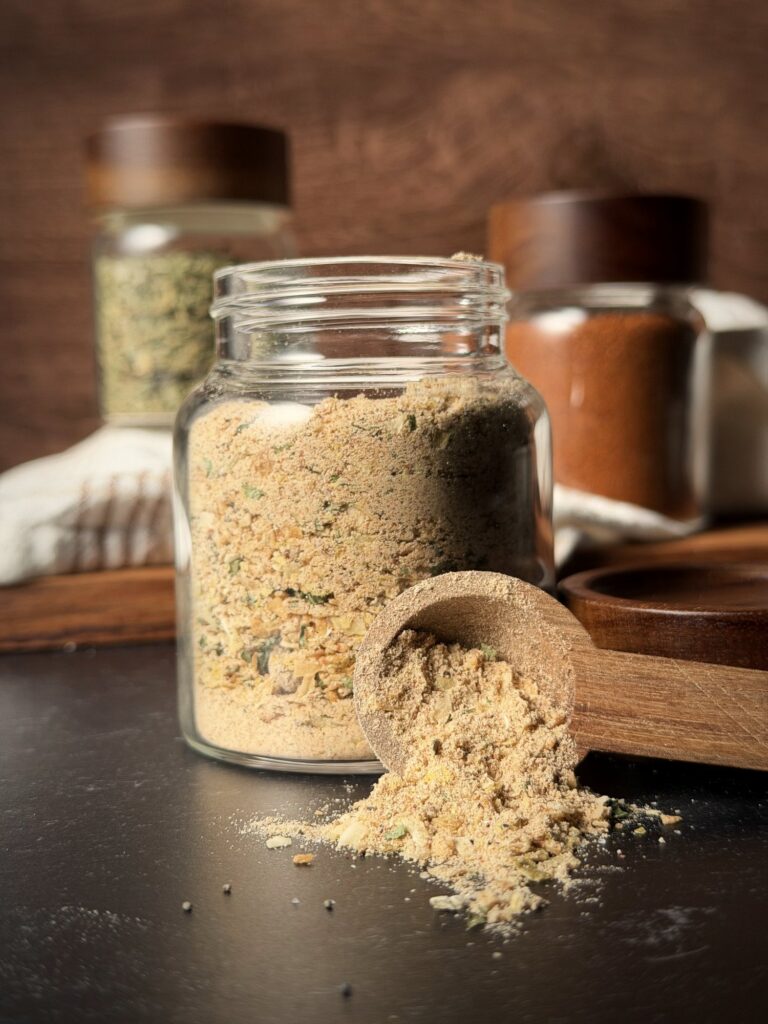
The result is a simple homemade seasoning salt that combines paprika, garlic, onion, and a few other spices with Redmond Real Salt. It has plenty of flavor without requiring a long list of ingredients.
And before we get to the recipe, let’s talk about one ingredient that has generated quite a few comments on my video: sugar.
It’s completely optional. You can leave it out!
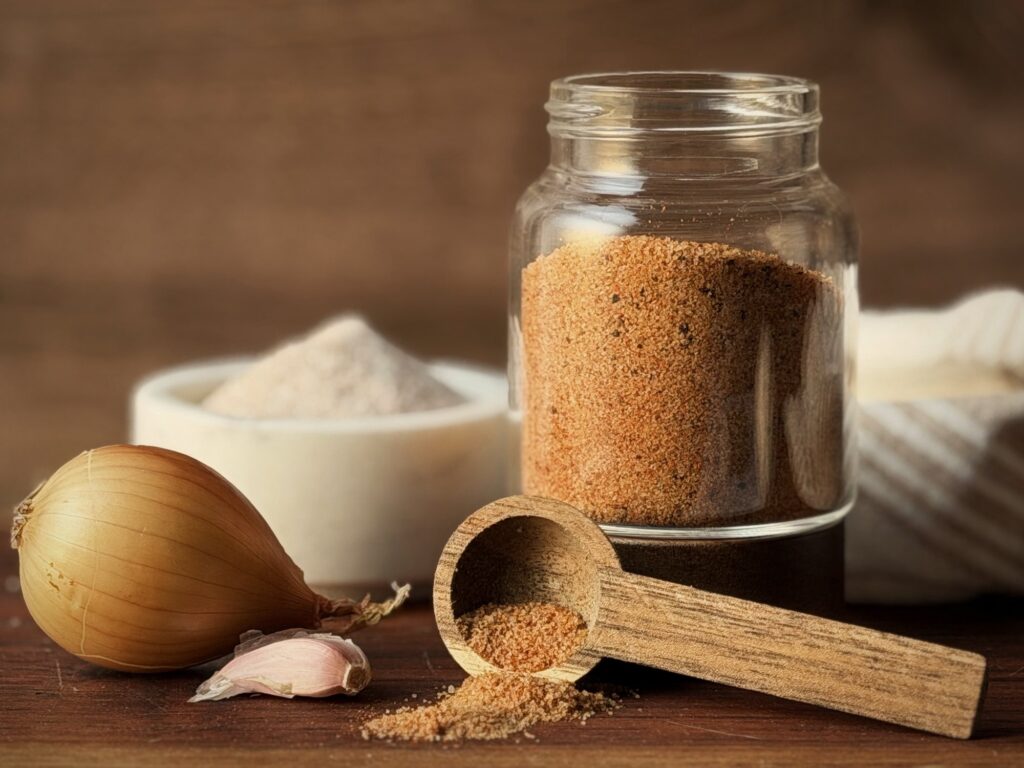
Why Is There Sugar in Seasoned Salt?
When I shared this recipe, quite a few people were surprised to see sugar listed among the ingredients.
Here’s the reason: some popular store-bought seasoned salt blends contain sugar. A small amount can help replicate that familiar commercial seasoning flavor by balancing the salt and spices.
But that doesn’t mean homemade seasoned salt needs sugar.
This recipe calls for just 1 teaspoon in the entire batch, and it’s entirely optional.
If you’re trying to reduce added sugar, prefer savory seasoning blends without sweeteners, or simply don’t want sugar in your seasoned salt, leave it out.
You will still have a flavorful blend of salt, paprika, garlic, onion, and other seasonings.
That’s one of the biggest advantages of making your own pantry staples. You get to decide what goes into them.
Homemade Seasoned Salt Recipe
This recipe makes approximately ¾ cup of seasoned salt, depending on how you measure your spices.
Ingredients
- ¼ cup Redmond Real Salt
- 2 tablespoons paprika
- 1 tablespoon garlic powder
- 1 tablespoon onion powder
- 2 teaspoons black pepper
- 2 teaspoons turmeric
- 1 teaspoon celery salt
- 1 teaspoon mustard powder
- 1 teaspoon sugar (OPTIONAL)
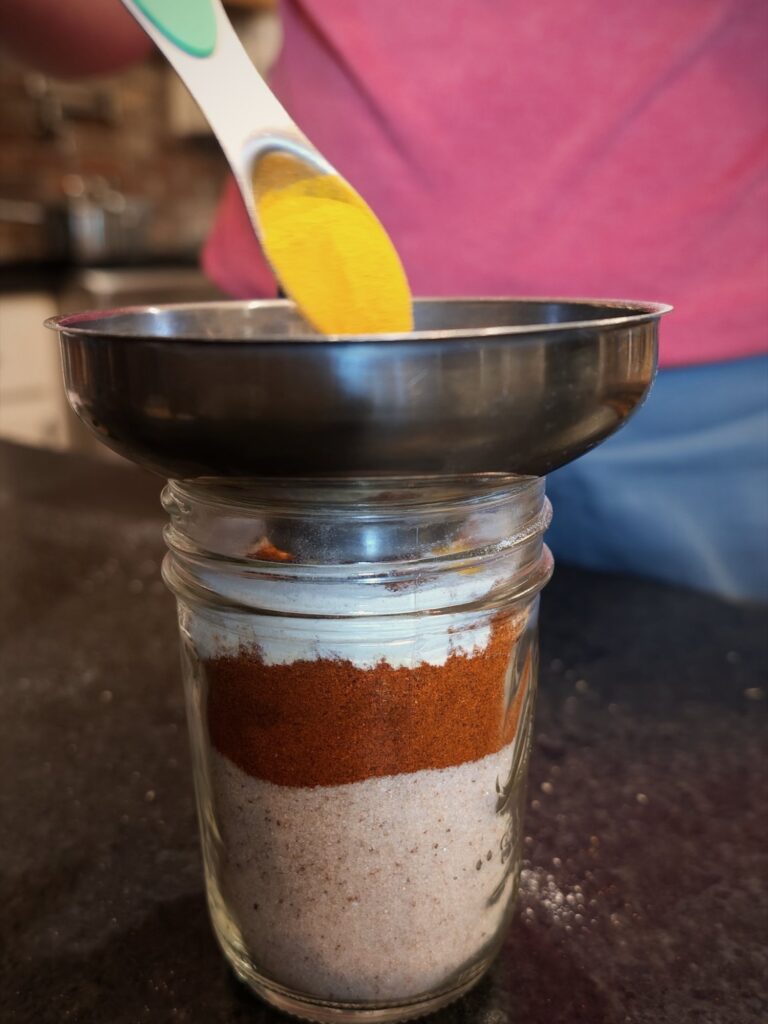
Instructions
- Add the salt, paprika, garlic powder, onion powder, black pepper, turmeric, celery salt, and mustard powder to a mixing bowl.
- If you want a flavor closer to certain store-bought seasoned salts, add the optional teaspoon of sugar.
- Whisk everything together until the spices are evenly distributed.
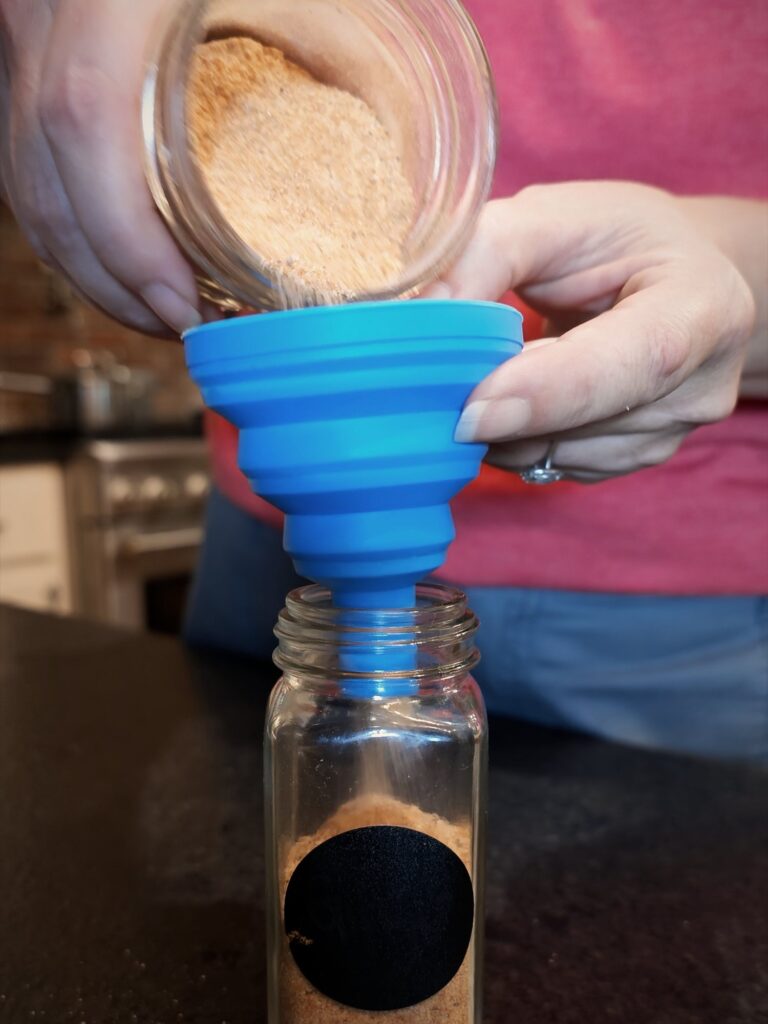
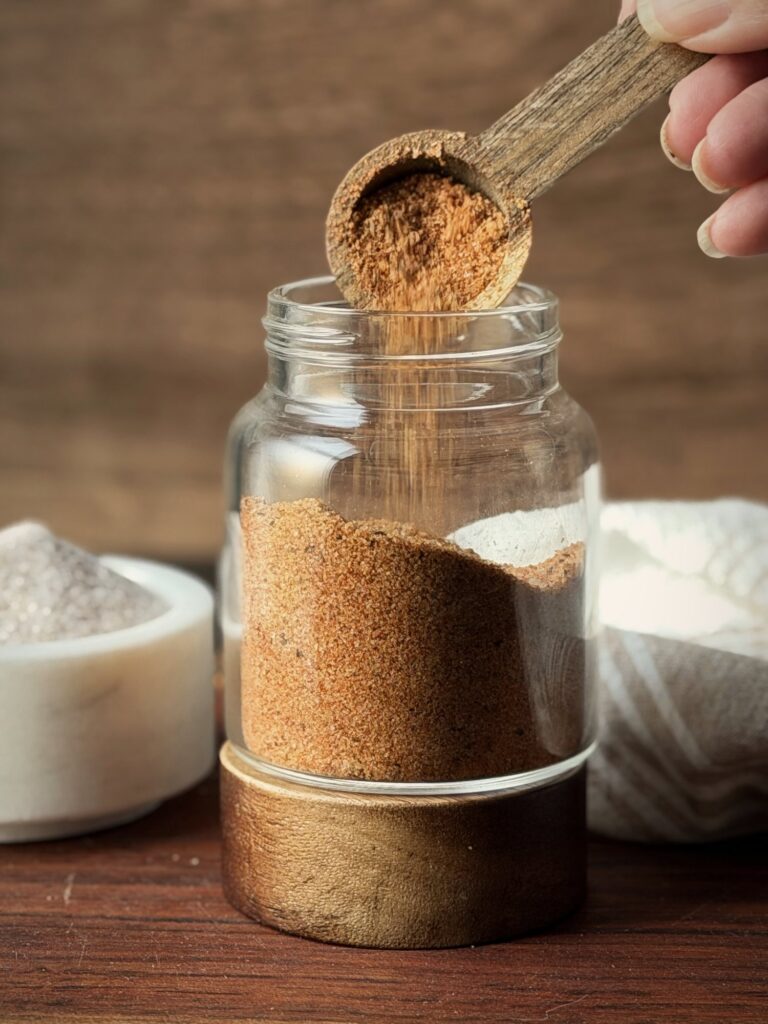
- Transfer the mixture to a clean, completely dry airtight jar or spice container.
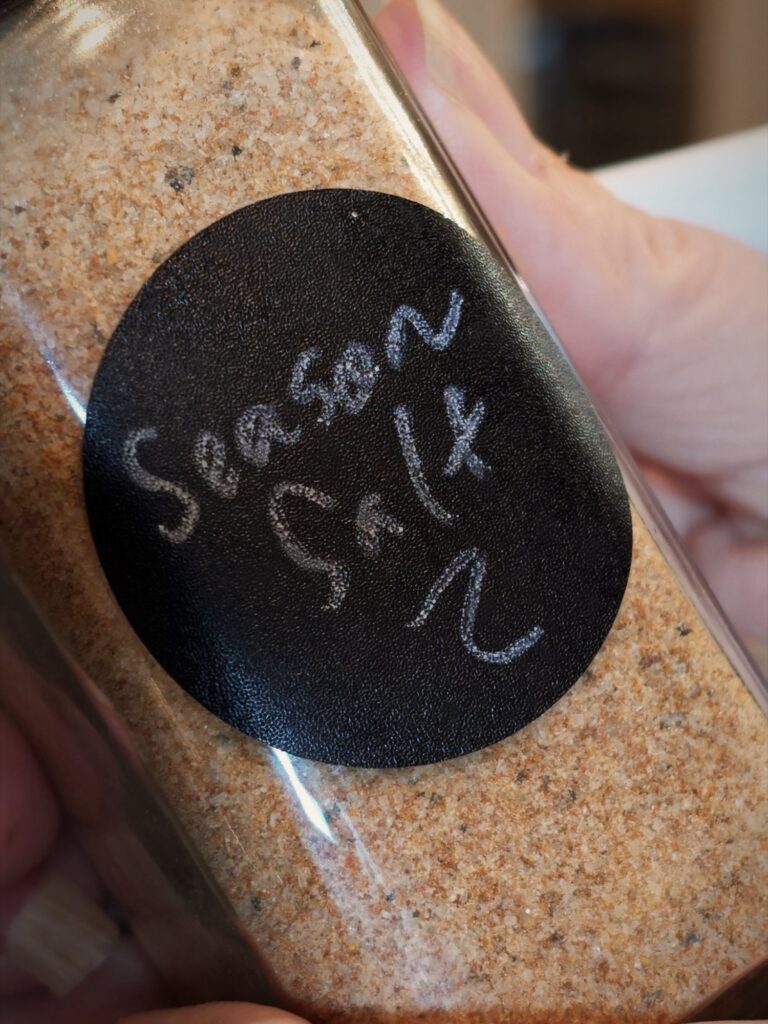
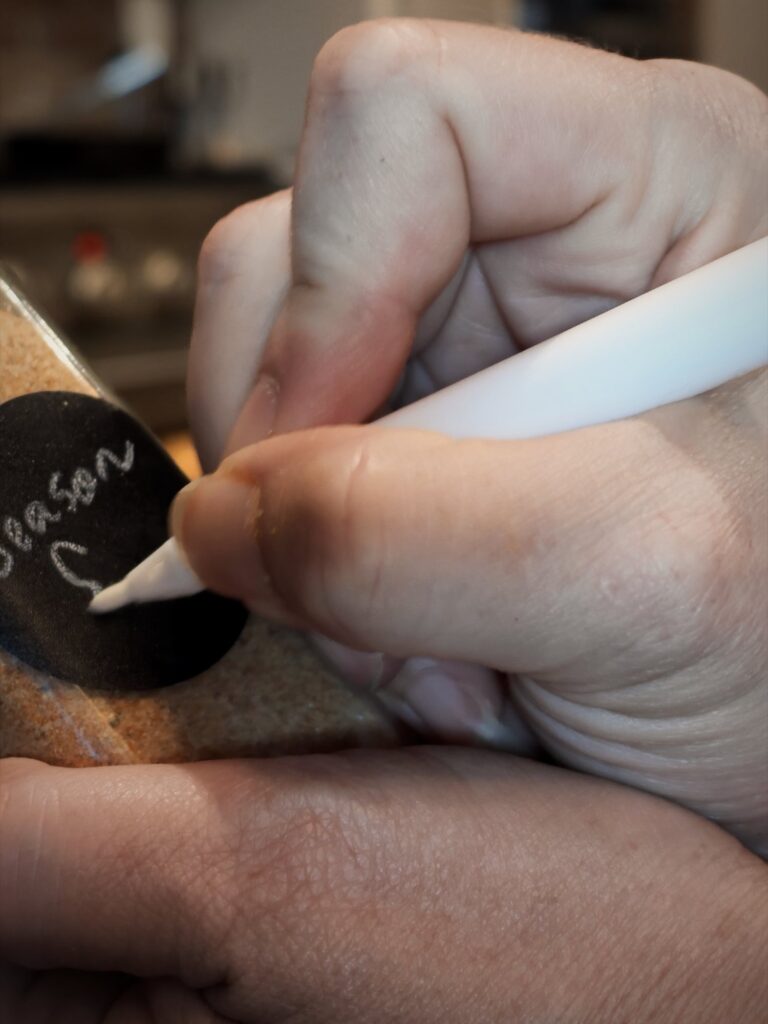
- Label the jar and keep it in your spice cabinet, away from heat and moisture.
- Shake or stir before using if the ingredients settle.
Important recipe note: The sugar is optional and may be omitted completely. It is included only as a way to more closely mimic the flavor of some commercial seasoned salt blends.
What Makes This Homemade Seasoned Salt So Good?
This isn’t just salt with a little paprika mixed in. Each ingredient adds something useful.
- Redmond Real Salt: The foundation of the blend. I use it because it’s a salt I already keep in my kitchen.
- Paprika: Adds the familiar reddish color and a mild pepper flavor without much heat.
- Garlic and onion powder: These provide the savory flavor that makes seasoned salt so versatile.
- Black pepper: Adds a little bite without turning this into a spicy seasoning.
- Turmeric: Contributes that recognizable golden color.
- Celery salt: Adds another layer of savory flavor. Remember that celery salt contains salt, so it also contributes to the overall saltiness.
- Mustard powder: Adds a subtle sharpness that rounds out the other spices.
- Optional sugar: Helps balance the savory ingredients and can make the blend taste a little closer to certain store-bought versions. It’s not necessary for the recipe to work.
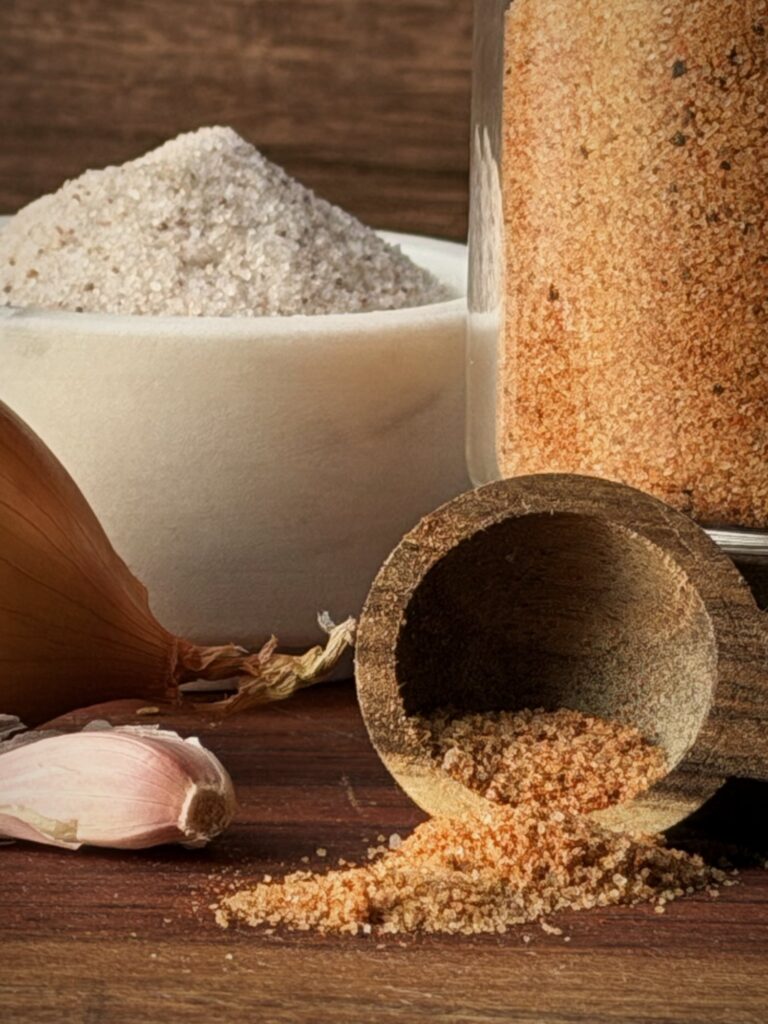
How to Use Homemade Seasoned Salt
One of my favorite things about keeping homemade seasoning blends in the pantry is how many different meals you can use them for.
This is especially true with seasoned salt.
Here are a few ways to use it:
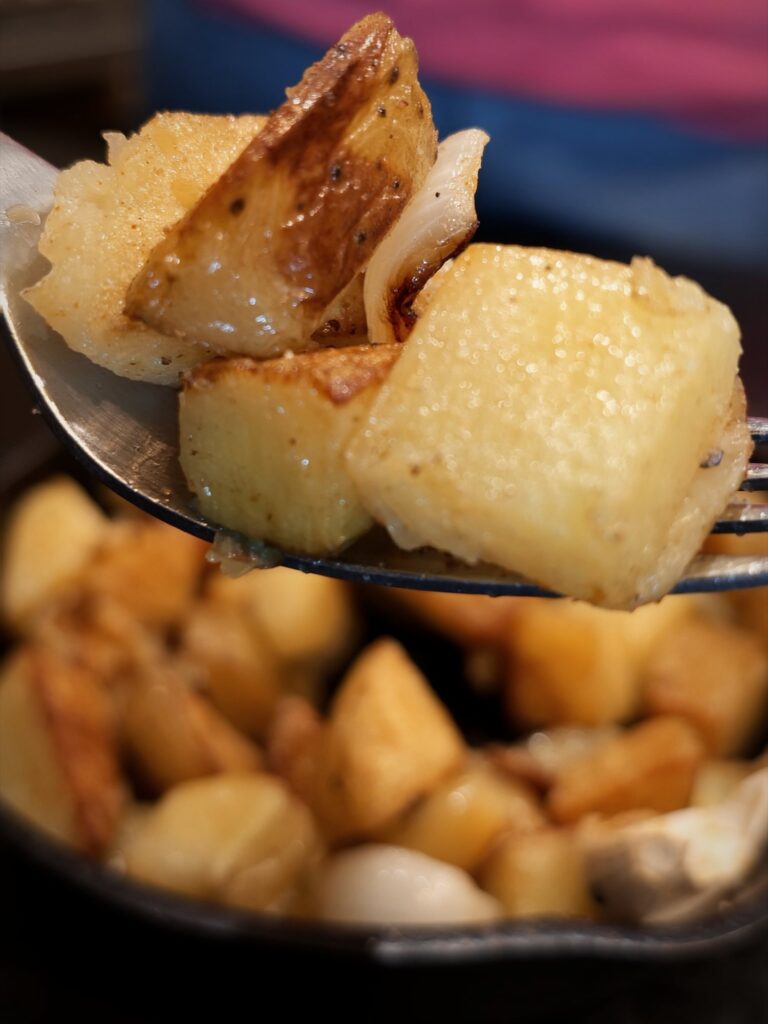
- Roasted potatoes: Sprinkle over chopped potatoes with oil before roasting.
- French fries: Season hot fries right after cooking.
- Chicken: Use it as an all-purpose seasoning on chicken breasts, thighs, or wings.
- Burgers: Add it to hamburger patties or sprinkle over the outside before cooking.
- Roasted vegetables: Try it on green beans, carrots, broccoli, or cauliflower.
- Eggs: Add a little to scrambled eggs or breakfast potatoes.
- Popcorn: Sprinkle lightly over fresh popcorn for a savory snack.
Start with a small amount and adjust to taste. This blend contains salt, so you’ll want to reduce or eliminate additional salt when using it.
Can I Use It on Everything?
Not quite everything, but it’s a pretty versatile seasoning.
I reach for blends like this when I want to add flavor without pulling five or six individual spice jars out of the cabinet.
It’s particularly useful for quick family meals when you need something that works on the meat, potatoes, and vegetables without making a separate seasoning mixture for each one.
Homemade Seasoned Salt vs. Store-Bought
There are some good store-bought seasoned salts available, but making your own has a few advantages.
First, you can control the ingredients. If you don’t want sugar, don’t add it. If you prefer a little more garlic or black pepper, you can adjust those too.
Second, you can make a larger batch using spices you already buy for other recipes. There’s no need to purchase another seasoning blend if the ingredients are already sitting in your pantry.
And finally, you know exactly what’s in the jar.
I like having a few dependable seasoning blends ready to go, especially when I’m putting together meals for a large family.
Can You Make Seasoned Salt Without Sugar?
Absolutely!
In fact, if you want a sugar-free seasoned salt, the only change you need to make to this recipe is to omit the optional teaspoon of sugar.
There’s no replacement necessary, and you don’t have to change the amounts of the other spices.
The finished seasoning will be a little more savory without that subtle sweetness, but it will still work anywhere you’d normally use seasoned salt.
If you’ve been looking for a homemade seasoned salt without added sugar, this recipe gives you that option without requiring a separate ingredient list.
How to Store Homemade Seasoned Salt
Store your seasoned salt in a clean, dry jar with a tight-fitting lid.
A small mason jar works well, especially if you’re making a larger batch.
Keep it in a cool, dry cabinet rather than next to the stove, where heat and steam can affect the spices.
Because this recipe uses dried spices, it doesn’t require refrigeration. For the best flavor, use it while your individual spices are still fresh and aromatic.
If the mixture starts to clump, check for moisture. Always use a dry spoon when measuring from the jar.
Can You Double This Recipe?
Yes! This is an easy seasoning blend to make in bulk.
Simply double or triple every ingredient, including the salt and spices. If you’re using the optional sugar, scale that proportionally too.
I like the convenience of having homemade blends ready to use rather than measuring out individual spices every time I cook.
And with a family that loves this seasoning, having some ready in the pantry makes sense.
Final Thoughts
Some pantry staples are worth making yourself because they’re cheaper. Others are worth making because they’re easier to customize.
This homemade seasoned salt checks both boxes when you already have the ingredients on hand.
But what matters most to me is that my kids absolutely love it. When a homemade version gets that kind of response, it’s worth keeping around.
And remember, if you don’t want sugar in your seasoned salt, just leave it out. It’s your pantry, your seasoning, and your choice.
Simple ingredients should work harder.
A Few Things I Use
- Glass spice jars – for storing the finished seasoned salt.
- OXO stainless steel mixing bowls – for mixing the blend.
- Stainless steel whisk – for blending the spices evenly.
- OXO measuring cups – for measuring the salt.
- Magnetic measuring spoons – for the paprika, garlic powder, onion powder, and other spices.
- Redmond Real Salt, fine – the salt base for this blend.
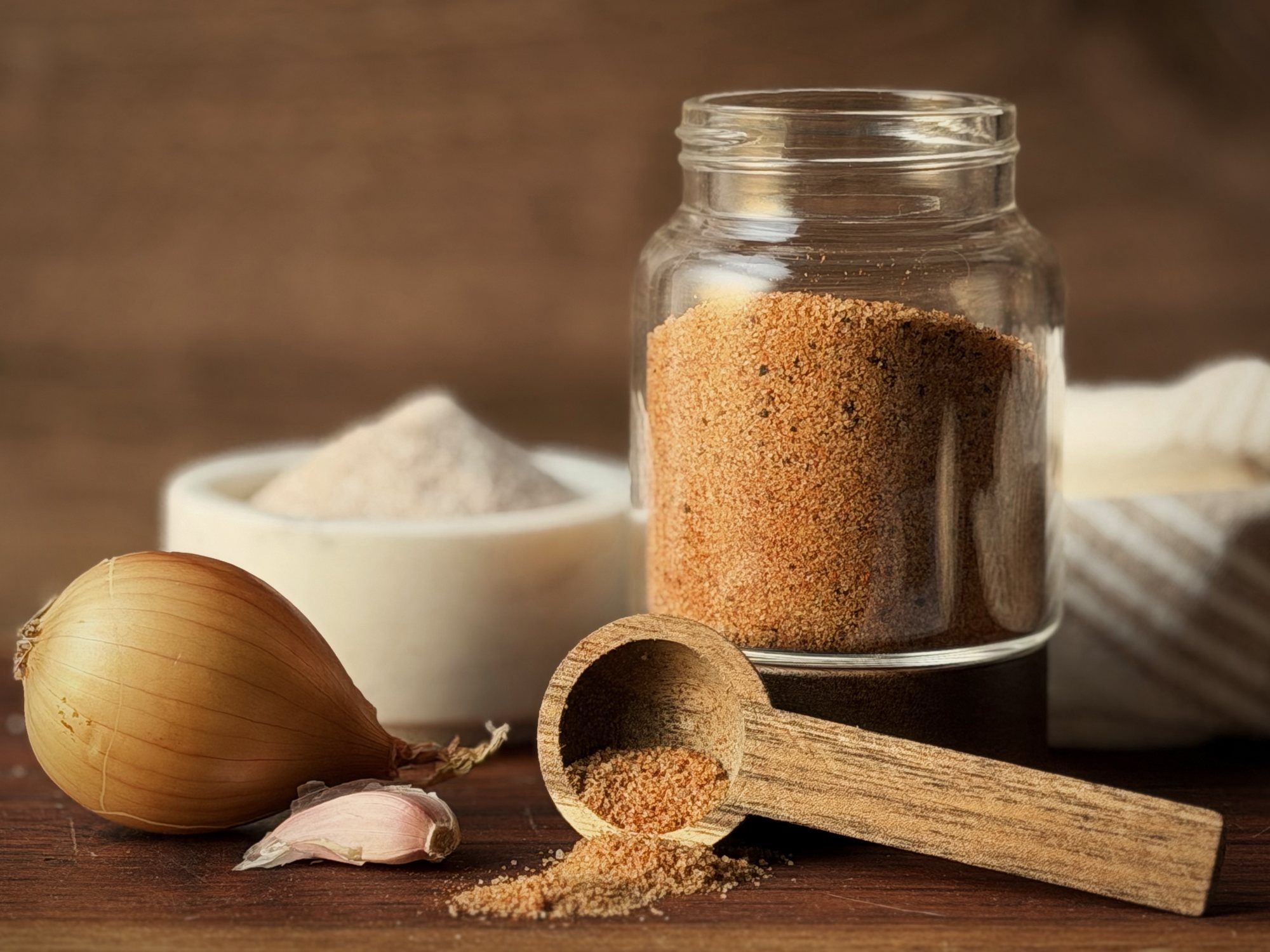
Homemade Seasoned Salt
Ingredients
Method
- Add the salt, paprika, garlic powder, onion powder, black pepper, turmeric, celery salt, and mustard powder to a mixing bowl.
- If you want a flavor closer to certain store-bought seasoned salts, add the optional teaspoon of sugar.
- Whisk everything together until the spices are evenly distributed.
- Transfer the mixture to a clean, completely dry airtight jar or spice container.
- Label the jar and keep it in your spice cabinet, away from heat and moisture.
- Shake or stir before using if the ingredients settle.
Notes
More Homemade Seasoning Blends to Try
If you enjoy making your own pantry staples, here are a few more recipes you might like:
- Homemade Taco Seasoning — a versatile blend for taco meat and more.
- Homemade Fajita Seasoning — great for chicken, beef, and vegetables.
- Homemade Poultry Seasoning — an easy way to add flavor to chicken and other poultry.
- Homemade Ranch Seasoning Mix — useful for homemade dressings, dips, and seasoning.
- Homemade Pumpkin Pie Spice
- 5 Homemade Seasoning Mixes to Make Instead of Buying
- Homemade Apple Pie Spice
- Homemade Italian Dressing Mix
- Homemade Everything Bagel Seasoning
- Homemade Onion Soup Mix
- Homemade Chili Seasoning
- Homemade Burger Seasoning
- 5 Grocery Store Staples You Can Stop Buying


One Comment